Date: 01/17/2026 01/18/2026
Location: Star Lake Meditation Center
Teacher: Shilin Long
Dharma Talk
The Karmic Cause by Which Five Hundred Brahmin Women Purified Their Minds and Attained the Path
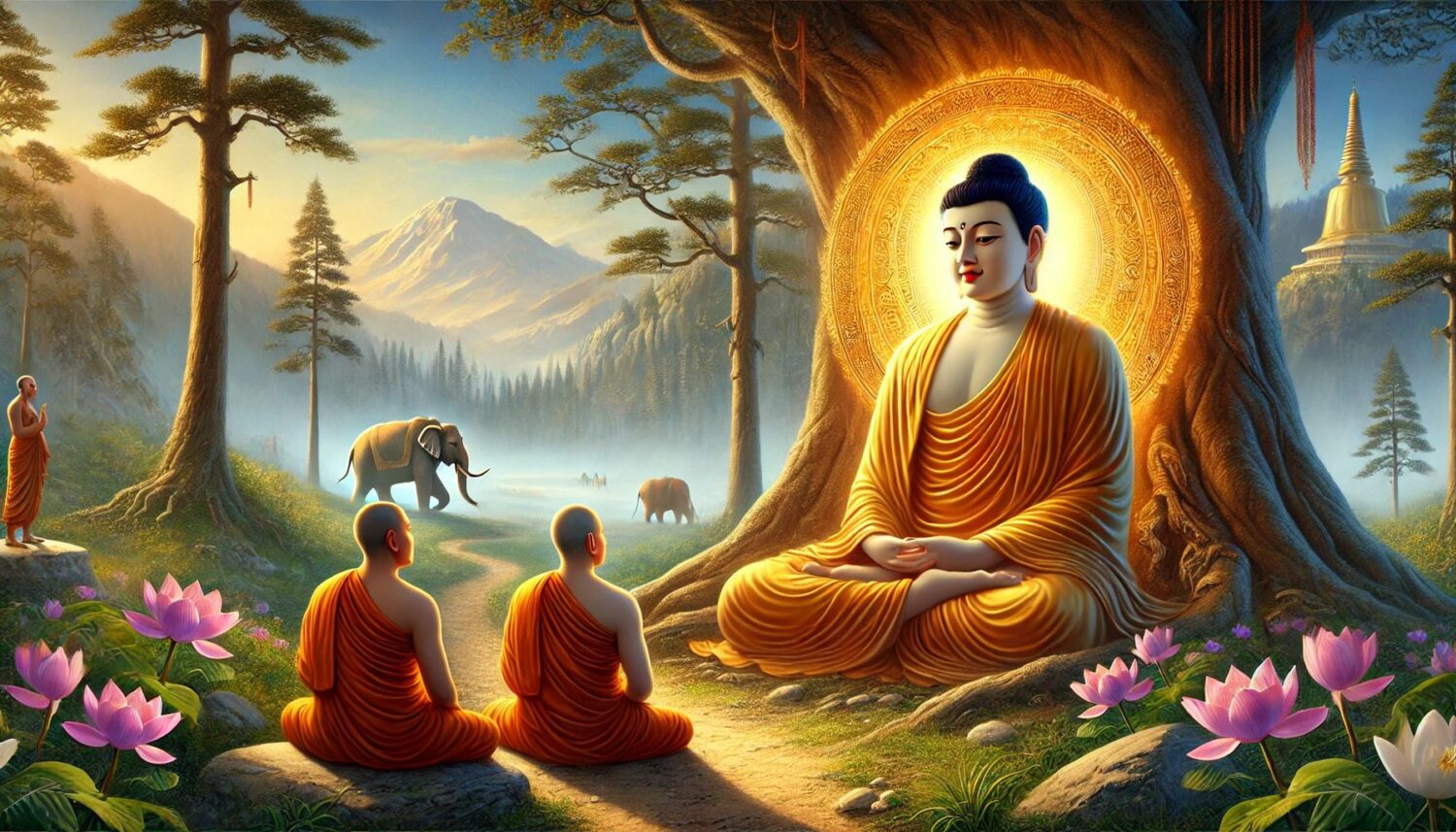
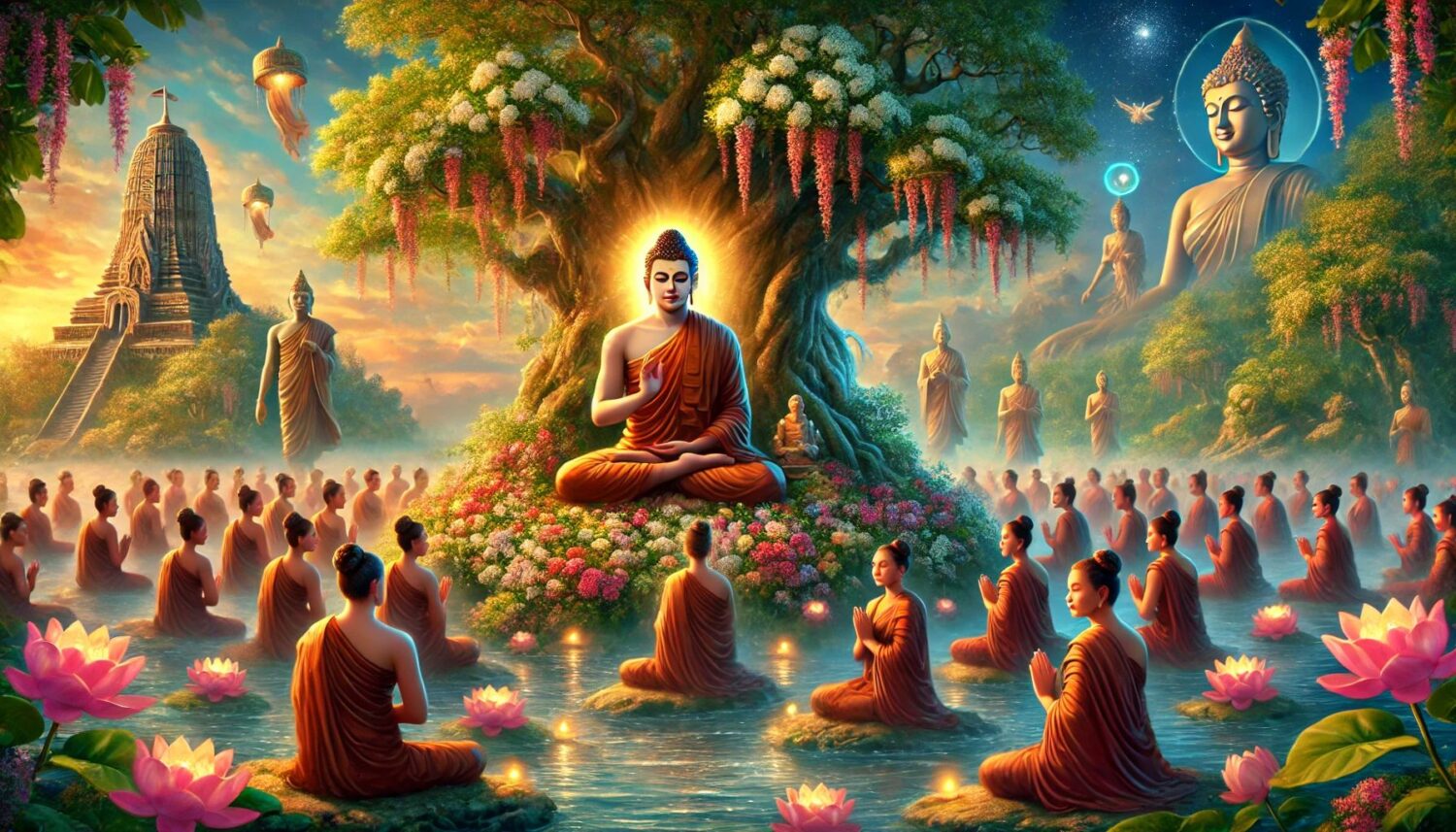
When the Buddha was residing in Śrāvastī, to the southeast of the country there was a sea, within which suddenly rose a landmass. Everywhere it was covered with fragrant flowers and luxuriant forests, and the surroundings were tranquil and elegant.
At that time there were five hundred Brahmin women who, although diligently cultivating ascetic practices, did not know of the Buddha, the noble sage. One day they gathered together and told one another: “In this life we have obtained female bodies, and from youth to old age we are bound by many forms of constraint and lack of freedom. Human life is short, like morning dew, uncertain from dawn to dusk.
Impermanence presses upon us, and things rarely go as we wish; in an instant we may perish. It would be better for us to go to the Fragrant Flower Terrace in the southeastern sea to gather fragrant flowers and offer sacrifices to Brahmā, and to diligently observe fasting and discipline, praying that in a future life we may be reborn in the Brahmā heaven, live long without death, gain freedom, and be far removed from sorrow and suffering.”
After saying this, the Brahmin women immediately prepared all kinds of offerings and went to the Fragrant Flower Terrace to observe fasting and perform sacrifices, hoping that Brahmā would descend and fulfill their wishes.
At this time, the World-Honored One in Śrāvastī, by means of his supernatural powers, knew the aspirations of these five hundred women. Although their minds were still like those of ordinary people, seeking conditioned and impermanent dharmas, their wholesome roots were deep, and they could still be transformed.
Therefore, the World-Honored One led the great assembly of disciples, bodhisattvas, and devas, nāgas, and spirits, ascended into the sky, and came to the Fragrant Flower Terrace in the sea, where he sat upright beneath a great tree.
The five hundred Brahmin women were immediately shaken by this sudden and extraordinary sight, believing that the Great Brahmā King had been moved by their sincerity and had compassionately descended, and each of them rejoiced greatly.
At this moment, the heavenly beings who had come together with the Buddha told them: “What stands before you is not the Great Brahmā King, but an even more venerable teacher of the three realms—the Buddha, who with his pure and unconditioned Dharma has liberated countless beings.”
Upon hearing this, the Brahmin women immediately paid reverent prostrations to the Buddha and prayed: “Because our defilements are deep and heavy, in this life we have been born as women. We hope that the Buddha, in his compassion, will grant us empowerment so that we may be reborn in the Brahmā heaven.”
The Buddha said: “Because you have planted wholesome roots in past lives, you are able today to give rise to such aspirations.
In the world there are two matters that are clearly evident: first, that humans experience suffering while the heavenly realms enjoy pleasure—doing good brings blessings, and doing evil brings retribution; second, that worldly happiness belongs to conditioned and tainted blessings—when such rewards are exhausted, one falls again, giving rise to distress.
Only the bliss of nirvāṇa, which is quiescent and unconditioned, is the most ultimate happiness.” The Buddha further spoke a verse for them:
“Knowing the world’s decay is like an illusion,
Phantasmal dharmas suddenly arise;
Cut off Māra’s flowery adornments,
And birth and death no longer appear.
Seeing the body as foam,
Illusory dharmas are thus by nature;
Cut off Māra’s flowery adornments,
And birth and death no longer appear.”
The five hundred Brahmin women listened with utmost sincerity to the verse. Their wholesome roots matured, and they gave rise to the mind of renunciation. Immediately, their hair fell away, Dharma robes clothed their bodies, and they all manifested the pure appearance of bhikṣuṇīs. Contemplating the principles of the Dharma, they calmly entered meditation, cut off all afflictions, and at once attained the fruit of arhatship.
Venerable Ānanda, seeing the exceptional nature of these causes and conditions, asked the Buddha: “By what meritorious causes and conditions did these Brahmin women encounter the World-Honored One coming to liberate them?”
The World-Honored One told Ānanda and the assembly: “In the time of Buddha Kāśyapa in the past, there was an elder whose household was wealthy, possessing five hundred wives and maidservants. However, the elder was by nature suspicious and jealous, and the household was strictly guarded, allowing no one to enter or leave freely.
Even when the wives wished to go to pay homage and make offerings to the Buddha, the elder firmly refused. Until one day, when the king held a grand banquet and summoned all the ministers to the palace to celebrate, with singing and dancing continuing from day until night, the five hundred wives and maidservants seized the opportunity, and while the elder was in the palace, they went to pay respects to Buddha Kāśyapa and listen to the Dharma.
They sincerely made the vow: ‘May we, life after life, not associate with evil people, and wherever we are, always encounter virtuous and noble beings. In a future life, when there is a Buddha named Śākyamuni, may we all be able to go forth and practice under him, upholding the path of cultivation.’”
The Buddha told Ānanda: “Those five hundred wives and maidservants at that time are the previous lives of the five hundred bhikṣuṇīs you see before you now. Because their vows were sincere and earnest, when the causes and conditions matured, they were naturally liberated.”
When the assembly heard this, all rejoiced and praised the vastness of the Buddhadharma, realizing that with a single sincere thought, the merit is truly inconceivable.