Date: 01/31/2026 02/01/2026
Location: Star Lake Meditation Center
Teacher: Shilin Long
Dharma Talk
The Parable of the Monkey: Awakening a Renunciant Who Intended to Abandon the Path
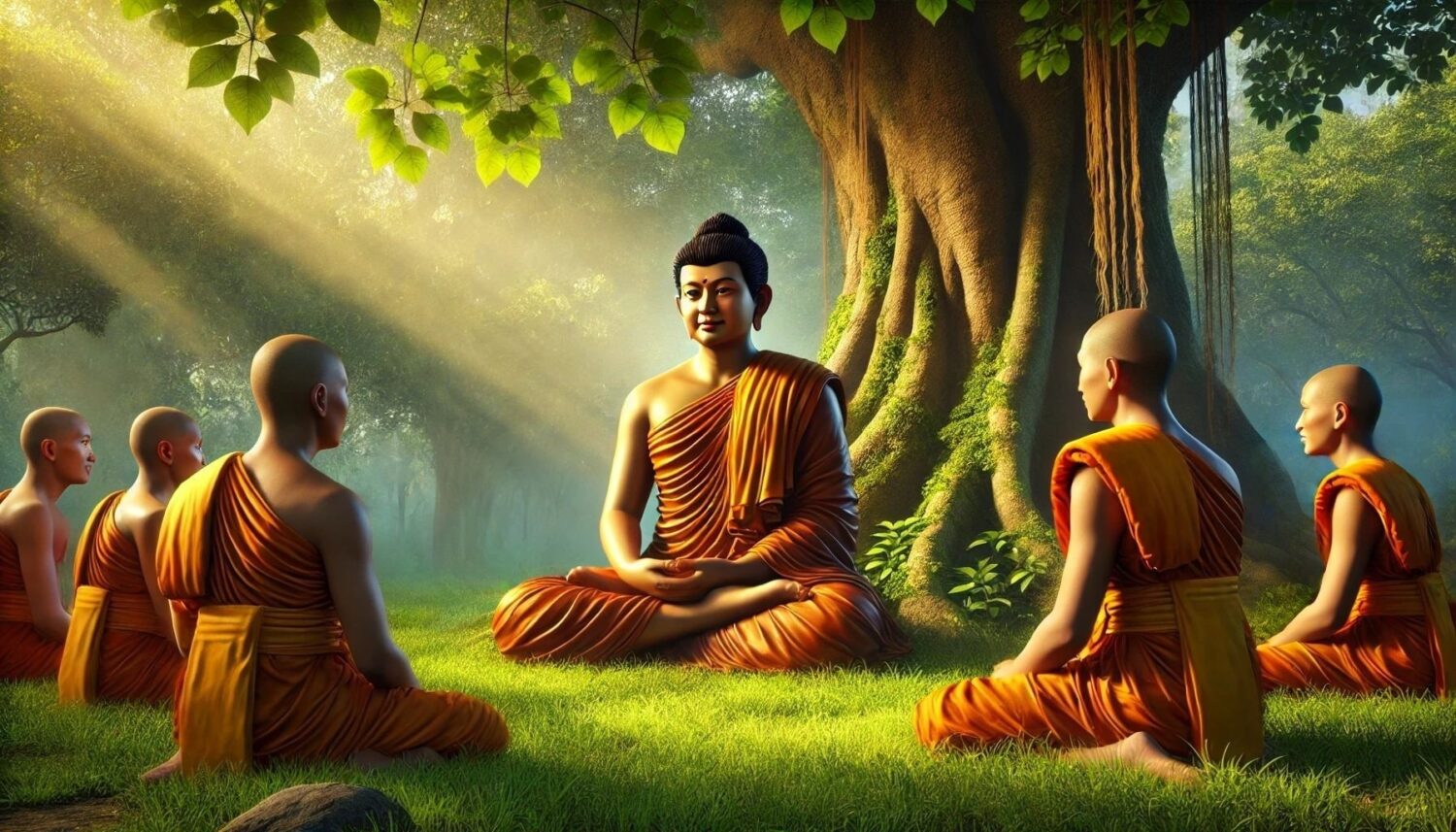
In the past, the Buddha was staying at the Vulture Peak Monastery on the outskirts of Rājagṛha, expounding subtle and wondrous Dharma teachings for devas, humans, nāgas, ghosts, and other beings. At that time, a man renounced his home, wife, and children and came to the monastery to seek an audience with the Buddha, hoping to go forth and practice under the Buddha’s guidance.
The Buddha compassionately consented, ordained him, and instructed him to meditate and sit in quiet contemplation beneath a tree, reflecting on the principles of the Dharma. After receiving the Buddha’s instruction, the bhikṣu went to a remote mountain forest a hundred li away from the monastery and diligently practiced there.
Thus, the bhikṣu sat alone beneath a tree cultivating the path for three years. Because he saw no attainment, doubts and regret arose in his mind: “Did I not renounce my home, wife, and children precisely in order to attain the Way? Yet three years have passed, and it seems I have achieved nothing at all.
If this continues, it is simply a waste of time and life. I might as well return home, reunite with my wife and children, and enjoy family happiness again.” Having thought this through, he prepared to descend the mountain and return home.
At that moment, the Buddha, through his supernormal powers, observed that this person was capable of attaining the path, but was temporarily deluded and about to abandon the road to liberation. Therefore, the Buddha transformed himself into an ordinary śramaṇa and, using his miraculous power of swift travel, came to the mountain where the bhikṣu was practicing.
Sure enough, upon arriving, he saw the bhikṣu hastily walking down the mountain. The śramaṇa stepped forward and asked, “Excuse me, I happened to pass by this way and saw the direction from which you came. May I ask whether you are coming from the mountains? There happens to be a flat grassy area nearby—why don’t we sit and rest for a while? We could also take this opportunity for me to ask you about the Dharma.”
The bhikṣu nodded in agreement. After the two sat down, the bhikṣu sighed and said, “To be honest with you, three years ago I single-mindedly sought the Way, renounced my home, wife, and children, and came to this deep mountain to cultivate.
But after all these years, I have accomplished nothing. So I think that rather than enduring hardship here and wasting my life, I might as well return home early, reunite with my wife and children, and enjoy family happiness again, and then make plans later.”
As they were conversing, they noticed an old monkey that had left the forest and was living on the flat ground. The śramaṇa asked the bhikṣu, “This old monkey is quite unusual. Why would it appear here? There are no large trees nearby for it to perch and rest in.
Why would it choose to live this way?” The bhikṣu replied, “I noticed this monkey long ago. Based on my observations in the mountains, it chose to live here for two reasons.
First, it had many wives and dependents, and even with constant toil day and night, the food it obtained was still insufficient to feed them all. Second, in order to obtain food, it had to climb up and down trees every day, which easily injured its feet and left it little time to rest. Therefore, the old monkey chose to leave the group and live alone in this place.”
They had just finished speaking when they saw the old monkey climb back into the trees in the forest. The śramaṇa asked, “Do you see that? The old monkey has returned to the trees and is living together with its companions again.” The bhikṣu replied, “This old monkey is truly foolish!
Since it was able to stay away from noise and disturbance and no longer had to toil for its daily food, why would it abandon such a free and easy life and return to seek trouble for itself?” Hearing this, the śramaṇa said, “In fact, how are you any different from this old monkey?
At the beginning, you too renounced your home for two reasons: first, because wife and family are like a prison, depriving one of freedom; second, because children and relatives are like shackles—one toils for them and scarcely has a moment’s rest.
You renounced the household life to seek the Way precisely to put an end to the suffering of birth and death. Yet today you wish to abandon the path and return home, just like putting the shackles back onto yourself and walking back into prison. Thus, clinging attachment and emotional fixation will lead you down the road to hell.”
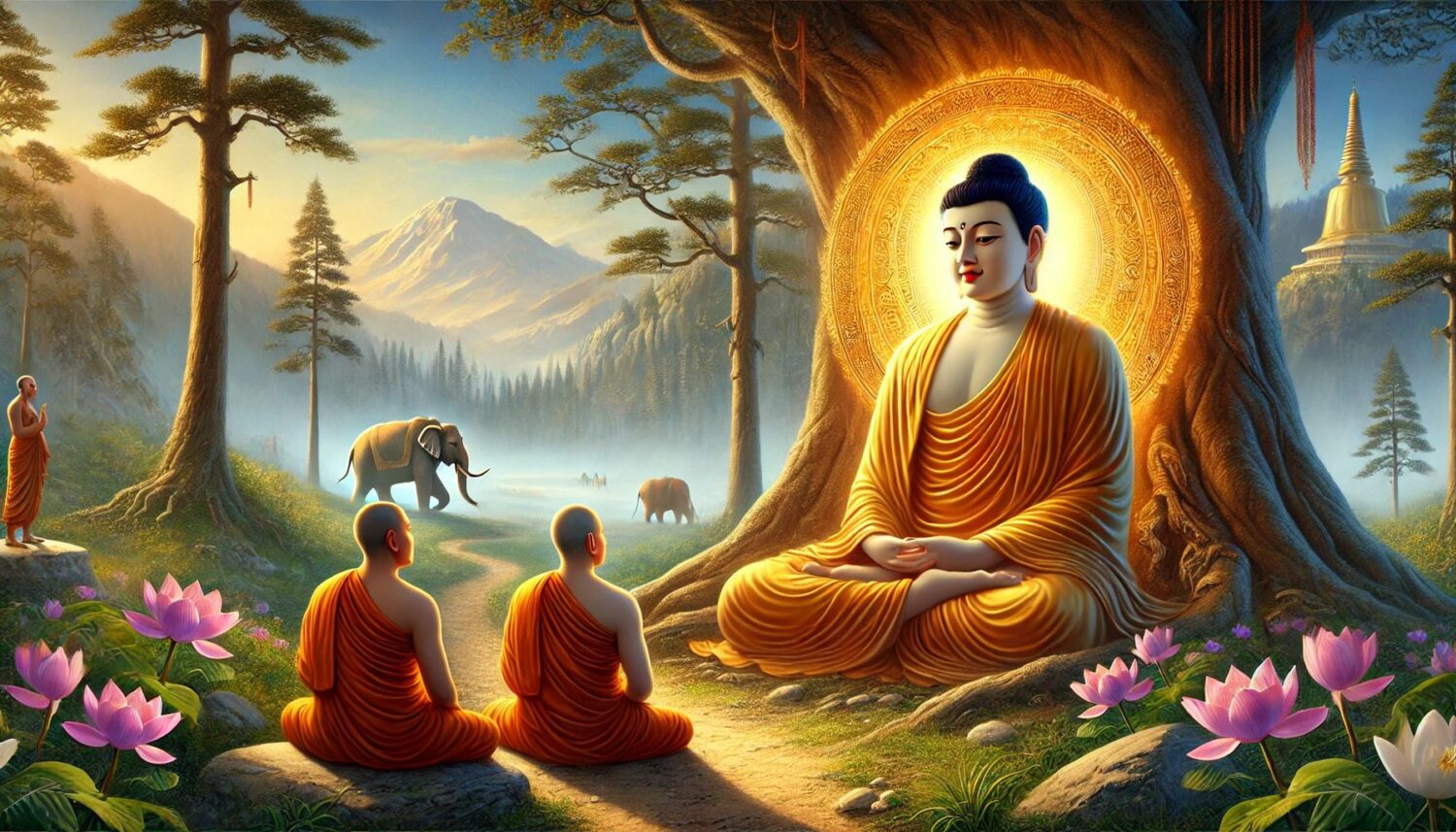
After saying this, the śramaṇa revealed his true form as the Buddha, manifesting his golden body sixteen cubits tall. Brilliant light shone everywhere, the great earth trembled, and birds and beasts all followed the light to come before the Buddha, repenting of their past misdeeds. Then the Buddha spoke a verse for the assembly:
“As with a tree whose roots are deep and firm,
Though cut, it grows again;
If craving is not entirely removed,
One will inevitably suffer again.
Like a monkey leaving a tree,
Escaping, yet returning to it again;
So too are people,
Leaving prison only to enter it once more.
Craving flows on constantly,
Habitual, bound with arrogance;
Thoughts cling to lust,
Covering oneself, seeing nothing.
All mental currents spread forth,
Love’s bonds are like creeping vines;
Only wisdom’s discerning vision
Can cut off the root of mind.
From love comes moistening,
Thoughts grow and spread;
Desire is deep and bottomless,
Increasing aging and death.”
When the bhikṣu saw the Buddha’s radiant signs and heard the verses spoken by the Buddha, he felt deeply ashamed and embarrassed. He respectfully bowed and repented, no longer giving rise to evil thoughts or deluded imaginings.
With single-minded contemplation of the Buddha’s teachings, he immediately attained the fruit of Arhatship. Devas and humans who heard the Buddha’s teaching were also filled with joy, scattering flowers in offering to the Buddha and praising with one voice the Buddha’s immeasurable merit.