时间:01/24/2026 01/25/2026
地点:星湖禅修中心
主讲:龙示林
佛法修行
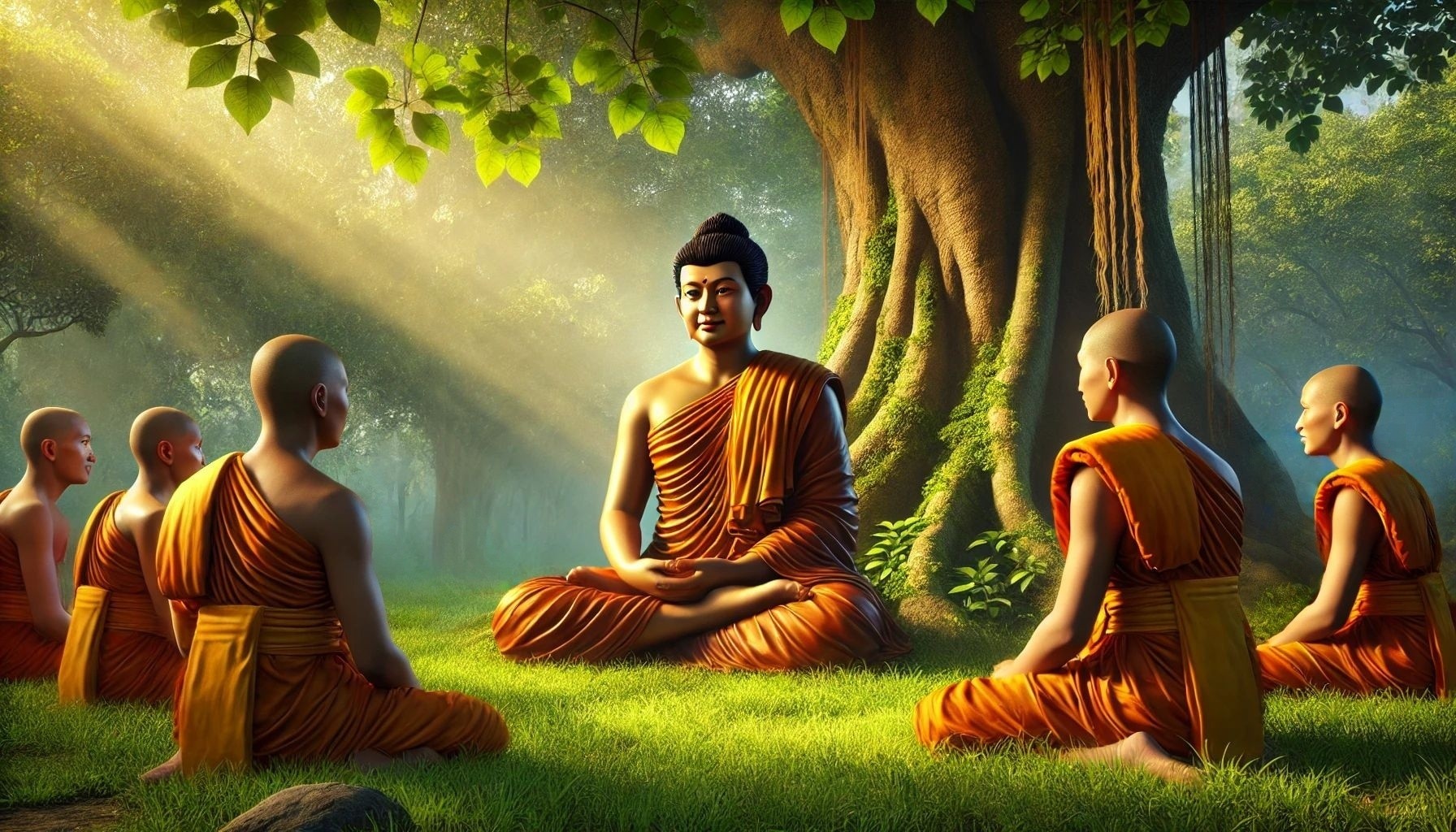
佛度五比丘
一天,佛陀带领弟子来到迦毗罗卫国,国人看见世尊相好庄严、巍巍堂堂,纷纷虔诚礼拜供养,并且赞叹在旁的憍陈如等五比丘有大福报,最先听闻佛法,成道证果。众比丘听到国人的赞叹,即恳请佛陀慈悲开示,为何五比丘今日能获此殊胜果报?于是世尊将过去的因缘娓娓道来。
久远劫前,波罗奈国中有位经商的长者,名为勒那阇耶。一日,这位长者外出办事,在郊外正巧遇到一位涕泪悲泣、准备上吊自杀的穷人。长者好言劝慰,并且询问原因,穷人回答:「唉!我贫穷如洗,但为了生计,只好举债度日。现在债主日夜催逼还债,让我生不如死,非常痛苦呀!」
长者听了心生悲愍,告诉他说:「不要担心,我来帮你还债,你可千万不要再寻短了。」然而穷人积债如山,令长者散尽家财。从此,长者陷于穷困,不但令妻小以乞讨为生,也让亲友无法谅解,纷纷诃责。
就在此时,有一群商人为邀长者一起出海采宝,特地登门拜访。长者说:「入海采宝虽可致富,但要先打点船只及粮食。现在的我如此穷困潦倒,已经没有财力采办了。」商人们答道:「钱的事情包在我们身上,您只要负责带我们入海采宝就好了。」于是众人聚资采买大船、粮食等所需用品,剩余的钱则留给长者的妻儿维持生计。
出发前,长者以七条大绳将船系在岸边,并且告诉大众说:「入海虽然可以采得许多奇珍异宝,但在海中也会遭遇狂风巨浪、大鱼、恶鬼……等种种艰险,大众都有父母妻儿,不妨多加考虑是否真要入海采宝。」说完便砍断一条绳索。就这样,长者每天对大众重述一遍相同的话,并且砍断另一条绳索。到了第七天,七条绳索全都砍断了,这群商人还是坚决要去采宝,于是大船便启航入海,展开惊险的寻宝之旅。
出发后没有多久,果真遇上了大风暴。在狂风暴雨中,船只完全被浪摧毁,众人掉落海中,有些人抓到浮木,便在海面上载浮载沉,有些人则不幸溺毙。
危难之中,有五位商人对长者说:「我们跟着您入海采宝,现在遇到海难,性命垂危,希望您能想办法救救我们。」长者回答:「我听说在大海中,尸体是不会下沉的。为了救度你们,我愿意布施我的身体,你们只要好好抓住我就行了。」于是,长者以至诚心誓愿:「若我成佛时,当以无上正法之船,度汝生死大海之苦。」说完便以刀自尽。于是商人们紧抓住长者的身体,得以漂浮在海上,海神随即起风将他们吹至岸边,这五人也因此保全了性命。
佛陀告诉弟子:「那位长者就是我的前世,而五位得救的商人就是现在的五比丘。我于过去世舍身救度这五人免于死难,所以今世得以成就佛道,这五人也因我的誓愿,能够最先听闻无漏正法,远离生死烦恼大海。」
众比丘深受启发,发自内心赞叹如来的大慈悲心,彼此互相勉励,欢喜奉行佛陀的教示。
Date: 01/24/2026 01/25/2026
Location: Star Lake Meditation Center
Teacher: Shilin Long
Dharma Talk
The Buddha Liberates the Five Bhikṣus
One day, the Buddha led his disciples to the land of Kapilavastu. When the people of the country saw the World-Honored One, whose physical marks were dignified and majestic, they all reverently paid homage and made offerings. They also praised the five bhikṣus, such as Kauṇḍinya, saying that they possessed great blessings, having been the first to hear the Dharma and attain the path and its fruition.
Hearing the people’s praise, the bhikṣus respectfully requested the Buddha to compassionately explain why the five bhikṣus were able to obtain such a supremely rare fruition on this day. Thus, the World-Honored One related the causes and conditions of the past in detail.
In a distant kalpa in the country of Vārāṇasī, there lived an elder who engaged in trade, named Leṇa-jaya. One day, while the elder was out on business, he happened to encounter a destitute man in the countryside who was weeping bitterly and preparing to hang himself.
The elder kindly comforted him and asked the reason. The poor man replied, “Alas, I am utterly impoverished. In order to survive, I have had no choice but to live on debt. Now my creditors pursue me day and night demanding repayment, making my life worse than death.
My suffering is unbearable.” Hearing this, the elder gave rise to compassion and said to him, “Do not worry. I will help you repay your debts. You must never seek death again.” However, the man’s debts were as numerous as mountains, causing the elder to exhaust all his wealth.
From then on, the elder fell into poverty, forcing his wife and children to live by begging, and even his relatives and friends could not understand him and reproached him one after another.
At that time, a group of merchants came to invite the elder to go out to sea with them to gather treasures, and they specially visited his home. The elder said, “Going to sea to gather treasures can indeed bring wealth, but one must first prepare ships and provisions.
Now that I am so poor and destitute, I no longer have the means to make such preparations.” The merchants replied, “Leave the matter of money to us. You only need to be responsible for leading us out to sea to gather treasures.” Thus, everyone pooled their resources to purchase a large ship and provisions, and the remaining money was left for the elder’s wife and children to maintain their livelihood.
Before departure, the elder used seven thick ropes to tie the ship to the shore and told the group, “Although going to sea can yield many rare and precious treasures, the ocean is also full of dangers such as violent winds and waves, great fish, and evil spirits.
All of you have parents, wives, and children. You may wish to consider carefully whether you truly want to go to sea to gather treasures.” After saying this, he cut one rope. In this way, the elder repeated the same words to the group each day and cut another rope.
By the seventh day, all seven ropes had been cut, yet the merchants remained determined to go gather treasures. Thus, the great ship set sail into the sea, embarking on a perilous journey in search of treasure.
Not long after departure, they indeed encountered a great storm. Amid the violent winds and torrential rain, the ship was completely destroyed by the waves, and everyone fell into the sea. Some people managed to grab onto floating pieces of wood and drifted up and down on the surface of the sea, while others unfortunately drowned.
In this moment of great danger, five merchants said to the elder, “We followed you out to sea to gather treasures, and now we have encountered a shipwreck and our lives are in peril. We hope you can find a way to save us.” The elder replied, “I have heard that in the ocean, corpses do not sink.
In order to save you, I am willing to give my body in generosity. You need only firmly hold on to me.” Then the elder made a sincere vow, saying, “When I attain Buddhahood, I will use the unsurpassed ship of the true Dharma to ferry you across the ocean of suffering of birth and death.”
Having said this, he took a knife and ended his own life. The merchants then tightly held onto the elder’s body and were able to float upon the sea. The sea deity immediately raised a wind that blew them toward the shore, and these five people were thus able to preserve their lives.
The Buddha told his disciples, “That elder was my former life, and the five merchants who were saved are the present five bhikṣus. In a past life, I sacrificed my body to save these five people from death.
Therefore, in this life I was able to accomplish the Buddhahood, and these five people, because of my vow, were able to be the first to hear the undefiled true Dharma and be freed from the great ocean of birth and death and afflictions.”
The bhikṣus were deeply inspired and, from the depths of their hearts, praised the great compassion of the Tathāgata. They encouraged one another and joyfully practiced in accordance with the Buddha’s teachings.