Date: 11/23/2024 11/24/2024
Location: Star Lake Meditation Center
Teacher: Sara
Dharma Knowledge
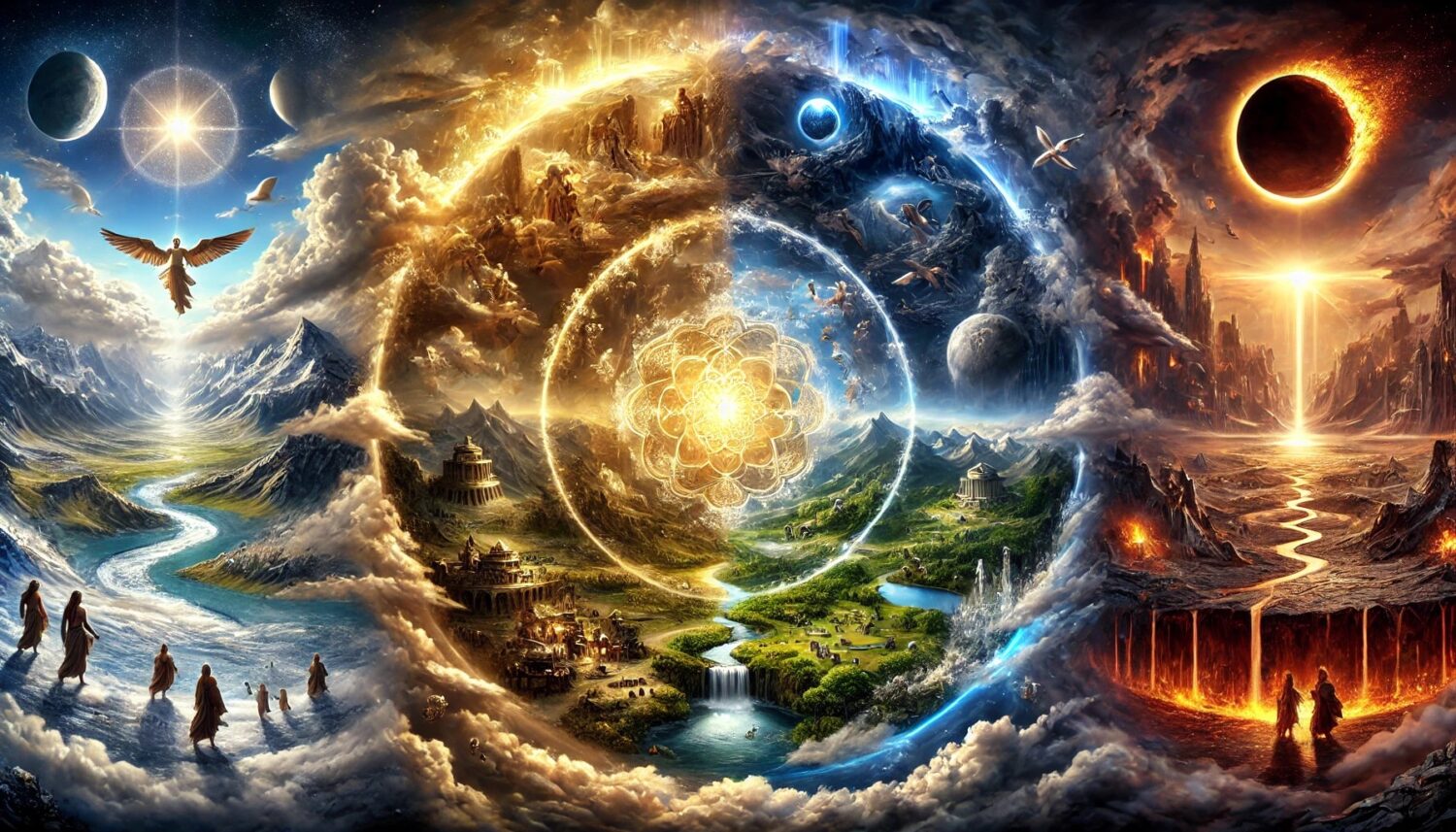
An Overview of the Six Realms of Rebirth
The Six Realms are not a cosmological map of the universe, nor a mythological classification of afterlife destinations. In the Dharma, they function as an analytical model explaining how karmic conditions shape lived experience. Interpreting the Six Realms as fixed metaphysical locations transforms the Dharma into speculative belief and obscures its original intent.
From the Buddhist perspective, “rebirth” refers to the repeated arising of experience under conditions of ignorance and attachment. The “Six Realms” are a systematic typology of these recurring patterns. They do not describe the migration of a soul through different worlds, but the ways consciousness manifests particular modes of existence when certain conditions mature.
The Six Realms are commonly listed as: the heavenly realm, the human realm, the asura realm, the animal realm, the hungry ghost realm, and the hell realm. This classification is not moral judgment, but differentiation based on the ratio of pleasure to suffering, the clarity of cognition, and dominant forms of attachment. No realm is permanent; each is a temporary configuration of causes and conditions.
The heavenly realm represents states dominated by pleasure and favorable conditions. Suffering is minimal, but precisely because pleasure is abundant and sustained, subtle attachment easily takes root. For this reason, the heavenly realm is not liberation. It is the realm most easily mistaken for fulfillment, yet once its karmic support is exhausted, transition to other realms follows.
The human realm is considered the most conducive to liberation, not because it is happiest, but because pleasure and suffering are relatively balanced. This balance preserves cognitive clarity and reflective capacity. Humans can directly perceive impermanence and dissatisfaction without being overwhelmed by either extreme pleasure or extreme pain.
The asura realm is characterized by comparison, rivalry, and antagonism. Its suffering does not arise from deprivation, but from perpetual imbalance and conflict. Asuras are not weak; they are driven by competition, status, and self-assertion, which prevents mental stability.
The animal realm symbolizes existence dominated by ignorance and passivity. Its defining feature is limited awareness and lack of reflective capacity regarding causality. “Animal” here does not only denote biological species, but any mode of existence in which behavior is governed almost entirely by instinct and external conditions.
The hungry ghost realm represents states centered on lack and insatiable desire. The core suffering lies not in objective scarcity, but in a desire structure that cannot be satisfied. The more one grasps, the stronger the sense of emptiness becomes. This is suffering produced directly by craving itself.
The hell realm is not a place of divine punishment, but a state shaped by extreme hatred, fear, and pain. When consciousness is fully occupied by intense negative states, cognitive freedom and choice nearly vanish, and experience becomes “hell-like” in nature.
Crucially, the Six Realms are not confined to life after death. The Dharma makes clear that these realms are psychological–karmic patterns that can arise moment by moment. Within a single day, one may experience heavenly satisfaction, asura conflict, hungry ghost craving, or hellish anguish, depending on mental conditions.
Thus, the significance of the Six Realms lies not in predicting future lives, but in revealing a mechanism. As long as ignorance persists, karmic processes operate, and experience cycles through these patterns. When ignorance is directly seen and attachment released, rebirth ceases immediately. Liberation is not escape from the Six Realms, but freedom from being driven by their conditions.