时间:11/23/2024 11/24/2024
地点:星湖禅修中心
主讲:净真
佛法知识
六道轮回概述
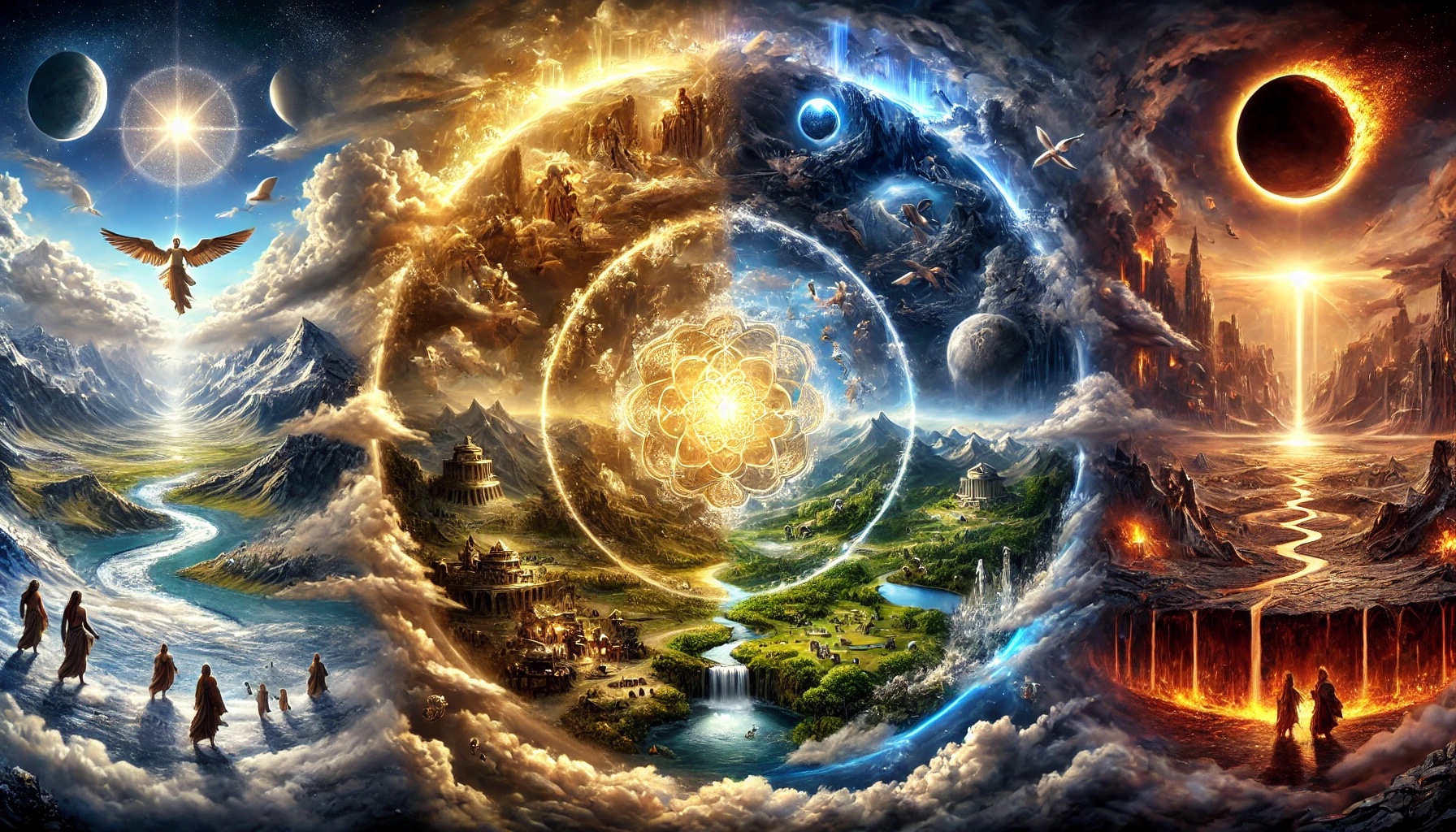
六道轮回并非佛法中的宇宙结构图,也不是关于死后世界的神话分类,而是一套用来说明“业力如何塑造生命经验”的分析模型。若脱离因果与心理结构而将六道理解为真实存在的空间层级,便会将佛法降格为形而上信仰体系,偏离其原意。
从佛法立场看,“轮回”指的是在无明与执取未被解除的前提下,生命经验不断重复生起的过程;“六道”则是对这种重复模式的类型化总结。它描述的不是灵魂在不同世界中的迁移,而是业力条件成熟时,意识如何投射出相应的存在状态。
六道通常分为:天道、人道、阿修罗道、畜生道、饿鬼道、地狱道。这一划分并非价值评判,而是基于苦乐比例、认知清晰度与执着形态的差异。六道之间不存在永恒归属,任何一道都只是条件暂时组合的结果。
天道代表以乐受为主的存在状态。其特征是福报充足、痛苦较少,但由于乐受强烈且持续,极易滋生细微而顽固的执取。正因如此,天道并非解脱之地,而是最容易被误判为“圆满”的状态,一旦福报耗尽,仍会堕入其他道。
人道在六道中被视为最具修行潜力的状态,并非因为其快乐最多,而是因为苦与乐相对平衡,认知能力与反思空间同时具备。人道的关键特征是:既能直接感受无常与苦,又未被极端痛苦或极端快乐彻底遮蔽心智。
阿修罗道以强烈的比较心、对立心与竞争意识为核心。其痛苦不来自匮乏,而来自持续的不平衡感与冲突结构。阿修罗并非缺乏能力,而是被胜负、尊卑与自我证明所驱动,难以安住。
畜生道象征以无明与被动为主导的存在状态。其特征是认知封闭、行动受限,对因果缺乏反思能力。这里的“畜生”并非单指动物,而是指在某种生命形态或心理状态中,被本能与环境完全牵引的存在模式。
饿鬼道代表以匮乏感与强烈欲望为核心的状态。其根本痛苦并不在于资源不足,而在于欲望结构本身无法被满足。越是追逐,越感空虚;越是占有,越感缺失。这是一种由执取直接制造的内在折磨。
地狱道并非神罚之所,而是由极端嗔恨、恐惧与痛苦体验构成的状态。当心智被强烈负面情绪完全占据,认知与选择能力几乎消失,生命经验便呈现出“地狱化”的特征。
需要强调的是,六道并非只存在于死后。佛法明确指出,六道是可在当下经验中不断切换的心理—业力结构。一个人可以在同一天之内,因不同心行而经历天道的满足、阿修罗的对抗、饿鬼的贪求,甚至地狱般的煎熬。
因此,六道轮回的意义不在于预测来世,而在于揭示机制:当无明存在,业力运作,生命经验必然在这些模式中反复流转;当无明被看清,执取被解除,轮回即刻止息。解脱不是离开六道,而是不再被六道的条件所驱动。
Date: 11/23/2024 11/24/2024
Location: Star Lake Meditation Center
Teacher: Sara
Dharma Knowledge
An Overview of the Six Realms of Rebirth
The Six Realms are not a cosmological map of the universe, nor a mythological classification of afterlife destinations. In the Dharma, they function as an analytical model explaining how karmic conditions shape lived experience. Interpreting the Six Realms as fixed metaphysical locations transforms the Dharma into speculative belief and obscures its original intent.
From the Buddhist perspective, “rebirth” refers to the repeated arising of experience under conditions of ignorance and attachment. The “Six Realms” are a systematic typology of these recurring patterns. They do not describe the migration of a soul through different worlds, but the ways consciousness manifests particular modes of existence when certain conditions mature.
The Six Realms are commonly listed as: the heavenly realm, the human realm, the asura realm, the animal realm, the hungry ghost realm, and the hell realm. This classification is not moral judgment, but differentiation based on the ratio of pleasure to suffering, the clarity of cognition, and dominant forms of attachment. No realm is permanent; each is a temporary configuration of causes and conditions.
The heavenly realm represents states dominated by pleasure and favorable conditions. Suffering is minimal, but precisely because pleasure is abundant and sustained, subtle attachment easily takes root. For this reason, the heavenly realm is not liberation. It is the realm most easily mistaken for fulfillment, yet once its karmic support is exhausted, transition to other realms follows.
The human realm is considered the most conducive to liberation, not because it is happiest, but because pleasure and suffering are relatively balanced. This balance preserves cognitive clarity and reflective capacity. Humans can directly perceive impermanence and dissatisfaction without being overwhelmed by either extreme pleasure or extreme pain.
The asura realm is characterized by comparison, rivalry, and antagonism. Its suffering does not arise from deprivation, but from perpetual imbalance and conflict. Asuras are not weak; they are driven by competition, status, and self-assertion, which prevents mental stability.
The animal realm symbolizes existence dominated by ignorance and passivity. Its defining feature is limited awareness and lack of reflective capacity regarding causality. “Animal” here does not only denote biological species, but any mode of existence in which behavior is governed almost entirely by instinct and external conditions.
The hungry ghost realm represents states centered on lack and insatiable desire. The core suffering lies not in objective scarcity, but in a desire structure that cannot be satisfied. The more one grasps, the stronger the sense of emptiness becomes. This is suffering produced directly by craving itself.
The hell realm is not a place of divine punishment, but a state shaped by extreme hatred, fear, and pain. When consciousness is fully occupied by intense negative states, cognitive freedom and choice nearly vanish, and experience becomes “hell-like” in nature.
Crucially, the Six Realms are not confined to life after death. The Dharma makes clear that these realms are psychological–karmic patterns that can arise moment by moment. Within a single day, one may experience heavenly satisfaction, asura conflict, hungry ghost craving, or hellish anguish, depending on mental conditions.
Thus, the significance of the Six Realms lies not in predicting future lives, but in revealing a mechanism. As long as ignorance persists, karmic processes operate, and experience cycles through these patterns. When ignorance is directly seen and attachment released, rebirth ceases immediately. Liberation is not escape from the Six Realms, but freedom from being driven by their conditions.