Date: 01/04/2025 01/05/2025
Location: Star Lake Meditation Center
Teacher: Shilin Long
Dharma Knowledge
The Warning of the Hell Realm
In the Buddhist view of existence, the hell realm is not merely a distant mythological destination after death, but an extreme state of suffering shaped by karma and constructed by the mind itself. Its warning is not limited to future retribution; it reflects the condition of one’s present life. The teaching of the hell realm reminds beings that when the mind is long dominated by greed, hatred, and delusion, life gradually descends into darkness and torment.
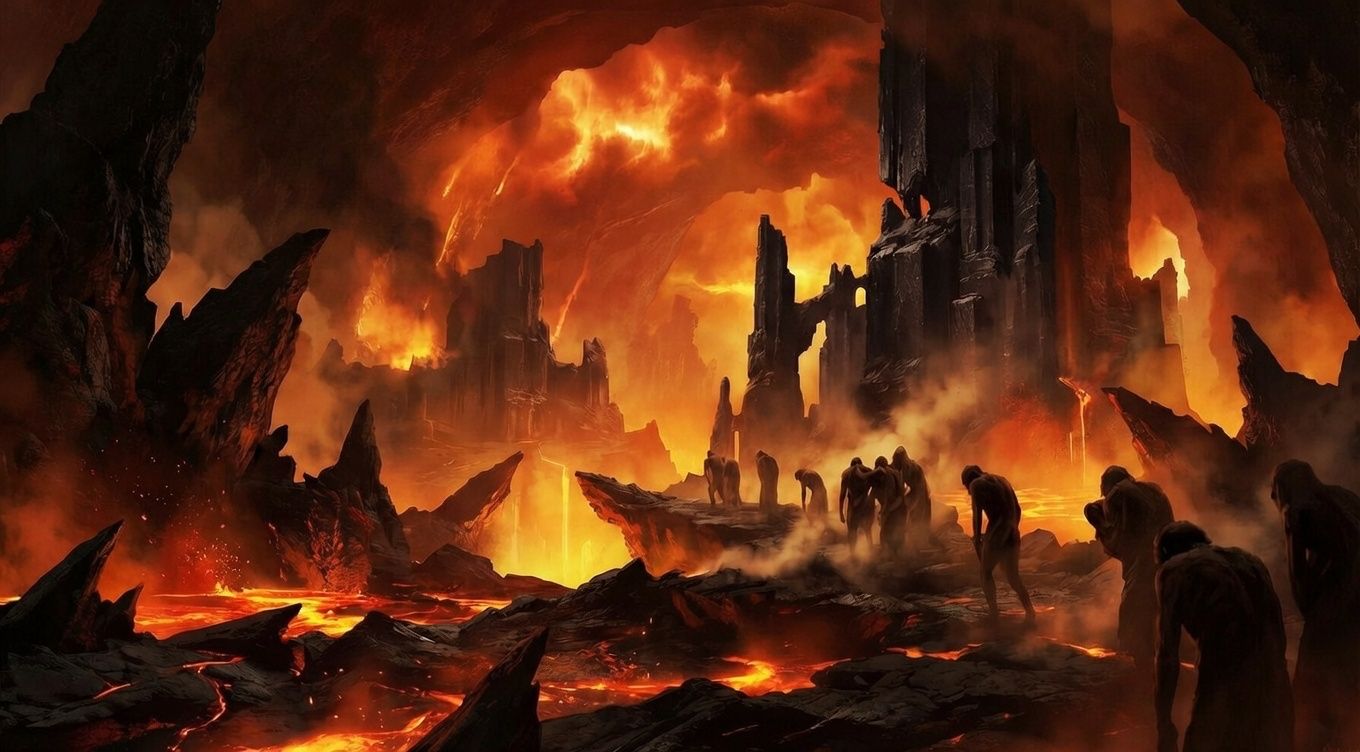
On the surface, hell is described with images of blazing fire, freezing cold, iron walls, sharp weapons, and relentless punishment. These images are not intended to terrify for their own sake, but to symbolize profound psychological and karmic realities. Intense anger burns like fire; deep despair and indifference freeze like ice; endless craving and attachment bind like iron chains. Such suffering is not imposed by an external judge, but arises naturally from repeated mental habits and actions.
The most profound warning of the hell realm lies in the principle of inescapable responsibility. There is no substitution, no chance escape, and no one else who can bear the consequences on one’s behalf. Every thought and every decision leaves an imprint on consciousness, eventually ripening into corresponding results. A person who indulges in hatred may already live in a personal hell while still in the human world. When anger erupts, reason collapses, relationships are destroyed, and the self is consumed. This is the hell realm manifested in the present life.
Moreover, the hell realm does not only concern overt violence or cruelty; it also addresses numbness and moral indifference. When one habitually ignores the suffering of others, turns away from injustice, and silences one’s conscience, this inner deadness itself becomes the prelude to hell. Buddhism warns not only against obvious wrongdoing, but against persistent ignorance—a state of disrespect for causality and disregard for the value of life.
Yet the teaching of the hell realm is not a sentence of despair; it is an expression of deep compassion. Because karma is created by the mind, hell is not eternal or unchangeable. When mental patterns shift, the current of karma can change direction. To notice anger as it arises and refrain from acting upon it, to recognize craving without being dragged by it, to acknowledge ignorance and choose reflection and learning—these subtle yet genuine turns are already steps away from the path to hell.
Thus, the true meaning of the hell realm lies not in describing the extremity of suffering, but in urging mindful and responsible living. It reminds us that every choice between wholesome and unwholesome intentions shapes the road ahead, and every moment of restraint or indulgence defines the direction of life. Understanding the hell realm is not about fearing death, but about valuing the present moment in which transformation is still possible.
When compassion is used to counter hatred, contentment to counter greed, and wisdom to counter delusion, hell ceases to be a predetermined destination and becomes a mirror of warning. It is precisely this mirror that restrains heedlessness, awakens moral awareness, and grants life the possibility of turning from darkness toward light.