Date: 12/13/2025 12/14/2025
Location: Star Lake Meditation Center
Teacher: Shilin Long
Dharma Talk
Tree Deity Saves the Brahmins
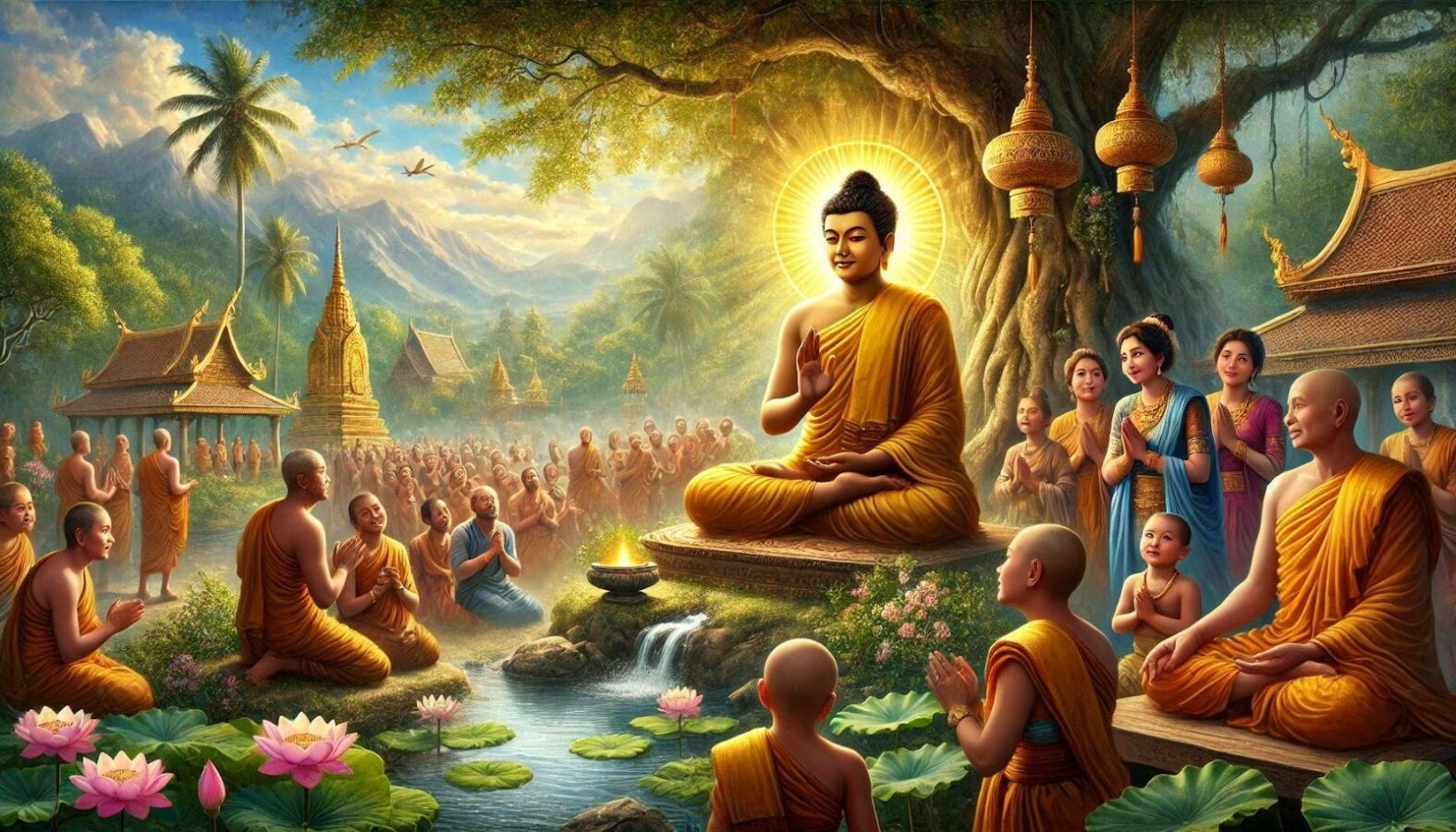
In the past, when the Buddha was staying at Jetavana Monastery in the city of Śrāvastī, he was teaching the Dharma to devas, nāgas, ghosts, and various beings. At that time, to the east of Śrāvastī, there was a country named Uttarapathī. Within that country, five hundred Brahmins wished to seek methods for becoming immortals and agreed to travel together to the Three-Shrine Sacred Pond on the bank of the Ganges River, where they would bathe to cleanse defilements and practice austerities in the nude, just like the Nigaṇṭha ascetics, hoping that by remaining naked they would be saved by heavenly sages.
On the way, the five hundred Brahmins passed through a vast and boundless marsh. They saw only misty water vapor and thick white fog and, unable to distinguish east from west, became lost. Their provisions were nearly exhausted, and in the distance they saw a great tree beside the marsh. The tree looked extraordinary, and they guessed that someone must live nearby, so they quickly ran toward it—only to find no one there. The Brahmins were filled with fear, deeply afraid that they would all die in this desolate marsh from hunger and thirst, so they burst into loud crying. Their sorrowful cries startled the tree deity, who then manifested and asked with concern: “Where have you come from? Where are you going? Why are you so distressed?”
The Brahmins replied, “We originally intended to go to the sacred pond on the bank of the Ganges to bathe and cultivate the path of immortals, but unexpectedly we lost our way here. Now we are hungry and thirsty. We beg you to take pity on us and save us!”
Upon hearing this, compassion arose naturally in the tree deity’s heart. He immediately raised his hand, and from his palm flowed forth various delicious foods. The five hundred Brahmins received the wondrous food and were delighted; everyone ate their fill, and the leftover food could also be stored as provisions for the rest of their journey.
Having recovered their strength, the Brahmins prepared to depart again. Before leaving, they gratefully asked the tree deity: “By what merit have you obtained such great divine powers?”
The tree deity, knowing his past-life causes, replied with emotion: “In a past life, I was a resident of Śrāvastī. In that country there was a wealthy, virtuous elder named Sudatta, who was fond of doing good and enjoyed giving. One day, Elder Sudatta personally went to the market to select the finest dairy products to prepare food to offer the Tathāgata and the Saṅgha. Because the goods were too many to carry, I happened to be nearby, and the elder asked me to help carry the dairy. Because of this karmic condition, I followed him to Jetavana Monastery to offer food to the Buddha and the monks. During the ceremony, I helped distribute rice, soup, and vegetables in proper order. After the meal, I stayed with the assembly and listened to the Buddha’s teachings.
At that time, the Buddha expounded the supreme merits of the Eight Precept Day (Uposatha). Everyone rejoiced and vowed to uphold it. After returning home, I kept the Eight Precepts and did not eat after noon. My wife, however, became suspicious and asked, ‘Are you dissatisfied with me and therefore not eating?’ I explained to her, ‘Today I went with Elder Sudatta to the monastery to offer food to the Tathāgata. I vowed to keep the Eight Precepts and must not eat after noon.’ After hearing this, my wife became angry and scolded, ‘This Gautama speaks nonsense and confuses people’s minds! Why must you follow his discipline? If you listen to him, disaster will eventually come upon you!’ Under her pressure, I was forced to break the precepts and eat.
Unexpectedly, that very night was the time of my death. After dying, I was reborn here as a tree deity. Because of the merit from carrying dairy goods and offering to the Saṅgha, I received this blessing of producing food from my hand. If at that time I had not followed my wife’s words and had kept the Eight Precepts until the final moment, I would have been reborn in the heavens and enjoyed limitless happiness.”
After speaking, the tree deity recited a verse for the Brahmins:
“Sacrificial rites sow the roots of calamity,
Day and night their branches grow.
They bring suffering and destroy one’s life,
But the Dharma of the Uposatha leads beings across, like immortals.”
After hearing this verse, the five hundred Brahmins’ doubts disappeared, and they gave rise to deep faith. They then set out to find Elder Sudatta in Śrāvastī. On the way, they passed through the country of Koliyan and encountered a wealthy elder named Beautiful Voice (Meiyin). Elder Beautiful Voice deeply respected practitioners, was kind and generous, and invited the Brahmins to stay at his home for the night. He asked, “Where have you come from? Where are you going?” The Brahmins truthfully recounted their experience of getting lost in the marsh and being rescued by the tree deity. They also said that they were going to Śrāvastī to seek Elder Sudatta and hoped to uphold the Eight Precepts and obtain blessings.
Upon hearing this, Elder Beautiful Voice rejoiced. Because his past-life roots of goodness were being stirred and because he now understood the merit of the Eight Precepts, he immediately told his relatives and clansmen: “I shall now seek blessings together with these Brahmins. Who wishes to join me?” As a result, five hundred people agreed, prepared themselves respectfully, and left the country together.
The large assembly entered Śrāvastī. As they walked, they passed a compassionate-looking, dignified elder. The Brahmins asked his attendant, “Who is this elder?” The attendant replied, “This is Elder Sudatta.” The group was overjoyed to have found him and hurried forward to recount the events involving the tree deity and asked the elder to teach them how to uphold the Eight Precepts.
Elder Sudatta was also delighted and said to them: “I have a venerable teacher named the Tathāgata, who possesses great wisdom and compassion, saving all beings. He is currently residing in Jetavana Monastery. We can go together to pay respects to the Buddha!” Everyone agreed respectfully and proceeded solemnly to the monastery.
When they arrived and saw the Buddha’s majestic physical marks from afar, they were filled with boundless joy. They knelt respectfully and stated their intention: “O Buddha, we left our homes intending to bathe at the Three-Shrine Sacred Pond on the Ganges to seek the immortal way, but we became lost and were rescued by the tree deity. Because of this, we heard about his past-life causes and the merit of keeping the precepts. Today, we come to take refuge under the Buddha and request instruction, hoping to find a final path to liberation.”
After hearing their words, the World-Honored One spoke this verse according to their circumstances:
“Though one cuts off hair,
Wears bark garments,
Bathes and sits on rocks,
Still doubt knots bind.
Neither killing nor burning,
Nor seeking victory—
With kindness for the world,
Wherever one goes, no resentment follows.”
After hearing this verse, the five hundred Brahmins were filled with great joy, and they all resolved to renounce the household life and practice. All of them attained the fruit of Arhatship. Elder Beautiful Voice and his relatives also attained the Dharma-eye.
The monks, seeing this extraordinary event, asked the Buddha about the past-life causes. The Buddha replied: “Long ago, during the time of Kassapa Buddha, that Buddha explained to his disciples the nature of the Five Defilements. At that time, more than a thousand Brahmins and lay elders made a vow together: ‘May we in the future encounter Śākyamuni Buddha!’ The Brahmins of that time are the five hundred Brahmins of today, and the elder of that time is Elder Beautiful Voice. Because of these karmic conditions, upon seeing me today, they attained realization.”
Upon hearing this, everyone rejoiced and faithfully practiced the teachings.