Date: 12/06/2025 12/07/2025
Location: Star Lake Meditation Center
Teacher: Shilin Long
Dharma Talk
The Bhikkhunī Pure White
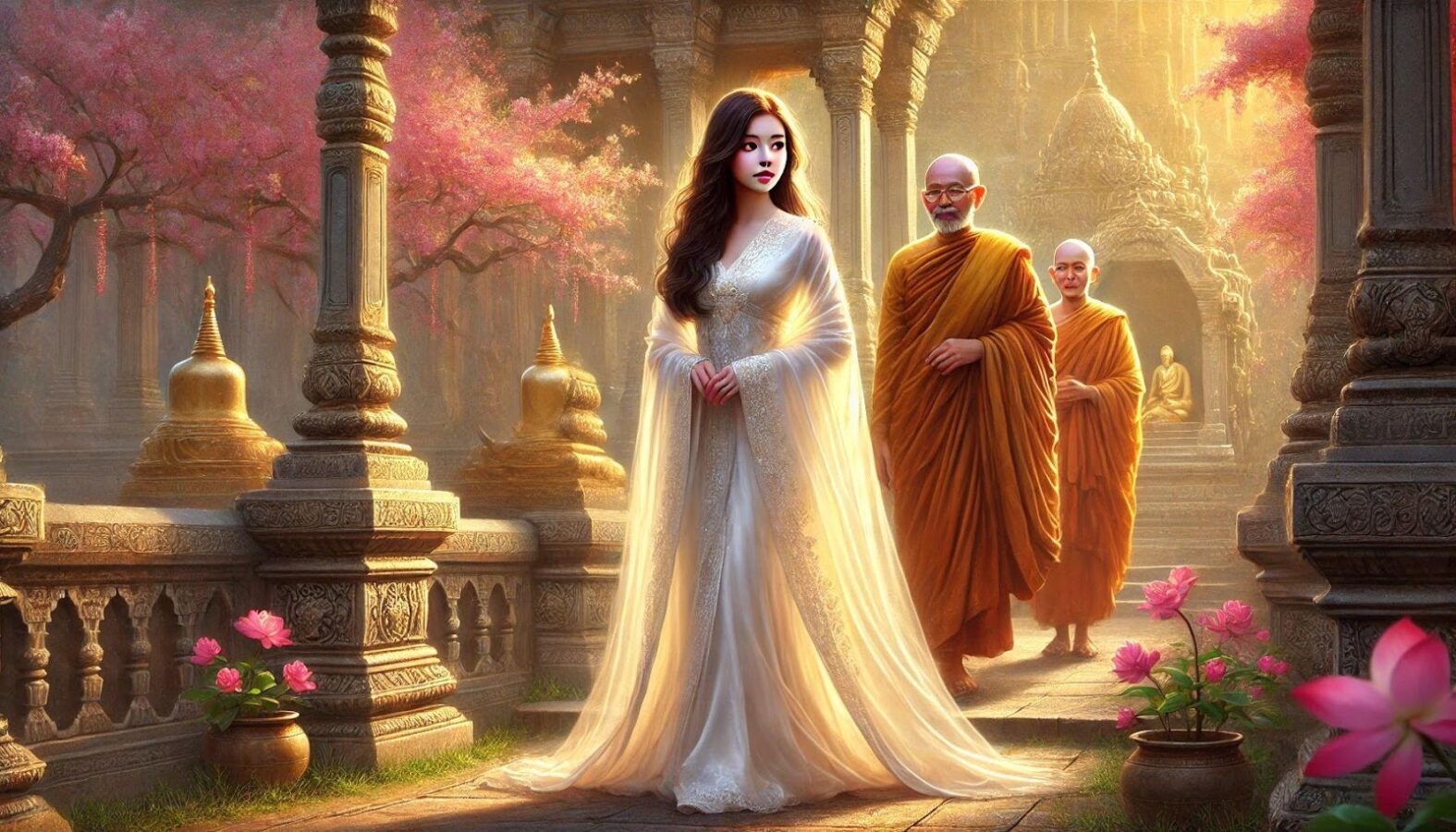
In the era when Śākyamuni Buddha dwelled in the world, there was a wealthy household in the country of Śrāvastī, and they were all lay disciples of the Buddha. The daughter of this rich man was born with a dignified and graceful appearance, and most remarkable of all, she was wrapped in a snow-white, soft, delicate cloth the moment she was born. Therefore, her parents specially named her “Pure White.” As she gradually grew up, this snow-white soft cloth that she was born with also changed along with her, fitting her perfectly.
As time passed, Pure White grew day by day. Not only was her beauty unmatched, but her elegant temperament made many people admire her. Many sons of the elders in Śrāvastī competed to propose marriage, hoping to take Pure White as their wife. Pure White’s parents had long invited craftsmen to make splendid and luxurious ornaments and prepared abundant dowry for her. At this time, Pure White told her parents of her wish to renounce the household life and follow the Buddha to cultivate. Since her parents were already lay followers protecting the Dharma, they knew that becoming a monastic and cultivating was the correct path to leave the three realms and be free from rebirth. Seeing that their beloved daughter had the intention to cultivate free from desire, her parents joyfully gave their blessing, hoping she would soon accomplish the path. They then instructed tailors to make monastic robes for her. Pure White said to her parents, “There is no need to make robes for me; what I am wearing is already sufficient.”
The wealthy elder and his wife brought their daughter to the Buddha and asked the Buddha to allow her to renounce the household life. The compassionate Buddha granted Pure White’s request, saying to her: “Come, O Bhikṣuṇī; your hair shall fall by itself, and the white cloth you wear shall become the five robes.” At once Pure White manifested the dignified appearance of a monastic, and the snow-white soft cloth she wore immediately transformed into monastic robes. The Buddha instructed Bhikṣuṇī Pure White to follow Mahāprajāpatī Bhikṣuṇī and diligently cultivate. Before long, Bhikṣuṇī Pure White attained the fruition of an Arhat.
Within the Saṅgha, many were discussing the extraordinary causes and conditions of Bhikṣuṇī Pure White. One day, the Buddha’s attendant Ānanda respectfully joined his palms and asked the Buddha: “World-Honored One, what causes and conditions led Bhikṣuṇī Pure White to possess such a remarkable appearance at birth, and how was she able to attain the fruit of Arhat so quickly after becoming a monastic? We sincerely ask the Buddha to compassionately explain this for the assembly.”
The Buddha said:
Long, long ago, in the era of the Buddha Vipaśyin, there was a very poor couple. They truly lived in utter poverty, having nothing at all. Everything that could be pawned had already been sold, and only one very old and worn-out blanket remained. During the day, the husband and wife would take turns wrapping themselves in this one blanket to go out and beg for food, while the other hid their body in a pile of dry grass in the corner of the house.
One day, a bhikṣu came to this extremely poor couple’s door carrying his bowl, seeking alms and giving teachings. At that moment, the woman, Dhanikā, came out wrapped in the old blanket. The bhikṣu explained to her the merits of giving and supporting the Three Jewels, and he advised Dhanikā to go to the place where Buddha Vipaśyin was teaching the Dharma, so that she might plant wholesome roots by listening to the Buddha’s teachings.
After hearing the bhikṣu’s teaching, Dhanikā felt both joyful and ashamed, for she did not even have proper clothing to cover herself. How could she go among the assembly to listen to the Buddha’s teaching? The bhikṣu saw her hesitation and compassionately asked the reason. Dhanikā explained the couple’s miserable conditions and asked why they had become so poor. So the bhikṣu taught her about the karmic consequences of stinginess. Upon hearing this, Dhanikā suddenly awakened and returned inside to tell her husband:
“I listened to the teaching of the bhikṣu outside and felt great Dharma joy but also deep shame. The reason we are so impoverished in this life is the karma we created in the past. Therefore, I want to seize the rare opportunity of a Buddha appearing in the world and offer our only blanket to the Buddha.”
Her husband said, “This blanket is our only possession. Without it to cover ourselves, how will we go out to beg for food? Wouldn’t we simply wait for death?”
Dhanikā replied, “Everyone must face death eventually. Even if we keep this blanket and go begging, sooner or later we will still die. We are so poor now because in past lives we disliked giving and were extremely stingy. In this life, we absolutely must not lose the chance to offer to the Buddha, so that in future lives we will no longer suffer such poverty! Rather than continuing to suffer poverty life after life, I would rather die from giving than abandon this chance to change our destiny.” Her husband considered her words. What she said was not unreasonable. Who knew how long such misery would last? This suffering was truly extreme.
Thus, Dhanikā gave their only blanket to the bhikṣu to offer to Buddha Vipaśyin, and she made a vow to hear the Dharma and free herself from afflictions in all future lives. When the bhikṣu brought the blanket before the Buddha, the Buddha personally received Dhanikā’s offering and made a blessing for the couple.
The king, ministers, and the entire assembly listening to the Buddha’s teaching felt puzzled: “Why would the Buddha personally receive such an old and filthy blanket and bestow such profound blessings?” The Buddha knew their thoughts and said: “Although this blanket appears old and dirty, it is the couple’s entire wealth. Other than this blanket, they own nothing. Such sincere offering is the purest and greatest giving.” At that moment, everyone present took off their own clothing and belongings and gave them to the couple.The Dhanikā of the past is the Bhikṣuṇī Pure White of today. Because Dhanikā offered to the Buddha with a sincere and pure heart, for the next ninety-one kalpas she was born each lifetime wrapped in a snow-white soft cloth, and in every life she enjoyed abundant clothing and food. And because she vowed to be free from afflictions and listen to the Dharma, in this life she was able to encounter the Buddha, renounce the household life, truly free herself from afflictions, and attain the fruit of Arhat.