时间:01/13/2024 01/14/2024
地点:星湖禅修中心
主讲:Lucy Zhou
佛法修行
圣者的恬静淡泊性格
佛陀晚年,已经有为数不少的僧众,跟随着佛陀修学。
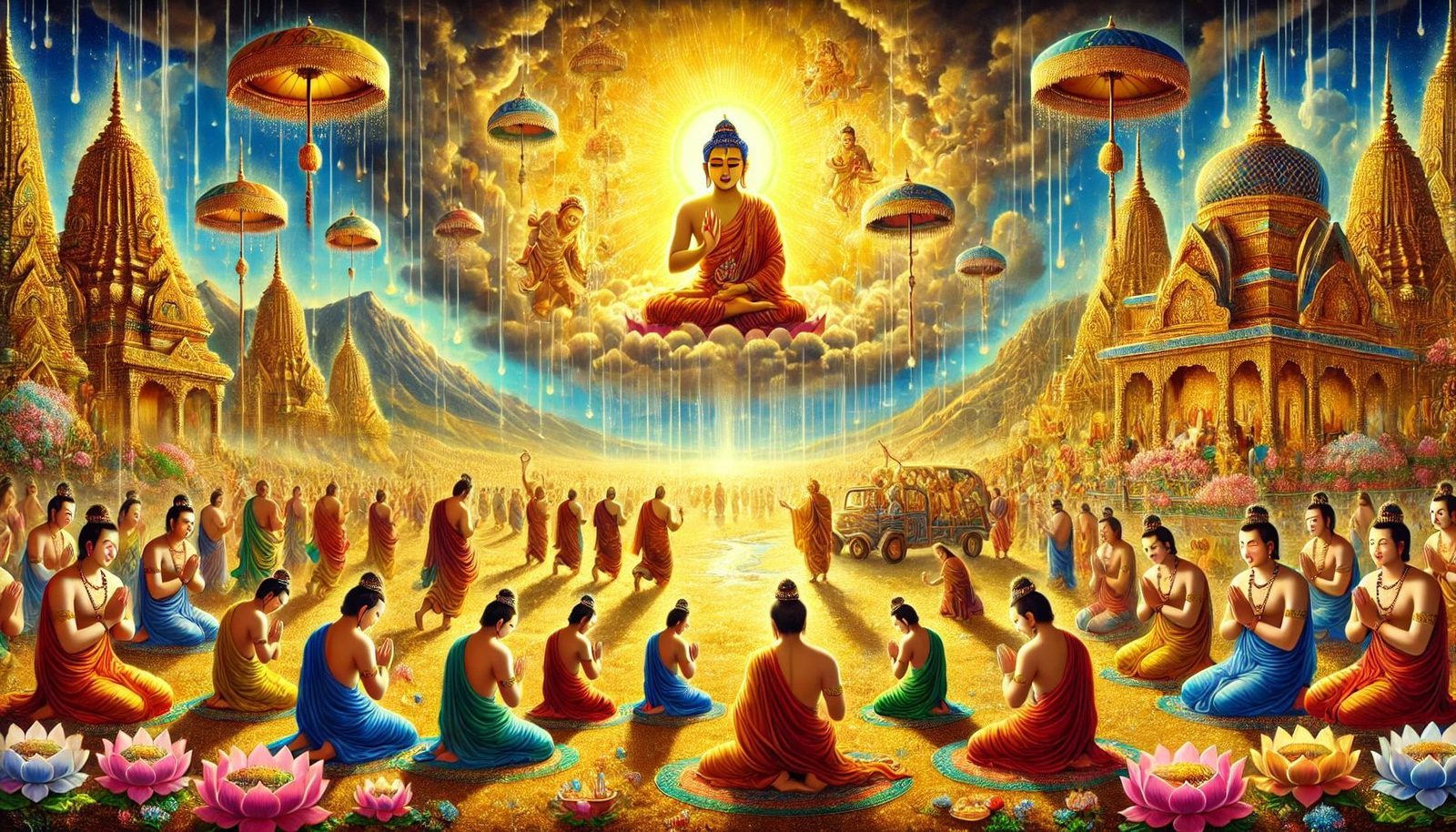
有一次,大约有僧众二千五百人跟随着佛陀,住在摩揭陀国首府王舍城,名医耆婆的庵婆罗园中。
一个月圆夜晚,摩揭陀国阿阇世王与宫女眷属、将相群臣们,正在宫中聚会。阿阇世王一时兴起,点名皇后、太子与群臣,要他们说说看,在这样美好的月圆夜里,应当做什么好。
皇后提议,来欣赏宫女们跳舞欢唱。
太子优陀耶提议,应与将士们共谋如何讨伐不顺服的邻国。
接着有六位大臣,分别起来介绍当时有名的沙门六师,以及他们的思想,建议国王去听他们说法。
对这些提议,阿阇世王都没反应。
最后,名医耆婆告诉国王,佛陀与二千五百位僧众,正住在他的庵婆罗园里,建议国王前往拜见。
阿阇世王一听到去见佛陀,心动了,接受了耆婆的建言。
国王的大队人马,浩浩荡荡地接近了耆婆的庵婆罗园。突然,阿阇世王惊恐万分地停下来,环顾四周,质问耆婆道:
「我忠诚的耆婆啊!莫非你要谋害我?莫非你敢欺骗我?我忠诚的耆婆啊!莫非这是你引我入敌营的圈套?否则,哪有一个二千五百人的僧众住处,没有任何声响,连个打喷嚏、咳嗽的声音都没有,怎么可能!」
「大王!我不敢欺骗您,也没有通敌设计陷害您,那是这些修行沙门的常态。他们常乐闲静,所以没有声响,请国王放心前进,前面就到了。」
国王来到了庵婆罗园外,下车步行入园内,洗脚,进入讲堂,默默地环顾寂静的四周,满心欢喜,自言自语地说:
「这么多沙门寂然静默,止观具足!但愿我太子优陀耶也能修到这样的成就。」
于是,阿阇世王向前礼敬了佛陀,然后提出他对沙门六师每一派思想中,有关于业报说法的疑惑。原来,阿阇世王对自己弒父夺取王位的行为,始终忐忑不安,不知道以后会有什么业报。
经过佛陀详细的解说,阿阇世王清楚了,终于对他的恶行,再三地在佛前忏悔,也得到佛陀的安慰。此时,阿阇世王对佛陀完全信服了,放下一国之尊的身段,顶礼佛陀,然后安静地坐在一旁,听闻佛陀的教导。
佛陀说法告一段落后,阿阇世王于佛前自说,即日起皈依佛、皈依法、皈依僧,终生遵守五戒,成为一位在家佛弟子。
有一次,佛陀在憍萨罗国境内游化。
这一天,佛陀一行人来到一个叫伊奢能伽罗的婆罗门村落,当晚就在村外的树园中过夜。
隔天,村里许多人知道了佛陀的住处,纷纷慕名前来。
他们各自准备了许多食物,来到佛陀所住的树园外,争先恐后地抢着第一个供养佛陀和随行的僧团。因为互不相让而大声争执,使得树园附近一片吵杂。
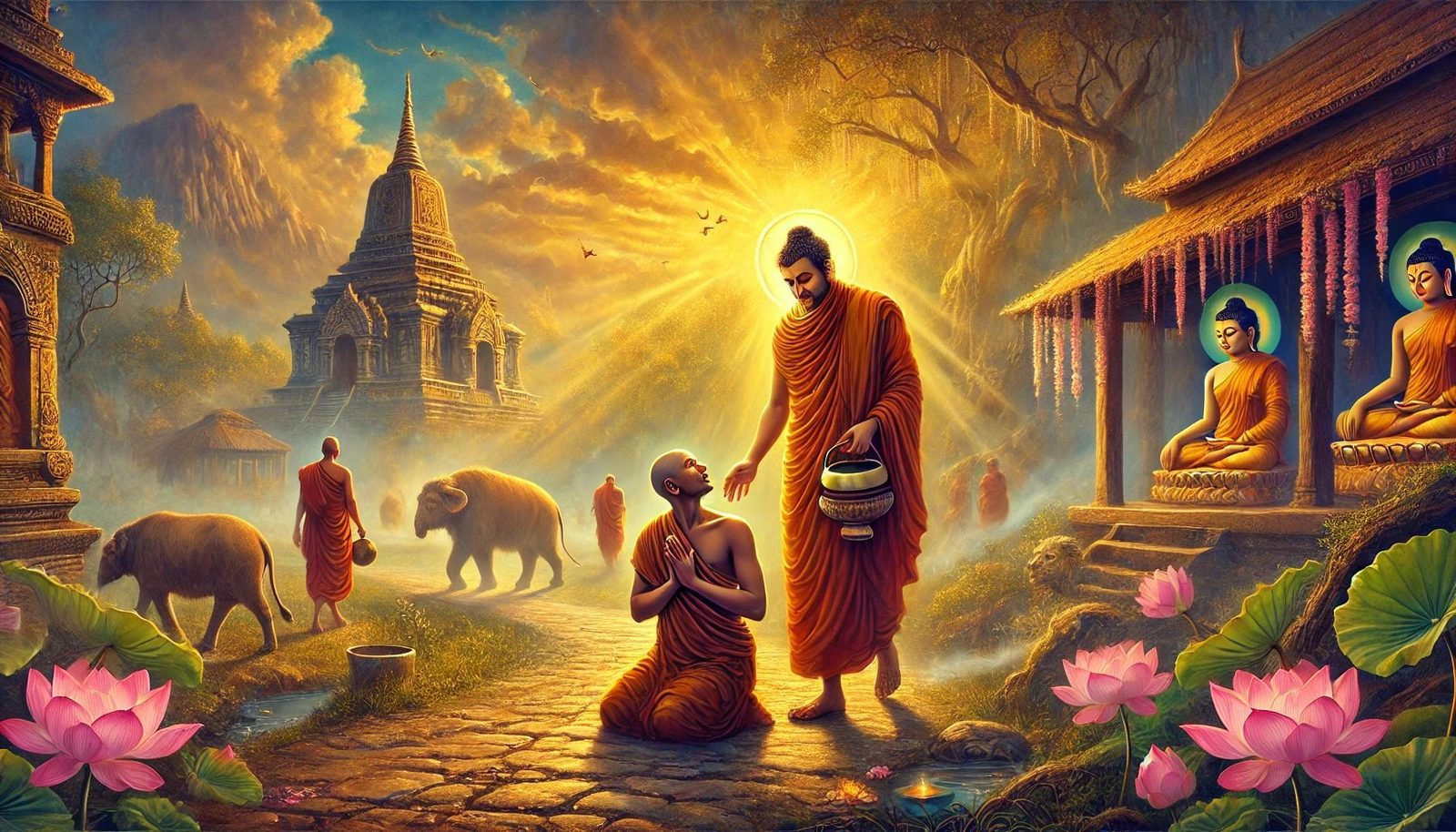
听到了这样的吵杂声,佛陀问侍者那提迦尊者:
「为什么外面有那么多人高声喧嚷?好像渔夫争相捕鱼时的吆喝。」
「世尊!外面来了许多村里的王族与婆罗门长者,他们正吵着由谁先供养世尊。」尊者那提迦回答。
「我不求名闻利养,不必给我名闻利养。那提迦!我已随时充满着出离、远离、寂静、正觉之乐,不必求就毫无困难地自然流露,我怎么还会需要名闻利养之乐呢?你们还没办法做到这样,天界众神也没办法做到,才会好于名闻利养之乐的追求!」
「世尊!且接受他们的供养吧,世尊!现在正是时候。世尊!您所到之处,不论在繁华的都市,还是在偏远的乡下地方,都有人们为您而来。世尊!这就像天空的乌云,随着密集而下雨,雨水随即流向低处一样。为什么呢?因为世尊有清净戒德、无上智慧的缘故。」
佛陀再次表示了不需要名闻利养,不需要这么多人供养饮食,并且对那提迦尊者说:
「那提迦!我看到此处有两位比丘,因为有太多美食供养了,吃得腹满气喘,连走路都困难。那提迦!我还看到许多比丘有了美食供养后,四处游荡,着于聚会之乐。像这类的长老比丘,是不能自然涌现出离、远离、寂静、正觉之乐的。
那提迦!污秽不净的大小便,是从美好饮食来的;忧、悲、恼、苦、愁,是从对于饮食等种种的贪爱而来的;勤于大小便等不净观的修习,就会对饮食等所认为美妙的种种,生起厌离心;善于观察爱染五蕴的生灭、六根认识境界的集灭,就可以生起厌离心;乐于修习远离独处,就可以厌离群聚之乐。
因此,那提迦!应当学习于爱染五蕴,观察其生灭无常;于六根认识境界时,观察其因缘的聚散变化;应当乐于远离,远离人群勤于精进修学,应当这样学!」
Date: 01/13/2024 01/14/2024
Location: Star Lake Meditation Center
Teacher: Lucy Zhou
Dharma talk
The Serene and Unattached Disposition of the Noble Ones
In the later years of the Buddha’s life, a considerable number of monks were already following him in training and practice.
On one occasion, about 2,500 monks were staying with the Buddha in the Kingdom of Magadha, at the capital city Rājagaha, in the mango grove of the renowned physician Jīvaka.
On a full-moon night, King Ajātasattu of Magadha was holding a gathering in his palace with his queens, royal attendants, ministers, and generals. Moved by the occasion, King Ajātasattu asked the queen, the crown prince, and the ministers what they thought would be appropriate to do on such a beautiful full-moon night.
The queen suggested enjoying music and dance performed by the palace attendants.
The crown prince Udayabhadda suggested discussing military strategies with the generals for subduing neighboring states that were not obedient.
Then six ministers rose in turn, each introducing one of the six famous non-Buddhist teachers of the time and their respective doctrines, suggesting that the king go and listen to their teachings.
To all of these proposals, King Ajātasattu gave no response.
Finally, the physician Jīvaka informed the king that the Buddha and 2,500 monks were residing in his mango grove and suggested that the king go to pay them a visit.
Upon hearing the Buddha’s name, King Ajātasattu was stirred and accepted Jīvaka’s advice.
The king’s large retinue advanced in great numbers toward Jīvaka’s mango grove. Suddenly, King Ajātasattu stopped in great alarm, looked around, and questioned Jīvaka anxiously:
“My loyal Jīvaka! Are you plotting to kill me? Have you deceived me? My loyal Jīvaka! Is this a trap to lure me into an enemy ambush? Otherwise, how could a place where 2,500 monks are staying be completely silent—not even the sound of a sneeze or a cough? How could this be possible?”
“Great King,” Jīvaka replied, “I would never deceive you, nor have I colluded with enemies to harm you. This is simply the normal state of these ascetic practitioners. They delight in quietude, and so there is no noise. Please proceed without fear—the destination is just ahead.”
The king arrived outside the mango grove, dismounted, entered on foot, washed his feet, and went into the assembly hall. As he silently surveyed the surroundings, filled with joy, he said to himself:
“So many ascetics, dwelling in stillness and silence, with calm and insight fully established! May my son, Prince Udaya, one day attain such an accomplishment.”
King Ajātasattu then stepped forward, paid homage to the Buddha, and raised his doubts regarding the teachings on karmic results found among the doctrines of the six non-Buddhist teachers. In truth, King Ajātasattu had long been uneasy about the grave act of killing his father and seizing the throne, uncertain of the karmic consequences that might await him.
After the Buddha explained the matter in detail, the king gained clarity. He repeatedly confessed his wrongdoing before the Buddha and received the Buddha’s consolation. At that moment, King Ajātasattu became completely convinced of the Buddha’s teaching. Letting go of the pride of kingship, he bowed deeply before the Buddha and then sat quietly to one side, listening to the Buddha’s instruction.
When the Buddha had finished teaching, King Ajātasattu declared before him that from that day onward he would take refuge in the Buddha, the Dharma, and the Saṅgha, observe the Five Precepts for the rest of his life, and become a lay disciple of the Buddha.
On another occasion, the Buddha was traveling within the Kingdom of Kosala.
That day, the Buddha and his followers arrived at a Brahmin village called Icchānaṅgala and spent the night in a grove of trees outside the village.
The next day, many villagers learned of the Buddha’s presence and came eagerly to see him.
Each brought abundant food, crowding outside the grove where the Buddha was staying, all vying to be the first to make offerings to the Buddha and the accompanying Saṅgha. Because none would yield to the others, loud arguments broke out, and the area around the grove became noisy and chaotic.
Hearing the commotion, the Buddha asked his attendant, Venerable Nāgita:
“Why are there so many people outside shouting loudly? It sounds like fishermen calling out while competing to catch fish.”
“Blessed One,” Venerable Nāgita replied, “many members of the local royal families and Brahmin elders have come. They are arguing over who should be the first to offer alms to the Blessed One.”
“I do not seek fame or material gain; I have no need for fame or material gain,” the Buddha said. “Nāgita, I am constantly filled with the joy of renunciation, seclusion, tranquility, and awakening. It arises naturally, without any effort or pursuit. How could I still need the pleasure of fame and material gain? You yourselves are not yet able to attain this, nor are the gods of the heavens; that is why they delight in the pursuit of fame and material gain.”
“Blessed One, please accept their offerings,” Nāgita urged. “Now is the right time. Blessed One, wherever you go—whether to bustling cities or remote villages—people come for your sake. Blessed One, this is like heavy clouds in the sky that bring rain, and the rain naturally flows downward. Why is this so? Because of the Blessed One’s pure moral virtue and unsurpassed wisdom.”
Once again, the Buddha stated that he did not need fame, material gain, or such abundant offerings of food. He then said to Venerable Nāgita:
“Nāgita, I see here two monks who, because of the abundance of fine food offered to them, have eaten until their bellies are distended and they are gasping for breath, barely able to walk. Nāgita, I also see many monks who, after receiving fine food, wander about indulging in the pleasure of social gatherings. Monks of this kind cannot naturally give rise to the joy of renunciation, seclusion, tranquility, and awakening.
“Nāgita, impure and foul excrement arises from fine food; sorrow, grief, distress, suffering, and lamentation arise from craving for food and other pleasures. When one diligently cultivates contemplation of impurity, such as reflection on excrement, one develops revulsion toward what is regarded as delightful in food and other objects. When one skillfully observes the arising and passing away of the five aggregates affected by craving, and the arising and cessation of cognition through the six sense faculties and their objects, one develops revulsion. When one delights in seclusion and solitary dwelling, one becomes disenchanted with the pleasure of crowds and gatherings.
“Therefore, Nāgita, one should train by observing the five aggregates affected by craving and seeing their arising and passing away as impermanent; by observing, in the activity of the six sense faculties, the coming together and dispersing of conditions; by delighting in seclusion, withdrawing from the crowd, and diligently devoting oneself to practice. One should train in this way.”