时间:01/06/2024 01/07/2024
地点:星湖禅修中心
主讲:Lucy Zhou
佛法修行
如何知道圣者
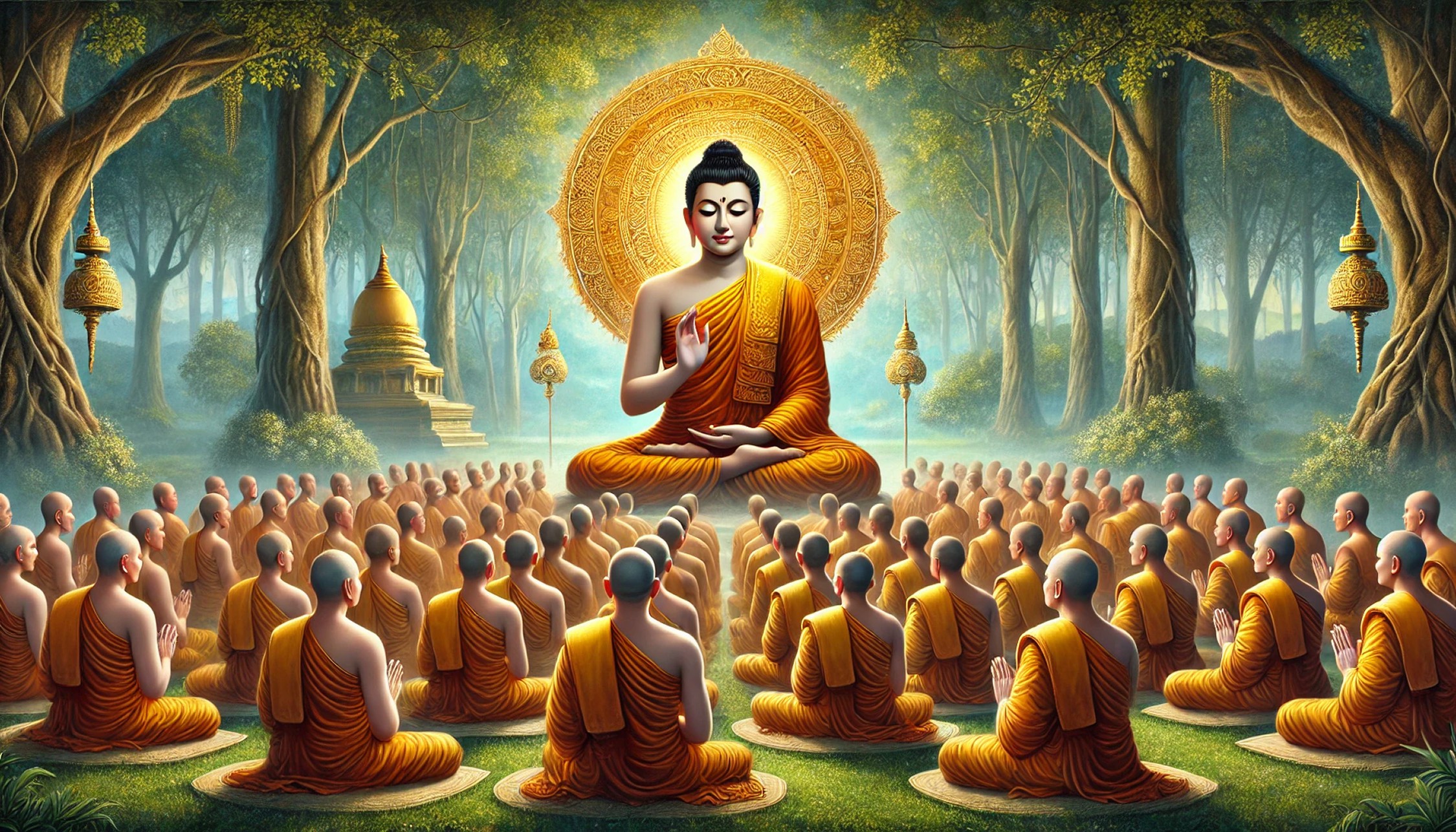
有一次,佛陀在舍卫城南郊的祇树给孤独园对比丘们说:
「比丘们!尚在修学而无他心神通的比丘,如何透过观察验证,知道那已经全然正觉的如来呢?」
「世尊!您的教导,是我们了解法的根源,请为我们说吧!我们当会记住不忘。」
「比丘们!你们可以从眼睛看、耳朵听两方面来观察验证。因为,全然正觉者的言行,
必然无任何污秽;
必然不会时而明净,时而杂染的间杂情形;
必然是一向洁净,而非暂时的洁净;
必然无自满傲慢之类的过失显露,不论是出了名之前或之后;
必然是自然流露正行,而不是因为顾忌、害怕什么才自制;
必然因内心全然断除欲贪而展现离五欲,不论是与僧团共住或独住;
必然不会鄙视嫌弃任何他所教导的学生,不论他修的好不好。
除了眼见、耳闻的观察验证之外,还要再进一步当面询问,以确认以上诸点。
一位全然正觉的如来,面对以上诸点的当面询问,必然会一一予以肯定的回答,因为这些都已经成为如来的风范与特质,虽然如来并不会特别地去展露它。
比丘们!学生应亲近能这样说法的老师:
对法以层层深入来教导;
跟他学习的学生会越来越受人尊敬;
能以善恶对比呈现的完整方式教导;
使学生得以从明确的教导中,生起对正法的现证慧,达成证果,乃至于解脱──如来教导的目标。
这样,学生就能对全然正觉的如来,对如来善巧教导的正法,对僧伽修行的正道生起净信。这样的净信,对别人有关佛、法、僧是否究竟的质疑,能很有自信地给予肯定的回答。
比丘们!任何人只要能根据以上所讲的各点来观察验证,就能坚固地建立对如来的净信,不为其它沙门、婆罗门、天、魔、梵等任何人所动摇。
比丘们!这就是根据法的观察验证,知道他已经是全然正觉的如来。」
Date: 01/06/2024 01/07/2024
Location: Star Lake Meditation Center
Teacher: Lucy Zhou
Dharma talk
How to Recognize a Noble One
On one occasion, while staying at Jeta’s Grove in Anāthapiṇḍika’s Park, located to the south of Śrāvastī, the Buddha addressed the bhikkhus:
“Bhikkhus, how can a bhikkhu who is still in training and does not possess the supernormal power of knowing others’ minds observe and verify that the Tathāgata has already attained complete and perfect awakening?”
The bhikkhus replied:
“Blessed One, your teaching is the source of our understanding of the Dharma. Please explain it for us. We will remember it well and not forget it.”
The Buddha said:
“Bhikkhus, you can observe and verify this through what you see with your eyes and hear with your ears. For the speech and conduct of one who is fully awakened will necessarily have the following characteristics:
They will be completely free from any impurity.
They will never alternate between clarity and defilement, never showing a mixture of purity and contamination.
They will be consistently pure, not merely pure for a time.
They will show no faults such as self-satisfaction or arrogance, whether before fame or after fame.
They will naturally express right conduct, not restraining themselves out of fear or concern for appearances.
Because desire and craving have been completely cut off in the heart, they will manifest freedom from the five sensual pleasures, whether living in community with the Saṅgha or living alone.
They will never look down upon or disdain any student whom they teach, regardless of whether that student practices well or poorly.
In addition to observing and verifying through what is seen and heard, one should further question such a person directly, face to face, in order to confirm these points.
When a Tathāgata who is fully awakened is questioned directly about these matters, he will necessarily affirm them one by one, because these qualities have already become his natural disposition and characteristics—though the Tathāgata does not deliberately display them.
Bhikkhus, students should associate with a teacher who teaches the Dharma in this way:
He teaches the Dharma progressively, leading step by step into deeper levels.
Those who study under him become increasingly respected by others.
He teaches by clearly presenting good and evil in contrast, in a complete and balanced manner.
He enables students, through clear instruction, to give rise to direct experiential wisdom of the true Dharma, to attain realization, fruition, and ultimately liberation—the very goal of the Tathāgata’s teaching.
In this way, students can give rise to pure and confident faith in the fully awakened Tathāgata, in the true Dharma skillfully taught by the Tathāgata, and in the correct path of practice of the Saṅgha. With such pure faith, when others question whether the Buddha, the Dharma, and the Saṅgha are ultimate and complete, they can answer with confidence and certainty.
Bhikkhus, anyone who is able to observe and verify according to the points explained above can firmly establish pure faith in the Tathāgata, a faith that will not be shaken by any other ascetics, brahmins, devas, Māra, or Brahmā.
Bhikkhus, this is how, through observation and verification based on the Dharma, one knows that someone has already attained complete and perfect awakening as a Tathāgata.”