时间:12/30/2023 12/31/2023
地点:星湖禅修中心
主讲:Lucy Zhou
佛法修行
能成就无量福报的教诫教化
有一次,佛陀来到了憍萨罗国的首都舍卫城游化,住在城南郊外的祇树给孤独园。
这天,一位名叫「伤歌逻摩纳」的婆罗门来拜访佛陀,对佛陀说:
「瞿昙大师!我们婆罗门自己从事献供祭祀,也教人家献供祭祀,这样,大家一起祭祀,一同得福。因为有无数的大众,都能一起从祭祀中得福,所以,祭祀是一种得福无量的行为。然而,尊者瞿昙!不论原来是哪一种种族的人,一旦出了家成为沙门,就只是在调伏自己、安顿自己,让自己一个人得到成就而已,所以,沙门出家只是为了个人之福的行为。」
「婆罗门!你虽然这么认为,但是,且让我问你一件事:如来为人宣说证悟涅槃的修行方法,劝勉他人也同样地来修学、同样地证悟,这样为他人说法,他人再为他人说法,一传十,十传百,百传千的辗转传播开来,让许多人也能得以修学成就,婆罗门!你对这样的事实怎么说呢?你想想看,像这样的出家修行,只是成就一己之福呢?还是造就许多人无量福报的行为呢?」
「瞿昙大师!如果是这样,那出家修行,应该也是造就无量之福的行为。」
这时,在一旁执拂尘侍佛的尊者阿难,接下去问难伤歌逻婆罗门:
「婆罗门!那献供祭祀与出家修行这两种行为,你认为哪一种比较好呢?」
被尊者阿难这么直接一问,伤歌逻婆罗门一时之间,竟难以回答,只能答非所问的说,佛陀与尊者阿难都是他所推崇、所赞叹的人。
尊者阿难当然不接受这样的答案,就又继续追问。
但任凭尊者阿难再三的追问,伤歌逻婆罗门依然答非所问。
最后,还是佛陀出面为他解围,引导伤歌逻婆罗门一面思考、一面回答。佛陀问伤歌逻婆罗门说:
「婆罗门!最近国王在王宫所召集的会议里,大家都谈些什么呢?」
「瞿昙大师!最近大家谈到,以前比丘人数较少,沙门瞿昙制订的戒律也不多,却有许多能展现神通的比丘,现在比丘人数增多了,沙门瞿昙所制订的戒律也增多了,反而能展现神通的比丘少了。瞿昙大师!这就是最近王宫集会中,大家的话题。」
「婆罗门!神通有三种:一是神足神通,二是他心神通,三是教诫神通。……(原文对三种神通的解说内容,与〈拒绝利用神通传教的佛陀〉里所摘录的相近,此略)婆罗门!你认为这三种神通中,哪一种是最殊胜奥妙的呢?」
「瞿昙大师!这三种神通中,神足神通、他心神通,都是修得的人自己受用,对我这种不会那些神通的人来说,感觉起来就和幻术的性质差不多,而教诫神通明确地教导人们应当这么做,不应当那么做,这是我所能理解与接受的,而且,教诫神通能辗转传授,造福许多人,所以,瞿昙大师!这是三种神通中,最殊胜奥妙的一种了。」
讲到这里,伤歌逻婆罗门完全放下最初对佛陀与出家众的轻蔑态度,以及无法面对尊者阿难问难的浑沌,转而明确地肯定佛陀具有三种神通的能力,信受佛陀鼓励人们「应当成就这三种神通」的教说,也就是说,间接地肯定了出家修行是优于祭祀的。
于是,伤歌逻婆罗门诚心地赞叹佛陀对他这番善巧的引导与开示,进而恭敬地对佛陀说,从即日起,终生皈依佛、法、僧,为在家佛弟子。
Date: 12/30/2023 12/31/2023
Location: Star Lake Meditation Center
Teacher: Lucy Zhou
Dharma talk
Teachings and Guidance That Can Accomplish Immeasurable Merit
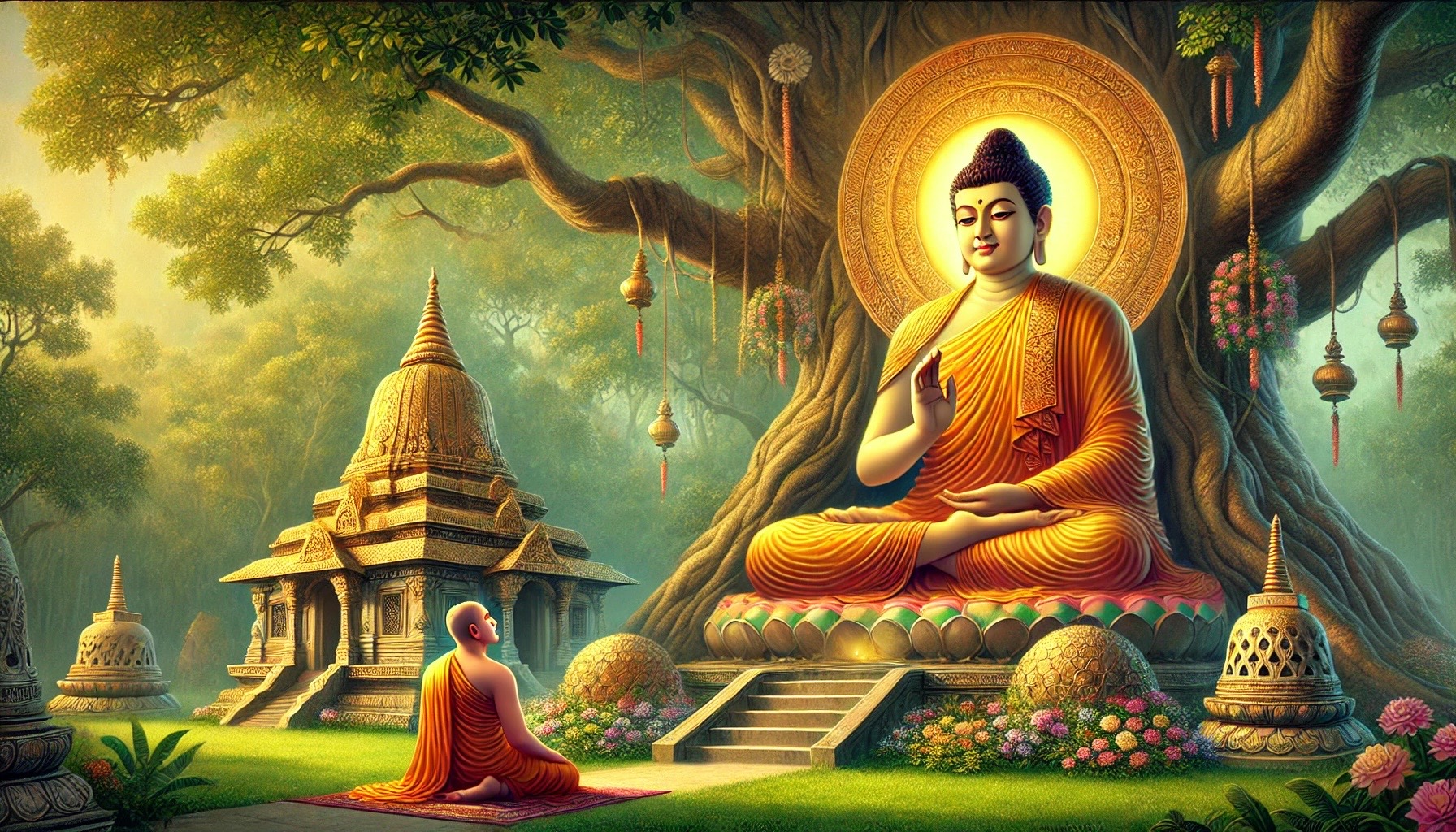
Once, the Buddha was traveling in the Kingdom of Kosala and came to its capital, Śrāvastī. He was staying at Jeta’s Grove in Anāthapiṇḍika’s Park, located to the south of the city.
On that day, a Brahmin named Saṅgārava came to visit the Buddha and said to him:
“Master Gotama! We Brahmins perform sacrificial offerings ourselves and also teach others to perform them. In this way, everyone participates in the sacrifices and all obtain merit together. Because countless people can gain merit from these sacrifices, sacrificial rites are actions that produce immeasurable merit. However, Venerable Gotama, no matter what caste a person originally belongs to, once he leaves home and becomes a śramaṇa, he only disciplines and settles himself, achieving attainment for himself alone. Therefore, the life of a renunciant is merely an action that brings benefit to oneself.”
“Brahmin,” replied the Buddha, “although you think in this way, let me ask you something. The Tathāgata teaches others the path of practice that leads to the realization of nirvāṇa, encouraging them to cultivate it and to attain realization themselves. Those who have learned then teach others in turn—one transmits to ten, ten to a hundred, a hundred to a thousand—so that the teaching spreads successively and many people are able to cultivate and attain realization. Brahmin, what do you say to this fact? Consider it carefully: is such renunciant practice merely the accomplishment of one person’s merit, or is it an action that brings immeasurable merit to many people?”
“Master Gotama, if that is so, then renunciant practice should indeed be an action that brings immeasurable merit.”
At that moment, Venerable Ānanda, who was standing beside the Buddha holding a fly-whisk, continued by questioning Saṅgārava the Brahmin:
“Brahmin, between sacrificial offerings and renunciant practice, which do you think is better?”
When Venerable Ānanda asked him so directly, Saṅgārava the Brahmin was momentarily unable to answer. He could only evade the question by saying that both the Buddha and Venerable Ānanda were people he admired and praised.
Naturally, Venerable Ānanda did not accept such an answer and continued to press him with further questions.
Yet no matter how many times Venerable Ānanda questioned him, Saṅgārava the Brahmin continued to evade the issue.
Finally, the Buddha stepped in to resolve the situation, guiding Saṅgārava the Brahmin to reflect and respond step by step. The Buddha asked him:
“Brahmin, in the recent assemblies convened by the king in the royal palace, what topics have people been discussing?”
“Master Gotama,” he replied, “recently people have been discussing this: in the past, when there were fewer bhikkhus, the precepts established by the śramaṇa Gotama were few, yet there were many bhikkhus who could display supernormal powers. Now, although the number of bhikkhus has increased and the precepts established by the śramaṇa Gotama have also increased, those who can display supernormal powers have become fewer. Master Gotama, this is the topic people have been discussing in the recent palace assemblies.”
“Brahmin,” said the Buddha, “there are three kinds of supernormal powers. One is the supernormal power of miraculous feats, the second is the supernormal power of knowing the minds of others, and the third is the supernormal power of instruction and guidance.”
(The original text here explains the three kinds of supernormal powers in a way similar to that found in The Buddha’s Refusal to Use Supernormal Powers to Spread the Teaching; this explanation is omitted here.)
“Brahmin, among these three kinds of supernormal powers, which do you think is the most supreme and profound?”
“Master Gotama,” answered Saṅgārava, “of these three kinds of supernormal powers, the power of miraculous feats and the power of knowing others’ minds are enjoyed only by those who have cultivated them. For someone like me, who does not possess such powers, they seem much like illusions. But the supernormal power of instruction clearly teaches people what should be done and what should not be done. This is something I can understand and accept. Moreover, the supernormal power of instruction can be transmitted from one person to another and bring benefit to many people. Therefore, Master Gotama, this is the most supreme and profound of the three kinds of supernormal powers.”
At this point, Saṅgārava the Brahmin completely let go of his initial contempt toward the Buddha and the renunciant community, as well as the confusion he had shown when unable to respond to Venerable Ānanda’s questioning. Instead, he clearly affirmed that the Buddha possessed all three kinds of supernormal powers and accepted in faith the Buddha’s teaching that people should “accomplish these three kinds of supernormal powers.” In other words, he indirectly affirmed that renunciant practice is superior to sacrificial rites.
Thus, Saṅgārava the Brahmin sincerely praised the Buddha for his skillful guidance and instruction. He then respectfully said to the Buddha that from that day onward, for the rest of his life, he would take refuge in the Buddha, the Dharma, and the Saṅgha, becoming a lay disciple of the Buddha.