时间:05/09/2026 05/10/2026
地点:星湖禅修中心
主讲:龙示林
佛法修行
佛度梵志
佛陀时代,有一位二十岁的外道青年,天资聪颖、智力超群,不论学习什么,只要看过就能学会。他凭恃这种过人的天赋,发誓要学遍天下所有的技艺,于是他四处寻师访道,无论天文、地理、医术、药方,乃至棋艺、奏乐、裁缝、烹调等等,世间种种技艺无不精通。他心想:「我如此多才多艺,世上应该无人能及!不如前往各地找人较量,来展现我高超的才能,一定能扬名天下、流传百世。」
一天,他来到热闹的市集,发现一处人潮聚集的摊位,走近一看,原来是有人正以敏捷的速度与高超的技艺在制作弓箭,大伙儿都争先想要购买。年轻人心想:「我以为所学已经足够,从没想过要学作弓箭,如果要较量这项技术,必定会败下阵来,所以我应当向他学习才行。」于是,年轻人跟弓箭师傅拜师学艺,每天都用心地研习,没多久便学会制作弓箭的诀窍,技术甚至还超越了老师。学成之后,他以财物礼谢老师的教导,随即又整装出发。
年轻人来到渡口搭船,欲前往另一个国家。航行中,他看到船夫摇橹的技术神妙,船只轻飘河面好似飞行一般,进退之间迅速无比,心里又想:「虽然我拥有许多技艺,却还不会驾驶船只,这种技术虽然不算高尚,但为了不时之需,学起来总是比较稳当。」于是,年轻人跟着船夫学习驾船的方法,没有多久时间,技术就比老师还更胜一筹。离去时,年轻人也以财物馈赠船夫,表示感激之意。
接着,他又来到另一个国家,看到王宫如此富丽堂皇,可谓举世无双,心想:「建造这座宫殿的工匠,技术必然非常巧妙,自我游历各地以来,建筑技术已经生疏,若要较量此一技艺,必然落败。所以我应当重新学习,才能不落人后。」于是年轻人请求殿堂的工匠收他为徒,学习操持各种建筑工具与技巧。天赋异禀的他,很快就知晓尺规量制、木造雕刻等建筑技术,并且还青出于蓝、更胜于蓝。学成后,他将自己所有的财物都送给工匠,表达深深的谢意。
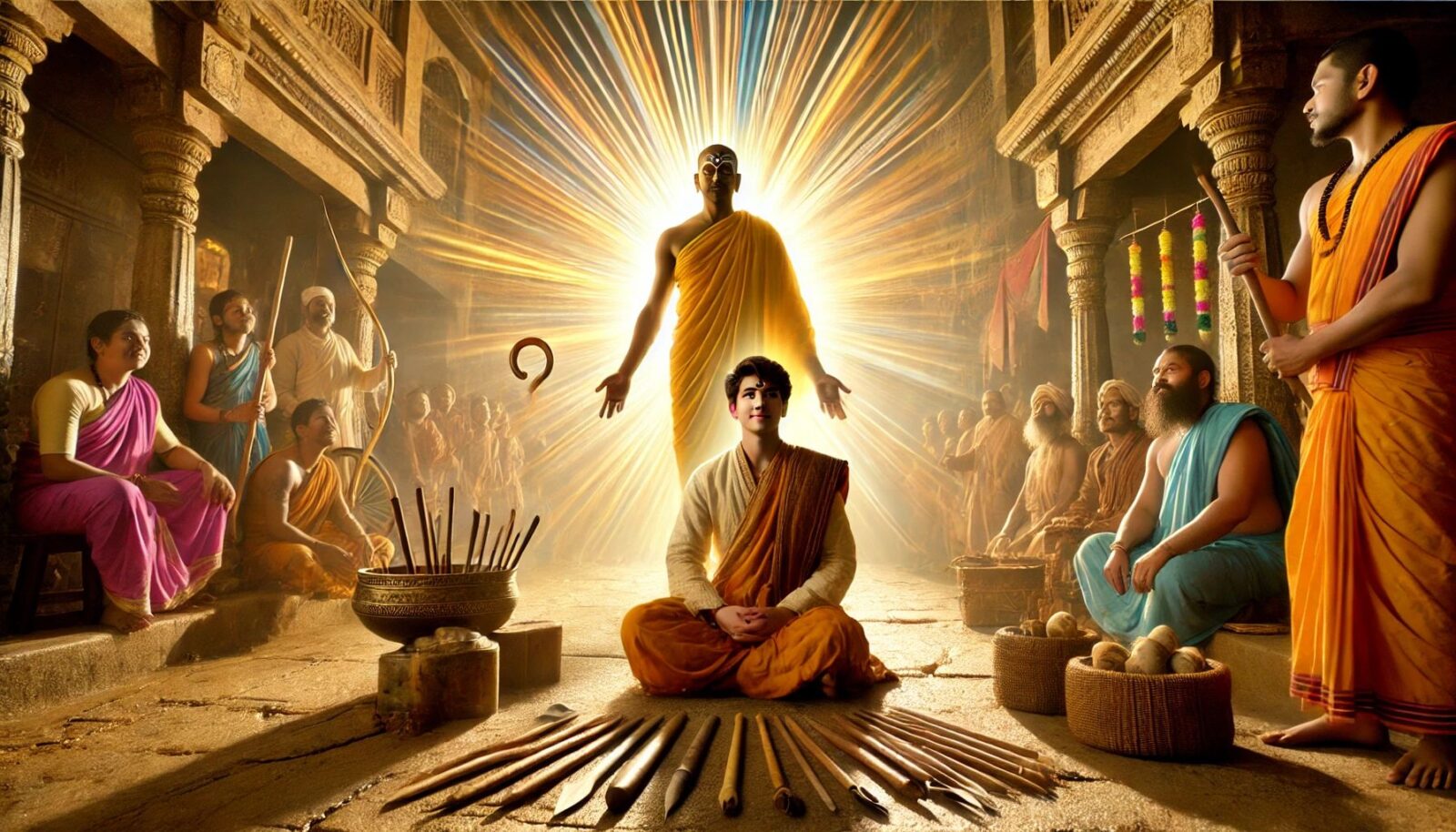
就这样,年轻人的足迹遍及十六个国家,每每展现自己独步天下的技艺后,就没有人敢站出来与之较量。也因为如此,年轻人傲慢的心念愈加炽盛,他心想:「天底下已经没有人能赢过我了。」此时,佛陀在祇园精舍以天眼观看这位年轻人,知道他得度的因缘已经成熟,便运用神通力化现成一位比丘,手持锡杖来到年轻人面前。由于年轻人生长的地方没有佛法,所以当他看到比丘缓缓走近时,好奇地询问:「我从未见过像你这样的人物,也没看过这样的穿著,你手持的东西也不像是宗庙的法器,请问你到底是什么人?为何装扮与常人不同?」比丘回答:「我乃调御自身之人。」青年又问:「什么是调御自身呢?」比丘知道他过去所学种种,便为他说了一首偈子:
弓匠调角 水人调船 巧匠调木 智者调身
譬如厚石 风不能移 智者意重 毁誉不倾
譬如深渊 澄静清明 慧人闻道 心净欢然
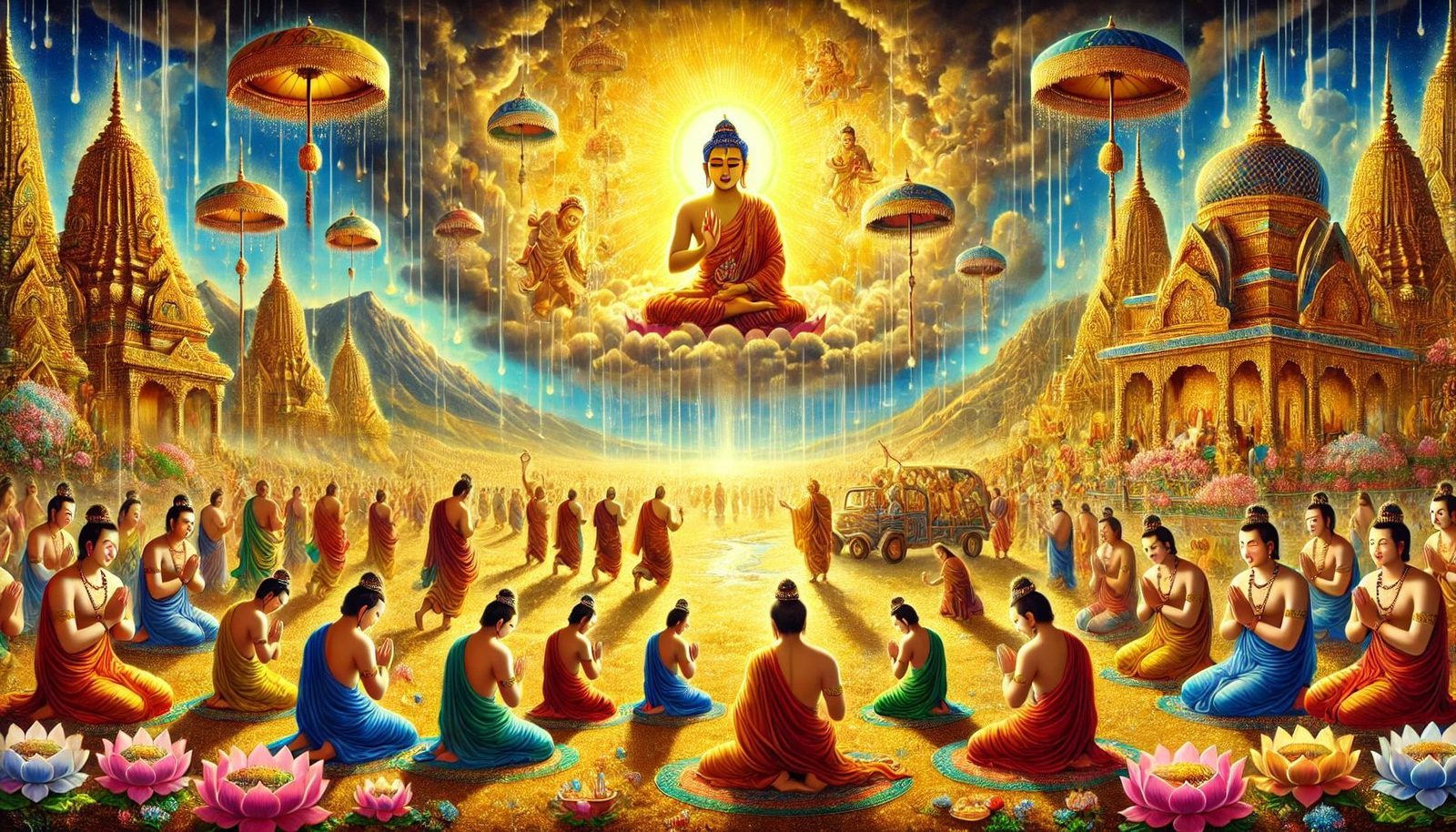
比丘说完偈子,飞至空中,恢复成庄严的佛身,展现三十二相、八十种好,顿时佛光普现,朗照天地。接着,佛陀回到地面,对年轻人说:「我能有如此神通妙用,都是因为历劫修行,调御自身的结果。」年轻人看到佛陀的神通变化,佩服地五体投地,于是请教佛陀调御自身的要领。佛陀对他开示五戒、十善、四无量心、六波罗蜜、四种禅定境界、三种解脱法门等殊胜妙法,并说明制弓、驾船、建屋等技术,都只是虚华不实、有生有灭的东西,若让自己耽溺其中,终究无法脱离生死轮回之苦。
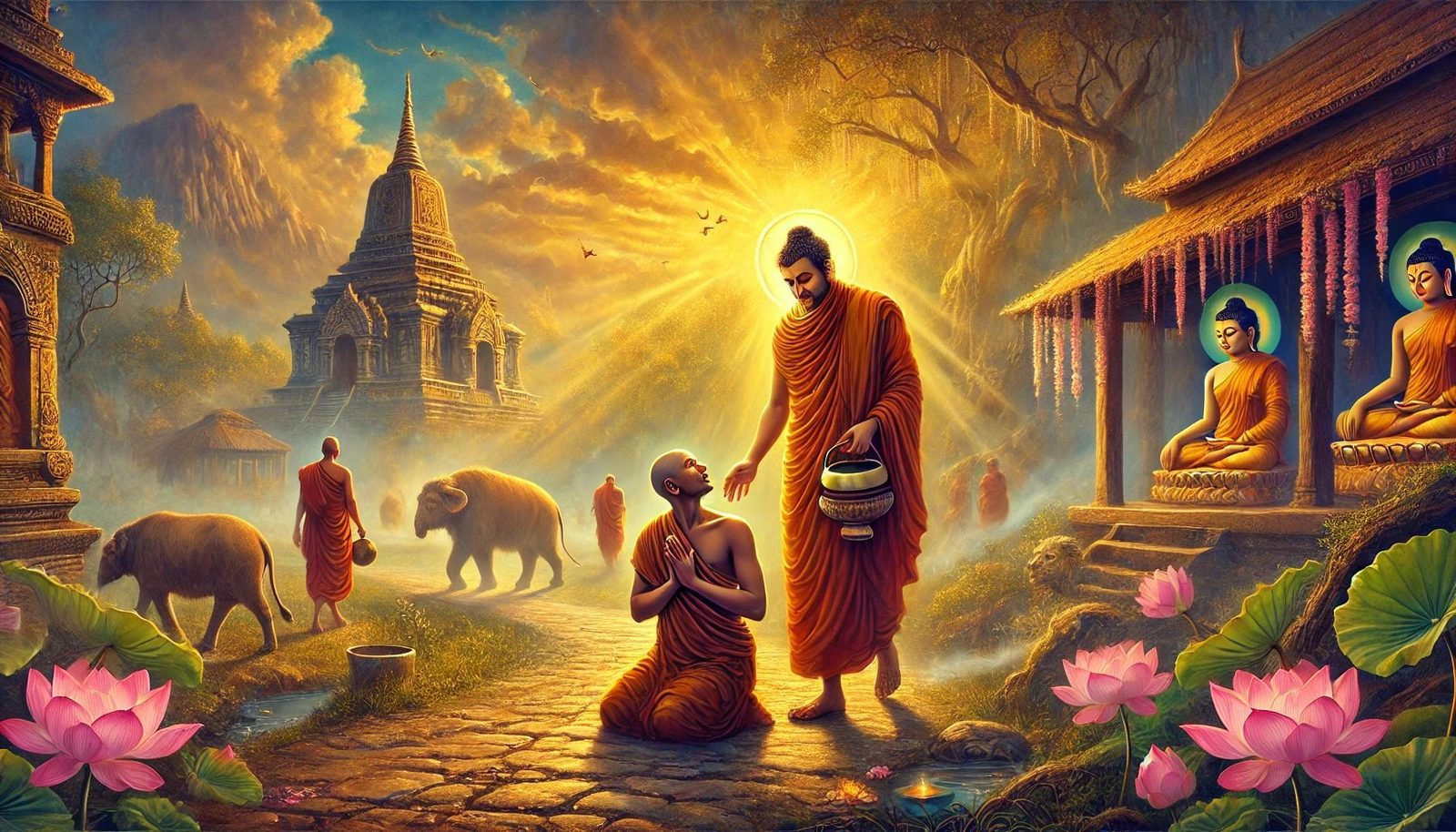
年轻人凝神倾听,豁然领悟,遂发心出家修行。佛陀即言:「善来比丘,须发自落,即成沙门。」年轻人即现清净比丘相。佛陀又重新为他开示四圣谛及八解脱之道,年轻比丘至诚专注聆听,思惟此理,当下即证阿罗汉果。
Date: 05/09/2026 05/10/2026
Location: Star Lake Meditation Center
Teacher: Shilin Long
Dharma Talk
The Buddha Converts the Brahmin
During the time of the Buddha, there was a twenty-year-old young man from a non-Buddhist path. He was naturally intelligent and exceptionally gifted. No matter what he studied, he could master it after seeing it once. Relying on this extraordinary talent, he vowed to learn all the skills in the world. Thus, he traveled everywhere seeking teachers and learning various arts. Whether astronomy, geography, medicine, prescriptions, chess, music, tailoring, cooking, and countless other worldly skills—there was nothing he did not master. He thought to himself, “With so many talents, surely no one in the world can surpass me! I might as well travel everywhere to compete with others and display my abilities. I will certainly gain fame and be remembered for generations.”
One day, he came to a bustling marketplace and noticed a crowd gathered around a stall. Upon approaching, he saw someone skillfully and swiftly making bows and arrows, and people were eagerly trying to buy them. The young man thought, “I believed my learning was already sufficient, but I have never learned how to make bows and arrows. If I were to compete in this skill, I would surely lose. Therefore, I should learn from him.” So he apprenticed himself to the bow-maker and studied diligently every day. Before long, he mastered the craft and even surpassed his teacher. After completing his training, he repaid his teacher with gifts and set off again.
The young man then came to a ferry crossing to take a boat to another country. During the journey, he observed the boatman skillfully rowing, the boat gliding across the water as if flying, moving swiftly forward and backward. He thought, “Although I possess many skills, I do not yet know how to navigate a boat. While this skill may not be considered noble, it would still be useful to learn.” So he studied under the boatman and quickly surpassed him as well. When he left, he presented the boatman with gifts to express his gratitude.
Next, he arrived in another country and saw a magnificent royal palace, unparalleled in the world. He thought, “The craftsmen who built this palace must have extraordinary skills. Since traveling, I have neglected architectural techniques. If I were to compete in this skill, I would surely fail. Therefore, I must learn it again.” Thus, he requested the craftsmen to accept him as a student, learning the use of tools and building techniques. With his exceptional talent, he quickly mastered measurement, carpentry, and carving, and again surpassed his teachers. After completing his studies, he gave all his belongings to the craftsmen in deep gratitude.
In this way, the young man traveled through sixteen countries. Each time he displayed his unparalleled skills, no one dared to challenge him. Because of this, his arrogance grew stronger, and he thought, “There is no one in the world who can defeat me.” At that time, the Buddha, staying at Jetavana Monastery, observed the young man with his divine eye and knew that the conditions for his liberation had matured. Using his spiritual powers, the Buddha manifested as a monk holding a staff and approached the young man.
Since the young man had grown up in a place without the Buddha’s teaching, he was curious when he saw the monk approaching. He asked, “I have never seen someone like you, nor such attire. The object you carry does not resemble any ritual instrument I know. Who are you, and why do you appear different from others?” The monk replied, “I am one who disciplines himself.” The young man asked, “What does it mean to discipline oneself?” Knowing what he had previously learned, the monk recited a verse:
“The bow-maker shapes the horn, the boatman steers the vessel,
The craftsman shapes the wood, the wise discipline themselves.
Like a solid rock unmoved by the wind,
The wise are not shaken by praise or blame.
Like a deep, clear lake, calm and serene,
The wise, hearing the Dharma, become pure and joyful.”
After reciting the verse, the monk rose into the air, revealing his true form as the majestic Buddha, displaying the thirty-two marks and eighty minor characteristics. Radiant light shone everywhere, illuminating heaven and earth. Then the Buddha descended and said to the young man, “My spiritual powers come from cultivating and disciplining myself over countless lifetimes.”
Seeing the Buddha’s miraculous transformations, the young man was filled with admiration and prostrated himself. He then asked the Buddha to teach him how to discipline himself. The Buddha taught him the Five Precepts, the Ten Virtuous Deeds, the Four Immeasurable Minds, the Six Pāramitās, the four stages of meditative concentration, and the three gates of liberation. He also explained that skills such as making bows, navigating boats, and constructing buildings are merely superficial and impermanent. If one becomes attached to them, one cannot escape the suffering of birth and death. The young man listened attentively and suddenly awakened. He then resolved to renounce worldly life and cultivate the path. The Buddha said, “Come, bhikṣu. Your hair shall fall away, and you shall become a monk.” Instantly, the young man appeared in the pure form of a monk. The Buddha then taught him again the Four Noble Truths and the path of the Eight Liberations. The young monk listened with utmost sincerity, contemplated the teachings, and immediately attained the fruit of arahantship.