时间:06/28/2025 06/29/2025
地点:星湖禅修中心
主讲:龙示林
佛法修行
功德意供养塔升天缘
佛陀在王舍城迦兰陀竹林时,笃信佛法的频婆娑罗王为了表达对佛陀的敬意,总是带着大臣们前往精舍礼拜佛陀,一日三次,日日如是,无有间断。然而随着年岁的增长,体力渐渐衰退,频婆娑罗王已无法再像往常一样前往礼拜。于是在大臣的建议下,国王将佛陀的头发、指甲请回宫中,为其建造塔寺,悬挂幡盖,日日三时皆以香花灯明礼拜供养。
当时,太子阿阇世受到提婆达多的煽动,与其谋害父王,篡夺王位,并且下令任何人皆不能再礼拜此塔,若有违犯者一律治罪。然而,宫中有一婇女,名「功德意」,在七月十五日僧众解夏的这一天,见到昔日国王所造的塔寺已结网蒙尘,心想:「此塔乃是频婆娑罗王所造,如今却污秽不堪,无人打扫。」于是决定即使身受刑罚,也要将佛塔洒扫干净。
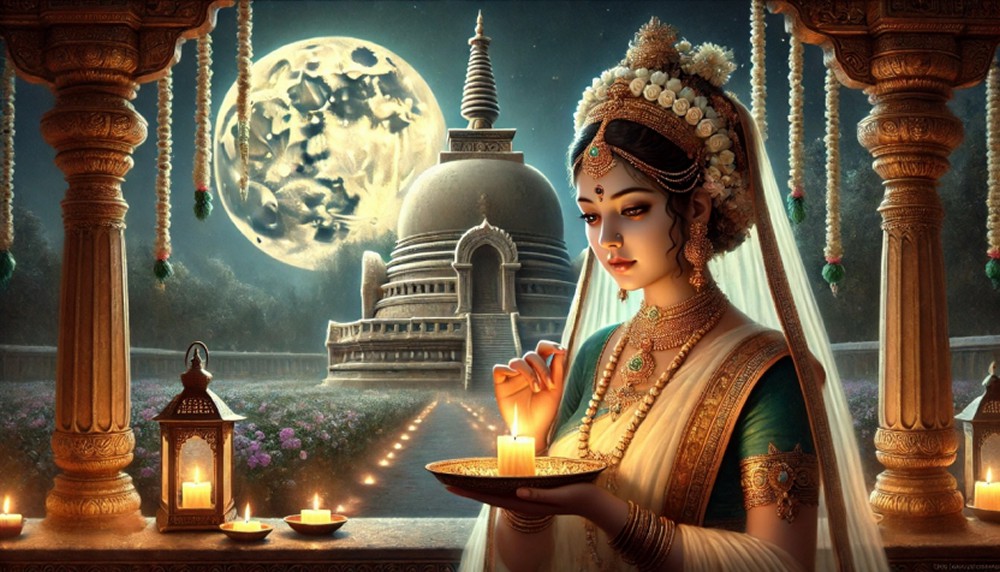
功德意马上行动,将佛塔四周打扫得焕然一新,并且燃灯供佛,使佛塔重现光明。正好站在皇宫楼阁上的阿阇世王,遥见佛塔又出现灯明,勃然大怒,立即派人前往察看。使者回来禀报:「是婇女功德意在塔中燃灯供佛。」阿阇世王一听,即传唤功德意进宫一问详由。
功德意回答:「此塔乃是先王所造,用以供养佛陀。今日适逢七月十五诸佛欢喜日,我希望在这殊胜的日子将佛塔打扫干净,并且燃灯供养。」阿阇世王又问:「难道你不知道本王之前所立下的旨意?」功德意回答:「我没有忘记,但是大王您现在对国家的治化远不如先王所为。」阿阇世王一听更加生气,马上以剑斩杀功德意。
功德意虽然被斩身亡,但因其一念善心,而往生忉利天中,且身放光明,照曜一由旬之远。忉利天主及天人们见此异象,皆赶来观看,并问此天人是修了何种福报,才往生天中,具此殊胜光明?天人以偈答曰:
「如来出于世,如日月光明,照彼诸黑暗,
皆悉普使明。见者生欢喜,心垢自然除,
善哉无上尊,众生良福田。信心修福德,
我不惜身命,被害致命终,得生于天上。」
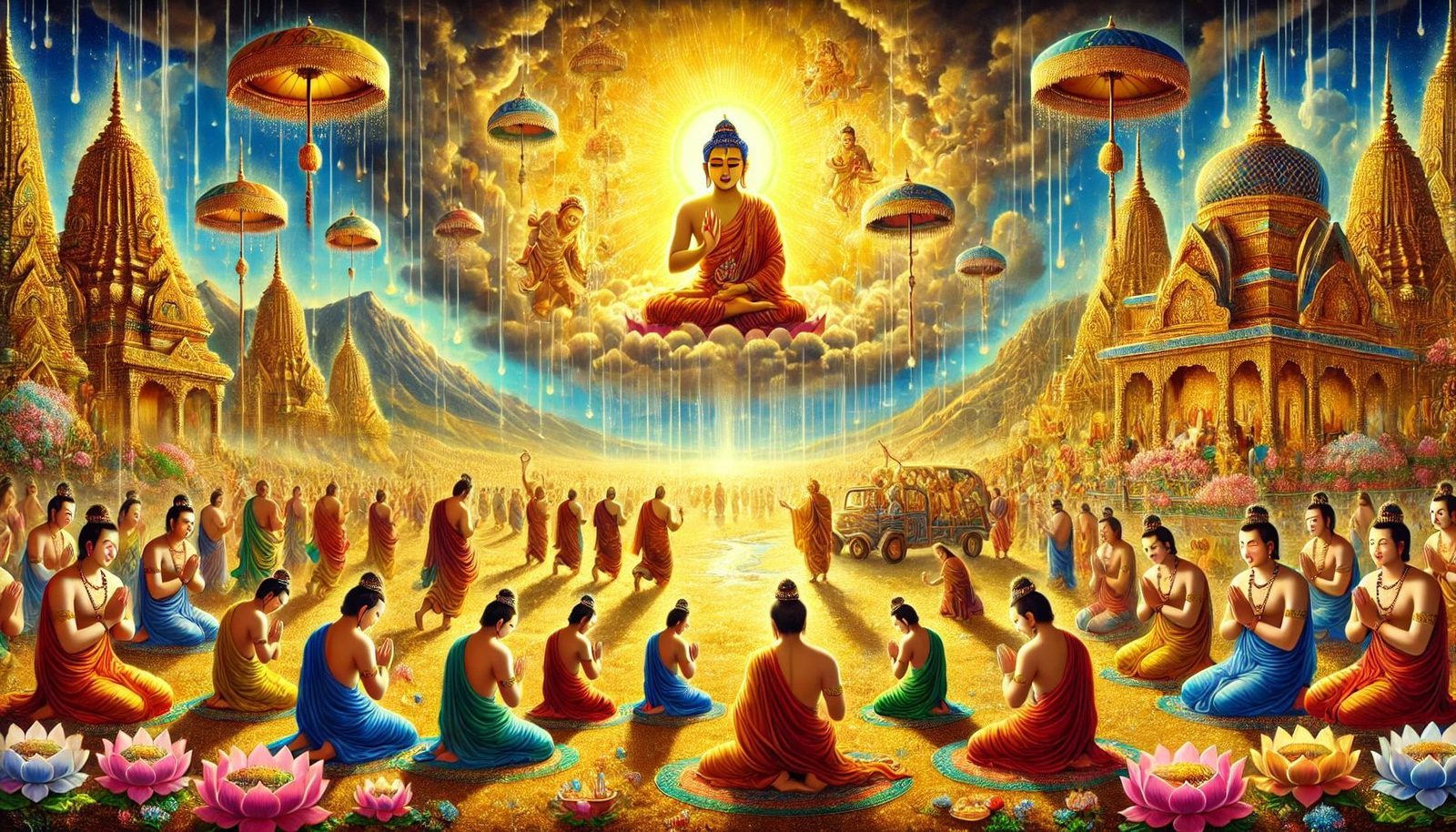
随后,天人顶戴天冠,着诸璎珞,庄严其身,并与诸天众各持香花,来到佛所顶礼、供养佛陀。佛即为其说四谛法,天人当下心开意解,得须陀洹果。
天人有感而发地说:「我往昔无始劫以来轮回不已,虚幻色身所积的白骨比须弥山还高,历经种种苦难留下的眼泪,比所有的海水还多,回顾过往,都只是虚掷光阴,浪费生命。今日有幸值遇佛法,得以出离生死轮回,获得究竟解脱。」说完此语,恭敬地绕佛三匝,还至天宫。
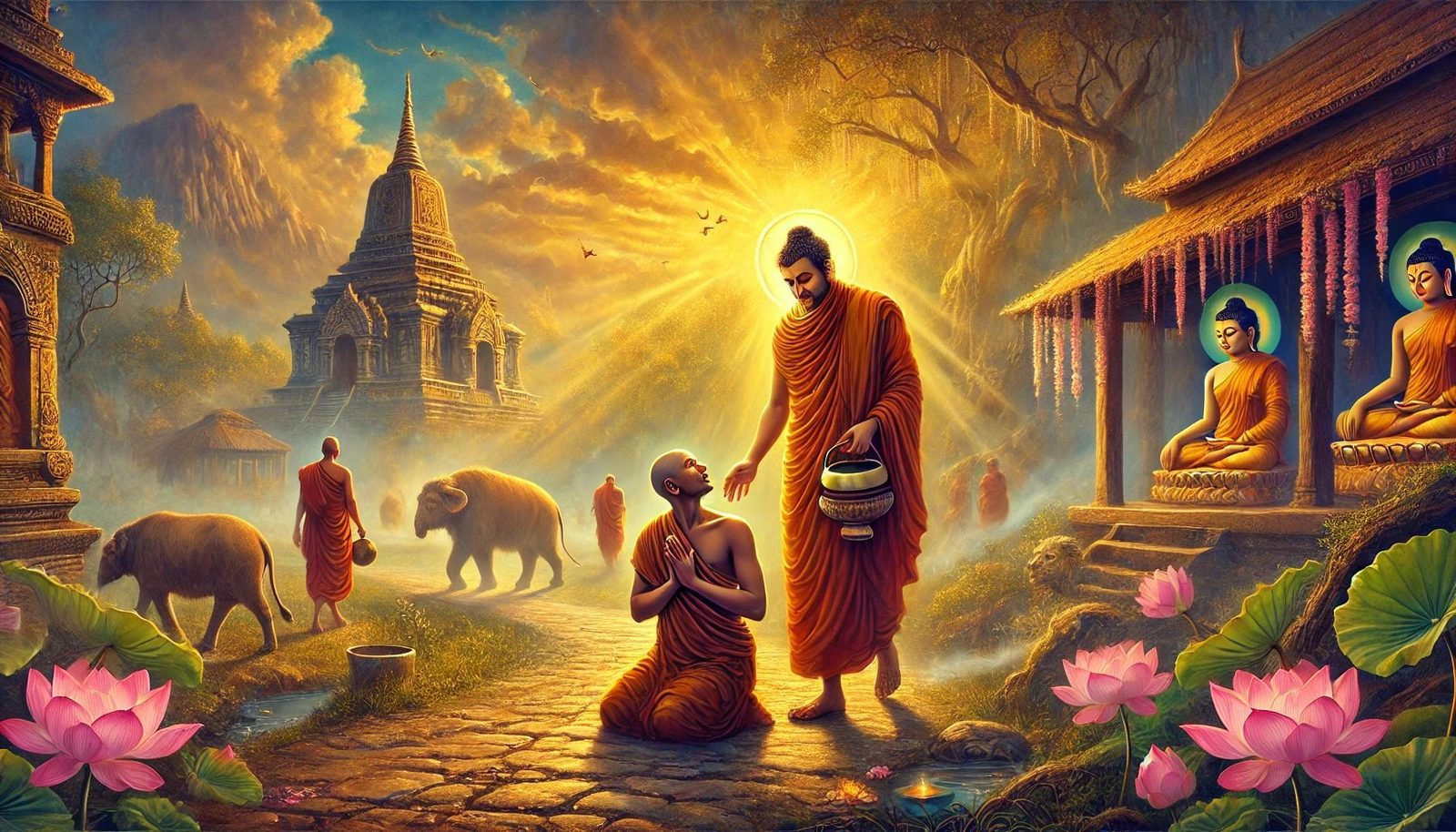
隔天一早,比丘们请问佛陀:「世尊,昨天夜里所见光明较过去更为炽盛,是谁来向您请法呢?」佛陀便对大众说明功德意生天的因缘。比丘们聆听此事后,信心增胜,当中即有证须陀洹、斯陀含、阿那含及阿罗汉者,亦有发无上菩提心者。
Date: 06/28/2025 06/29/2025
Location: Star Lake Meditation Center
Teacher: Shilin Long
Dharma Talk
The Merit-Intent Woman Offers to a Stupa and Ascends to Heaven
When the Buddha was staying in the Bamboo Grove Monastery in Rājagṛha, the devout King Bimbisāra, out of deep reverence for the Buddha, would lead his ministers to visit and pay respects to the Buddha three times daily—morning, noon, and evening—without fail. However, as he aged, his strength declined, and he was no longer able to visit as before.
On the advice of his ministers, the king invited relics—some of the Buddha’s hair and nails—back to the palace and had a stupa and temple constructed for veneration. He hung banners and canopies, and offered incense, flowers, lamps, and light three times a day.
Later, Prince Ajātaśatru, incited by Devadatta, plotted to kill his father and usurp the throne. He then issued a decree forbidding anyone from worshiping at the stupa; violators would be punished by law.
At the time, there was a palace attendant named Merit-Intent (Gōngdéyì). On the 15th day of the 7th lunar month, the day of the monastic Pravarana (the joyful day of the Buddha and the Sangha), she noticed that the stupa constructed by King Bimbisāra had become covered in cobwebs and dust.
She thought, “This stupa was built by the former king in honor of the Buddha, but now it is neglected and filthy. No one tends to it.” She resolved that even if punished, she would clean and sweep the stupa.
Merit-Intent immediately went to action. She cleaned and swept the surroundings of the stupa, making it shine once again, and lit lamps in offering, causing the stupa to radiate with light.
Just then, King Ajātaśatru happened to be standing in the upper pavilion of the palace and saw from afar that the stupa was again lit. Enraged, he sent people to investigate. When they returned, they reported, “It was the palace maid Merit-Intent who lit the lamps in offering to the Buddha at the stupa.” Ajātaśatru immediately summoned her to question her.
She replied, “This stupa was built by the former king to venerate the Buddha. Today is the 15th day of the 7th month—the day of the Buddha’s joy—so I wished to clean the stupa and light lamps in offering.”
The king asked, “Are you not aware of the decree I issued?”
She answered, “I have not forgotten. But compared to the late king, Your Majesty’s governance and virtue are far inferior.”
Hearing this, Ajātaśatru was even more furious and immediately ordered her execution by sword.
Though Merit-Intent was slain, due to her single thought of pure devotion, she was reborn in the Trāyastriṃśa Heaven. Her body radiated light for a distance of one yojana (about 7 miles). Śakra, the Lord of Heaven, along with many celestial beings, saw this miraculous light and came to investigate. They asked the newly reborn deva what good deed she had performed to attain such a heavenly rebirth with such brilliant radiance.
She replied in verse:
“The Tathāgata appears in the world,
Like sun and moon radiating light,
Illuminating all darkness,
And bringing clarity to all.
Seeing him, joy arises,
And defilements are naturally cleansed.
Oh, the Supreme Honored One!
The true field of blessings for all beings.
With faithful heart I cultivated merit—
Unhesitatingly gave my life.
Though slain, I passed away,
And was reborn in heaven above.”
Adorned in heavenly crowns and jeweled ornaments, the deva, together with many other heavenly beings bearing incense and flowers, descended to the Buddha’s presence to pay homage and make offerings.
The Buddha then expounded the Four Noble Truths for them. Merit-Intent, now a deva, opened her heart and gained insight, realizing the fruit of Srotāpanna (stream-entry).
Moved, she exclaimed: “Since beginningless time I have wandered in saṃsāra. The illusory body I have clung to has left behind bones higher than Mount Sumeru, and the tears I’ve shed from suffering surpass all the waters of the oceans. Looking back, it was all wasted time and a squandered life. Today I am fortunate to encounter the Dharma, and to be freed from birth and death, attaining ultimate liberation.”
After speaking, she respectfully circumambulated the Buddha three times and returned to her heavenly abode.
The next morning, the monks asked the Buddha, “World-Honored One, last night we saw a radiant light brighter than usual—who came to receive your teaching?”
The Buddha explained the cause of Merit-Intent’s rebirth in heaven.
Upon hearing this, the monks’ faith was greatly strengthened. Some attained the fruits of Srotāpanna, Sakadāgāmi, Anāgāmi, and Arhatship, while others gave rise to the aspiration for unsurpassed Bodhi (enlightenment).