时间:06/21/2025 06/22/2025
地点:星湖禅修中心
主讲:龙示林
佛法修行
悭贪长者的布施
昔日,在舍卫城有两位长者,一位名为「最胜」,一位名为「难降」。这两人虽拥有无数珍宝,马车、仆从、奴婢、谷食、家产不可称计,却是城中最悭贪吝啬之人。
长者家中门禁森严,设有七重围墙,为了避免不必要的麻烦,还特别嘱咐守门者不可让乞丐入内。此外,为了怕飞鸟来啄食稻谷,房舍周围特别以铁网围遮;墙壁更以铁铸而成,以防老鼠凿墙进入咬坏器物。
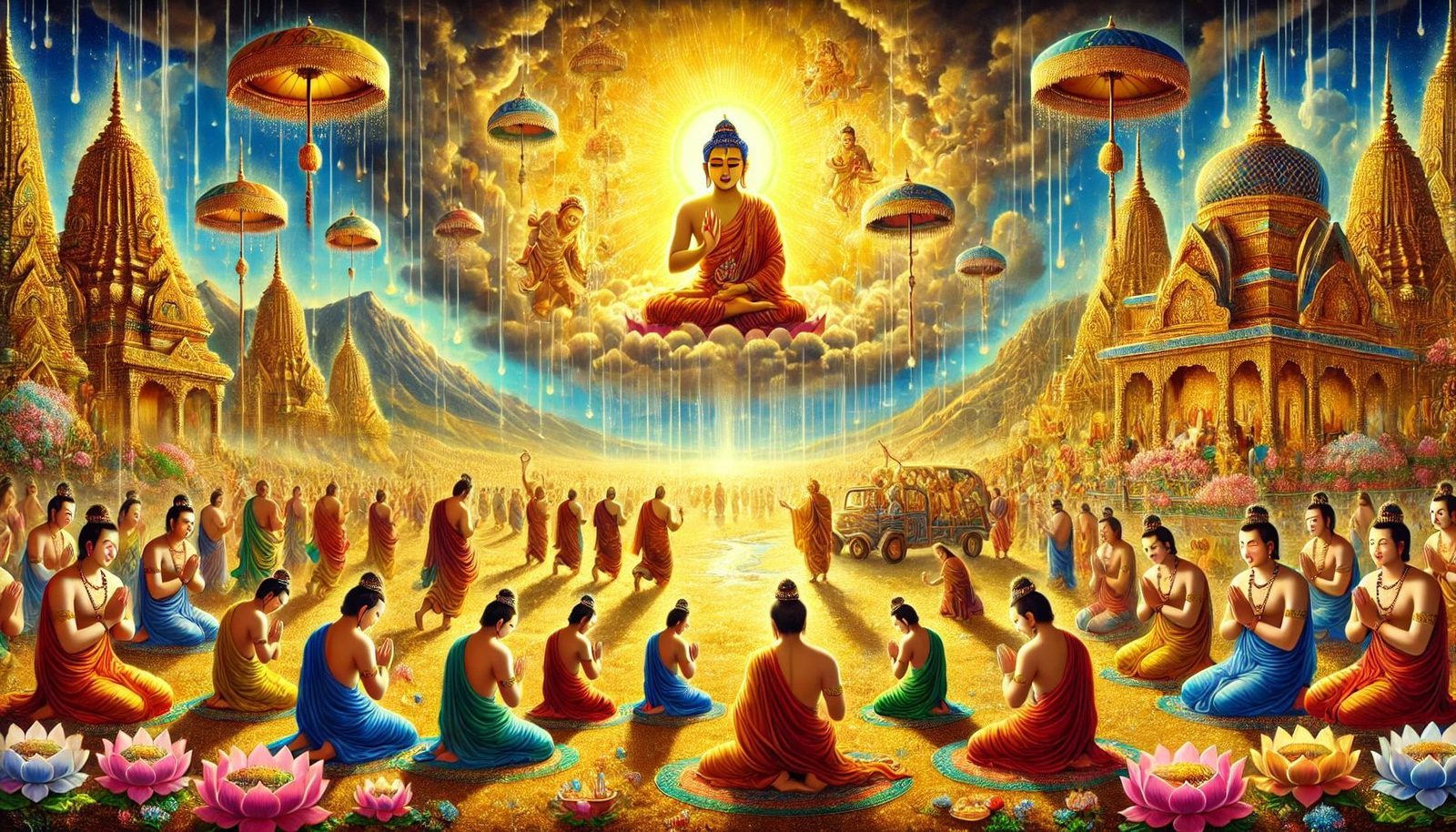
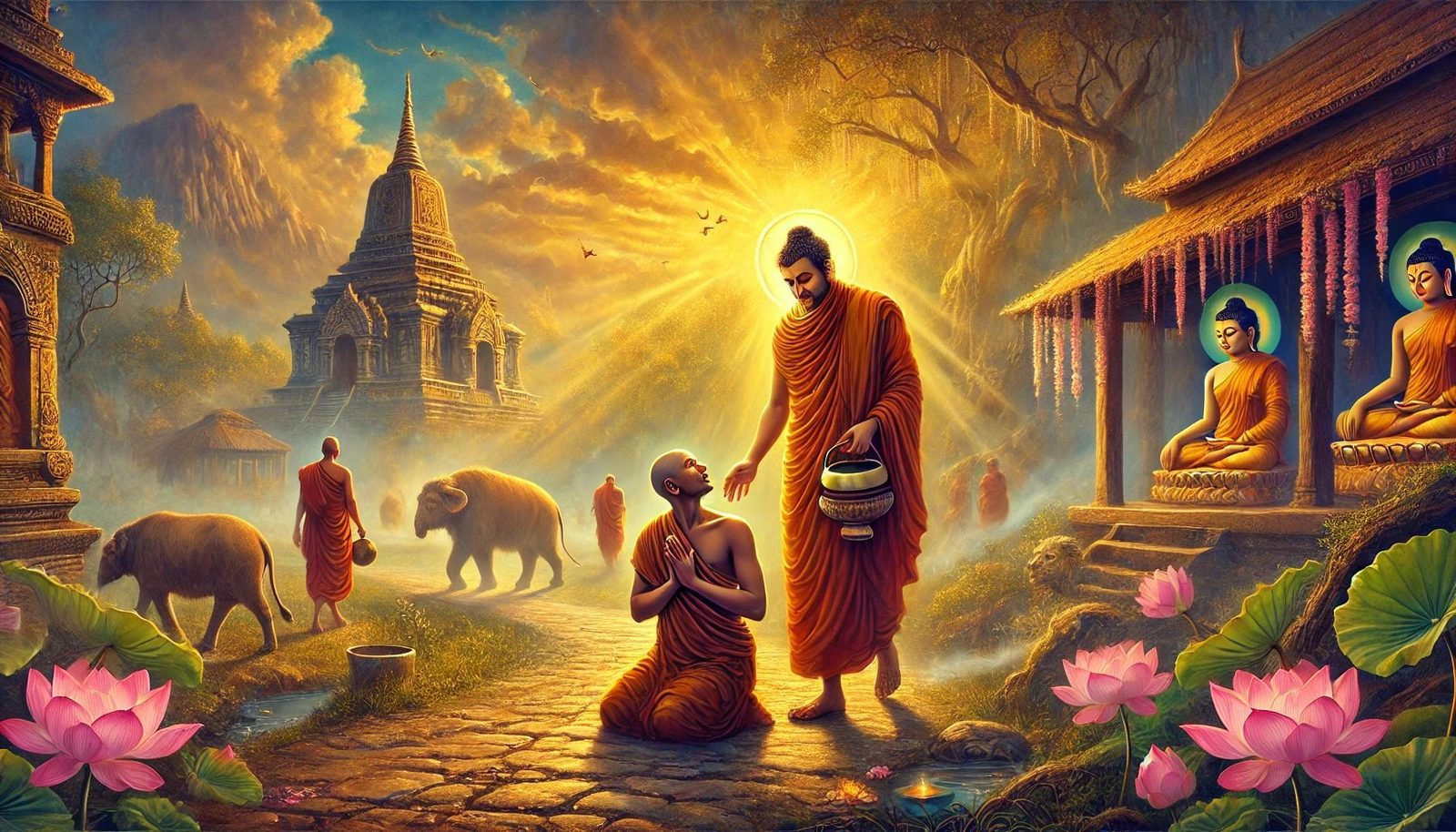
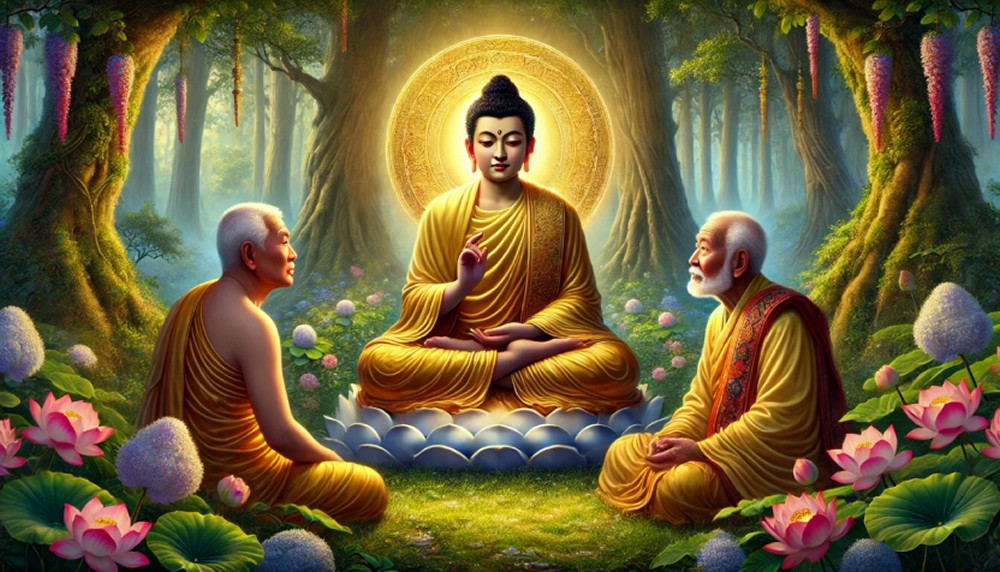
当时,佛陀的五大声闻弟子为了度化他们,特别示现神通,从地涌出,先后来为长者说法,然而长者听了却不受感化,依然旧习不改。佛陀了知二人应当得度,便亲往长者家,于虚空中示现坐卧如意等神通自在,并且放大光明,为长者宣说微妙圣法。长者听完后,还是无法理解佛法大意,只是想到:「佛陀既然来了,不应该让佛陀空手而返。」于是决定去库房取一条白毡布来供佛。
没想到,长者在库房挑了一条差的毡布,拿出来后却变成上等的毛毡。不舍的他,又转回库房仔细挑了一条次等的,岂知取出细看,却又变成极好的毛毡。就这样,长者选了又选、挑了又挑,最后看上的毡布都比之前的还要更好。
平时悭吝不舍的长者,一方面想要布施,一方面又舍不下自己的悭贪之心,就这样犹豫不决、天人交战许久。当时,天上的阿修罗与忉利天人正巧交兵,打得昏天暗地,有时天人占上风,有时阿修罗得胜。佛陀用天眼观察长者的心念,也发现长者的悭贪心与布施心正在交战,于是说了一首偈子:
「施与战同处,此德智不誉,
施时亦战时,此事二俱等。」
长者在屋内远远地听到佛陀所说的话,顿时惭愧非常,心想:「佛陀所说的,正是我的写照,我应当改过向善。」于是挑选了一条上等毡布来供养佛陀,而难降长者也至诚供养佛陀五百两金。摆脱了与悭贪交战的两位长者,因施得福,福至心灵,对佛陀的妙法皆心开意解,有所领悟。
Date: 06/21/2025 06/22/2025
Location: Star Lake Meditation Center
Teacher: Shilin Long
Dharma Talk
The Miserly Elders’ Act of Giving
In ancient times, in the city of Śrāvastī, there were two wealthy elders. One was named “Supreme” (Zuisheng), and the other “Hard-to-Convert” (Nanjian). Though both possessed countless treasures—chariots, servants, slaves, grains, and properties beyond measure—they were the most miserly and stingy individuals in the city.
Their homes were heavily guarded, surrounded by seven layers of walls. To avoid unnecessary trouble, they had specifically instructed the gatekeepers not to let beggars enter. Furthermore, to prevent birds from pecking at their grain, they had enclosed their dwellings with iron mesh. Even the walls were cast in iron to keep out rats from gnawing into the house and damaging their belongings.
At that time, the Buddha’s five foremost disciples manifested their spiritual powers to try to transform them. They emerged from the earth and each took turns teaching Dharma to the elders. However, the elders remained unmoved and unchanged in their habits.
Knowing that the two were destined to be liberated, the Buddha personally visited their home. He manifested miraculous powers in the air—sitting and lying at will, radiating great light—and spoke profound and wondrous Dharma. Yet the elders still could not grasp the essence of the teachings. They merely thought, “Since the Buddha has come, we shouldn’t let him leave empty-handed.”
Thus, one of the elders decided to go to the storeroom to retrieve a piece of white wool cloth as an offering to the Buddha.
Unexpectedly, the cloth he picked, which was of poor quality, transformed into a high-grade wool blanket when brought outside. Unwilling to part with it, he returned to the storeroom and selected an even worse piece. But when examined outside, it again became an exquisite blanket. Again and again, he picked and changed, and each time the cloth turned out to be better than the last.
This miserly elder, torn between his desire to give and his deep-seated greed, struggled internally for a long time, caught in a fierce battle of will.
At that moment, in the heavens, a battle was taking place between the Asuras and the Devas of Trāyastriṃśa Heaven—one moment the Devas prevailed, the next the Asuras gained the upper hand.
With his heavenly eye, the Buddha observed the elder’s mind and saw that the battle between his miserly thoughts and his wish to give mirrored that of the gods and demons. So he recited this verse:
“Giving and war coexist;
This virtue and delusion are not praised.
When giving arises, so does battle—
These two events are equally strong.”
Hearing the Buddha’s words from within his home, the elder was filled with shame and thought, “The Buddha has spoken exactly of my situation. I should change and turn toward goodness.”
So he chose an excellent wool blanket and offered it to the Buddha. The elder Hard-to-Convert also made a sincere offering of five hundred gold coins.
Freed from their inner struggle with miserliness, both elders were blessed through their act of giving. Their minds became clear and open, and they gained insight and understanding into the wondrous Dharma of the Buddha.