时间:09/12/2026 09/13/2026
地点:星湖禅修中心
主讲:龙示林
佛法修行
达路吉力的故事
「虽诵千句偈,若无义理者,
不如一句偈,闻已得寂静。」
【千品 (第 101 偈)】
这偈法句是佛陀在给孤独园时,对达路吉力说的:
有一次,许多人坐船出海去玩,很不幸船在大海中触礁,船底破个洞,海水漏进船里。海里的大鱼、乌龟等顺势侵入船中,吞噬船难中沉溺的人。唯一幸存的达路吉力紧抓住一块浮木,飘流到彼岸,在苏巴勒格柏德纳村子上岸。此时,达路吉力连遮身的衣物也没有了,他在丛林里找些树叶树皮围裹身躯,又捡了一个骷髅当做钵,进入村子乞食。村子里的人看见他这副模样,都认为「阿罗汉」应当就是如此,以为看到阿罗汉会得到幸运,所以非常尊敬他,五体投地礼拜他。
达路吉力暗地里想:「倘若我不是穿着树皮,且捧着骷髅当做钵,必定没有人会如此礼敬我。」然而,很多人称呼他「阿罗汉!阿罗汉!」因此,他彷佛也以为自己就是所谓的阿罗汉了。
有一天,达路吉力遇见以前的老朋友,老友认出是他,很坦白地告诉他:「你不要再骗自己了,你一点儿也没有阿罗汉的特质,我看不出来你有什么阿罗汉的样子。」
听了朋友的真心话,达路吉力觉得很惭愧,心想:「我真的错了,我竟以为自己是阿罗汉。」他问朋友说:「这个世界上到底有没有真正的阿罗汉﹖」朋友答道:「有!从这个地方向北走,有一个舍卫城,城里住着一位佛陀,他就是阿罗汉,同时,他也指导修学阿罗汉的法。」
于是,达路吉力连夜赶往北方,第二天早上即到达舍卫城。由于他迫切地想要看见阿罗汉,要听闻阿罗汉的法,所以虽然彻夜赶路也丝毫不觉得疲倦。、
他到了舍卫城,即前往寺院。一走进寺院,看到许多比丘正在饭后经行,就问:「你们为什么经行﹖请问佛陀在哪里﹖」
比丘们回答说:「我们刚刚吃饱饭,若是立刻坐下来会容易懒散,经行则可以帮助消化,也会感觉舒服。至于你想拜访的佛陀,现在正在托钵,还没回来,你需要再等一些时候。」
有比丘问他:「你从哪里来的﹖」
达路吉力说:「我从苏巴勒格柏德纳来的。」
比丘说:「哦,你远道而来,一定累了,请过来洗脚、擦油,先休息一下,等佛陀回来的时候,你再去拜见他。」
达路吉力却说:「师父们,这样不行,我不能再等,我要赶快去找佛陀。」
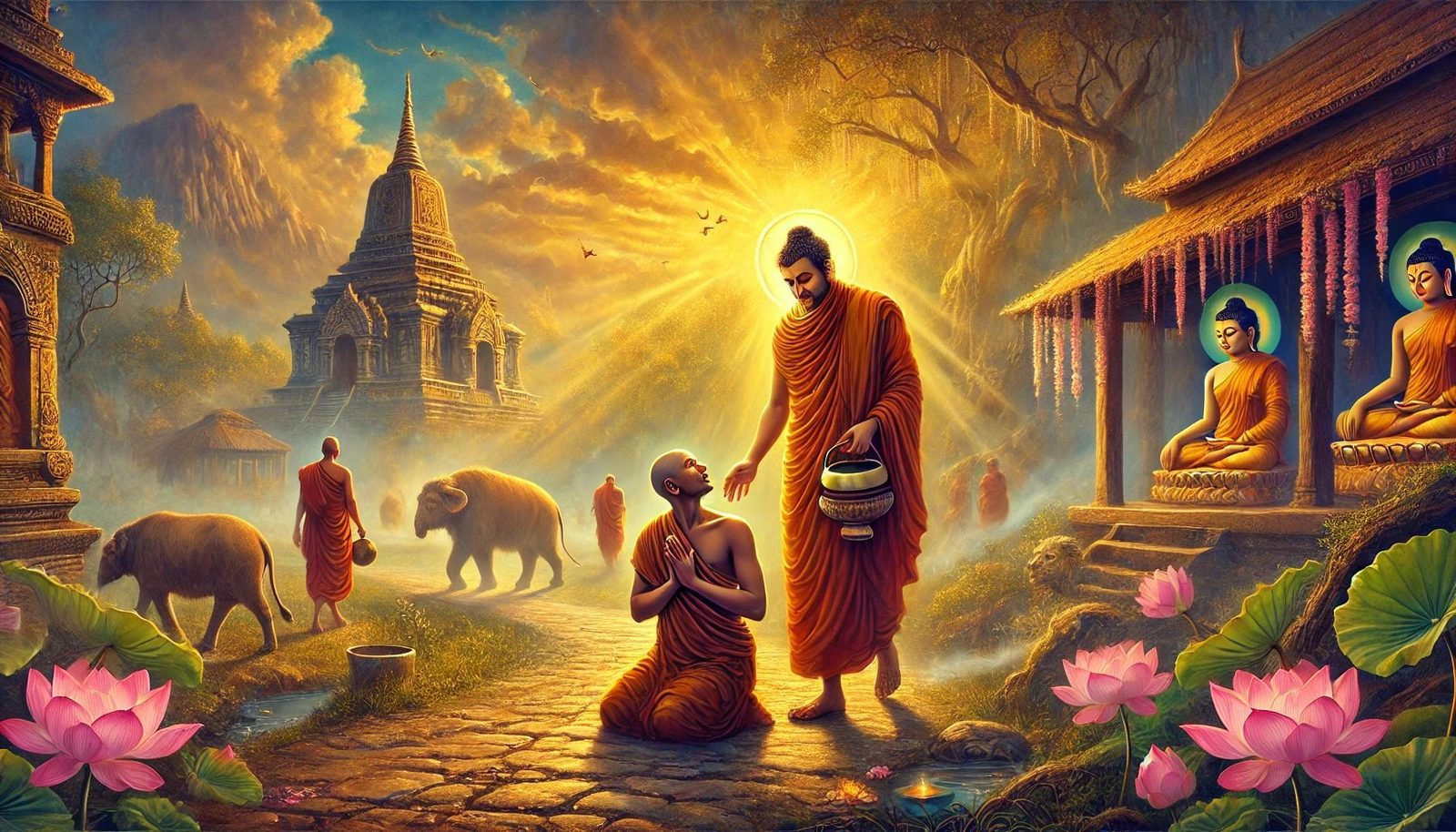
他不洗脚也不休息,就循着佛陀托钵的方向走去。途中他看到佛陀正在托钵,动作缓慢而稳重,如狮子般地庄严。达路吉力即上前五体投地礼拜佛陀,并跪着说:「世尊,请告诉我一个法──从现在到未来,长久对我有益处的法。」
佛陀对他说:「达路吉力,现在我在托钵的途中,不宜说法。」
达路吉力说:「师父!在轮回当中,有些人还没有拿到食物就死了,我不知道是您会先死还是我先死,所以请您为我说法。」
佛陀再度推却说:「我正在托钵,不宜说法!」
达路吉力第三次恳求的时候,佛陀心想:「这个人已经满心喜悦想要闻法,我没有办法可以制止他了。」于是佛陀就对他说:「既然如此,你要知道一件事情,那就是──看就看。」
听了佛陀这一句话,达路吉力顿时领悟,成了慧解脱阿罗汉。达路吉力同时请求佛陀让他剃度出家。佛陀问他有没有钵和袈裟,他说还没有,佛陀便说:「你去找钵和袈裟带来。」说完,佛陀就离去了。
达路吉力去找钵和袈裟,在半路上突然有一只牛狂奔过来,把他撞死了。他死了以后,尸体被扔到垃圾堆。佛陀和比丘们用餐后,走出寺院看到达路吉力的尸体被弃置于垃圾堆,佛陀便叫比丘们用一块木板把尸体抬到城外烧掉,将骨灰堆起来做一个小塔。
回到寺院以后,佛陀将发生的事情告诉比丘们,并且说:「在家居士中,最快成为慧解脱阿罗汉的,就属达路吉力了。」
比丘们问:「他什么时候证阿罗汉的﹖」
佛陀说:「当他听法的时候,证得阿罗汉的。」
比丘又问:「什么时候世尊为他说法的﹖」
佛陀答道:「就在托钵的途中。」
比丘们说:「我们从来没有听过途中说法,世尊您讲的多还是少﹖有没有特别的法﹖」
佛陀说:「比丘们,不要秤量法是多还是少!你们若是听了千万个没有意义的法门,倒不如一句有益的话呀!」
于是佛陀诵这一偈法句:
「虽诵千句偈,若无义理者,
不如一句偈,闻已得寂静。」
比丘们听了以后,深受法益,得须陀洹果。
Date: 09/12/2026 09/13/2026
Location: Star Lake Meditation Center
Teacher: Shilin Long
Dharma Talk
The Story of Dārucīri
”Though one recites a thousand verses, if they are without meaning,
It is better to hear a single verse, by hearing which one attains peace.”
(The Dhammapada, Chapter of Thousands, Verse 101)
This verse of the Dhammapada was spoken by the Buddha at Jetavana Monastery to Dārucīri.
Once, many people went out to sea for pleasure by boat. Unfortunately, the boat struck a reef in the middle of the ocean, and a hole was torn in its hull. Seawater poured into the boat. Large fish, turtles, and other sea creatures took the opportunity to enter the vessel and devoured the people who were drowning in the shipwreck. The only survivor, Dārucīri, tightly clung to a piece of driftwood and drifted to the opposite shore, where he landed at the village of Subalagapadana. At that time, Dārucīri no longer had any clothing to cover himself. He found some leaves and tree bark in the forest to wrap around his body, picked up a human skull to use as an alms bowl, and entered the village to beg for food. When the villagers saw his appearance, they all believed that this was what an “Arahant” should look like. Thinking that seeing an Arahant would bring them good fortune, they deeply revered him and prostrated themselves before him.
Dārucīri secretly thought, “If I were not wearing tree bark and carrying a skull as my alms bowl, surely no one would pay me such respect.” However, many people addressed him as “Arahant! Arahant!” Gradually, he himself seemed to believe that he really was an Arahant.
One day, Dārucīri met an old friend who recognized him. His friend frankly told him, “Do not deceive yourself any longer. You do not possess any of the qualities of an Arahant. I cannot see anything about you that resembles an Arahant.”
After hearing his friend’s sincere words, Dārucīri felt deeply ashamed. He thought to himself, “I was truly mistaken. I actually believed that I was an Arahant.” He asked his friend, “Are there any true Arahants in this world?” His friend replied, “Yes! If you travel north from here, you will come to the city of Śrāvastī. There lives a Buddha. He is an Arahant, and he also teaches the Dharma for attaining Arahantship.”
Therefore, Dārucīri immediately set out northward during the night and arrived at Śrāvastī the following morning. Because he earnestly wished to see an Arahant and hear the Dharma of an Arahant, he did not feel the slightest bit tired, even after traveling throughout the night.
When he arrived at Śrāvastī, he went directly to the monastery. As soon as he entered, he saw many bhikkhus practicing walking meditation after their meal, so he asked, “Why are you practicing walking meditation? May I ask where the Buddha is?”
The bhikkhus replied, “We have just finished our meal. If we sit down immediately, we are likely to become drowsy. Walking meditation helps digestion and makes us feel comfortable. As for the Buddha whom you wish to visit, he is currently out on alms round and has not yet returned. You will need to wait a little longer.”
One of the bhikkhus asked him, “Where have you come from?”
Dārucīri replied, “I have come from Subalagapadana.”
Please come and wash your feet, apply some oil, and have a rest. When the Buddha returns, you may then pay your respects to him.”
However, Dārucīri said, “Venerable sirs, that will not do. I cannot wait any longer. I must hurry to find the Buddha.”
Without washing his feet or taking any rest, he followed the direction in which the Buddha had gone on alms round. Along the way, he saw the Buddha collecting alms, moving slowly and steadily, majestic like a lion. Dārucīri immediately stepped forward, prostrated himself before the Buddha, and knelt down, saying, “World-Honored One, please teach me one Dharma—a teaching that will benefit me for a long time, from now into the future.”
The Buddha said to him, “Dārucīri, I am now on my alms round. It is not an appropriate time to teach the Dharma.”
Dārucīri said, “Master! In the cycle of saṃsāra, some people die before they even receive their food. I do not know whether you will die first or I will die first. Therefore, please teach me the Dharma.”
The Buddha declined again, saying, “I am on my alms round. It is not an appropriate time to teach the Dharma.”
When Dārucīri made his request for the third time, the Buddha thought, “This man is already filled with joy and longing to hear the Dharma. There is no way for me to stop him.” Therefore, the Buddha said to him, “If that is the case, then you should know one thing—that is: when seeing, just see.”
Upon hearing these words from the Buddha, Dārucīri immediately attained realization and became an Arahant liberated through wisdom. At the same time, Dārucīri requested permission from the Buddha to receive ordination. The Buddha asked him whether he had an alms bowl and robes. He replied that he did not. The Buddha then said, “Go and find an alms bowl and robes, and bring them here.” Having said this, the Buddha departed.
Dārucīri went to look for an alms bowl and robes. On the way, a mad cow suddenly charged toward him and struck him to death. After he died, his body was thrown onto a garbage heap. After the Buddha and the bhikkhus had finished their meal, they walked out of the monastery and saw Dārucīri’s body lying discarded on the garbage heap. The Buddha instructed the bhikkhus to carry the body on a wooden board outside the city and cremate it. They then gathered the ashes and built a small stupa over them.
After returning to the monastery, the Buddha told the bhikkhus what had happened and said, “Among lay followers, Dārucīri was the one who most quickly attained Arahantship through wisdom.”
The bhikkhus asked, “When did he attain Arahantship?”
The Buddha said, “He attained Arahantship while listening to the Dharma.”
The bhikkhus asked again, “When did the World-Honored One teach him the Dharma?”
The Buddha replied, “While I was on my alms round.”
The bhikkhus said, “We have never heard of the Dharma being taught while on an alms round. World-Honored One, did you teach much or little? Was it some special teaching?”
The Buddha said, “Bhikkhus, do not measure the Dharma by whether it is much or little! Even if you hear tens of thousands of teachings that are without meaning, they are not as valuable as a single beneficial sentence.”
Then the Buddha recited this verse of the Dhammapada:
”Though one recites a thousand verses, if they are without meaning,
It is better to hear a single verse, by hearing which one attains peace.” After hearing this verse, the bhikkhus greatly benefited from the Dharma and attained the fruit of Stream-entry (Sotāpanna).