时间:02/01/2025 02/02/2025
地点:星湖禅修中心
主讲:龙示林
佛法知识
死向何去
“死向何去”并不是一个只属于临终时刻的问题,而是每一个活着的人在内心深处都曾隐约触及的疑问。它并非单纯关乎死亡之后的去处,更关乎生命在终结时究竟留下些什么,又以何种方式继续。当人真正面对死亡,这个问题便不再抽象,而成为直指存在根本的追问。
从表象看,死亡似乎意味着一切的终止。呼吸停止,身体冰冷,意识不再显现,人与世界的关系仿佛被彻底切断。然而佛教并不将死亡理解为绝对的消失,而是视为一段因缘的解散。身体作为暂时的组合体,随条件崩解而归于分散,但推动生命经验的力量,并不止于此。
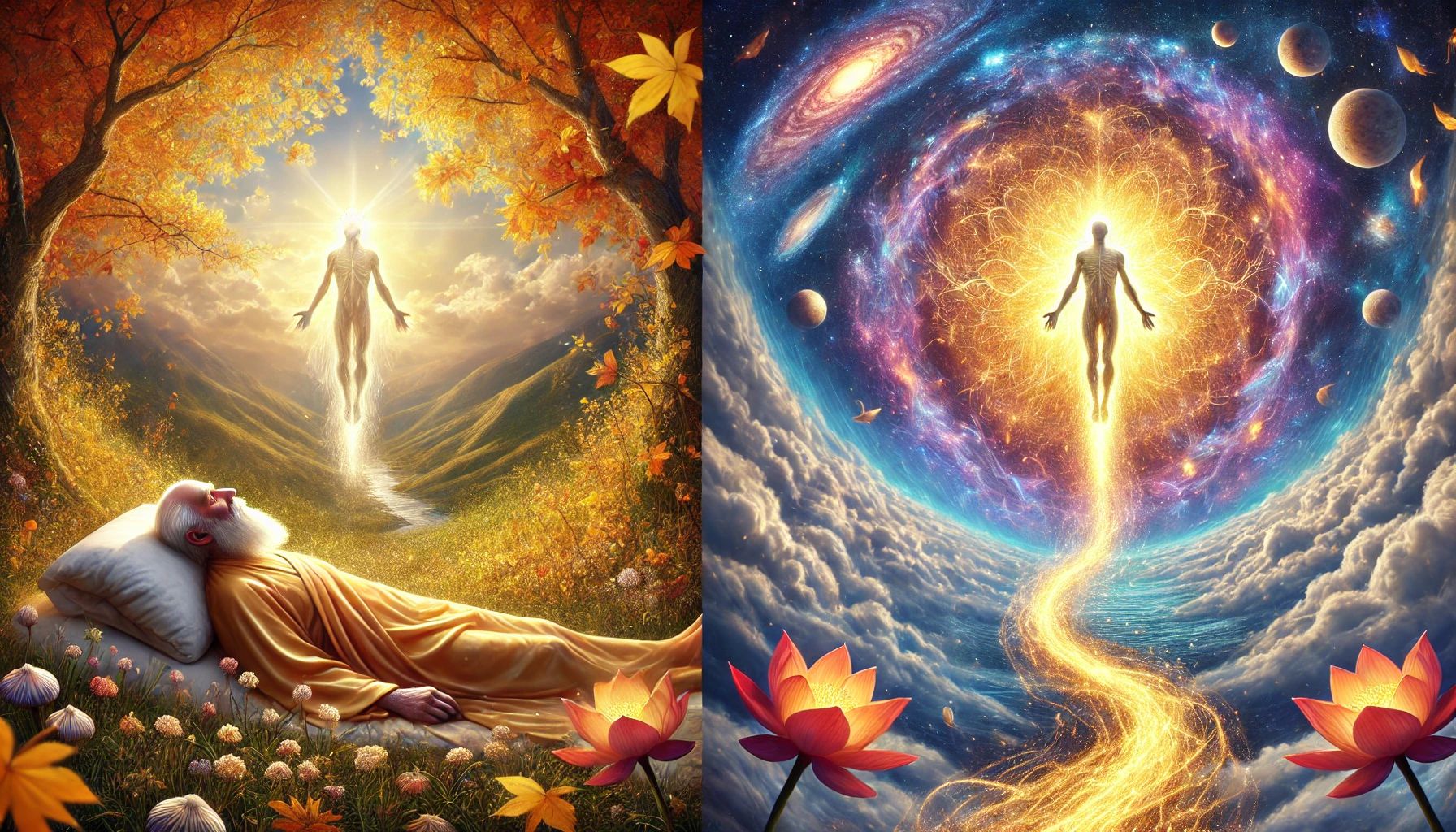
死亡真正指向的,是心识的去向。佛教认为,心并非随着身体坏灭而全然断绝,而是依业力与习气继续流动。当支持一生的物质条件不再具足,心识便失去原有的依托,在未被觉悟止息之前,必然趋向新的安住处。这并非一个“我”在移动,而是一股由因果推动的连续过程。
那么,死后心识向何处去?答案并不在外界的某个固定空间,而在内在的力量结构中。业,决定了趋向;习气,决定了方向;当下的心境,决定了临门一刻的落点。长期以贪欲为主导的心,容易被欲界牵引;长期以嗔恨为燃料的心,容易坠入痛苦的境地;而经常培育安定、慈悲与清明的心,则更有可能趋向相对光明与稳定的存在状态。
值得注意的是,死亡并非突然发生。事实上,一个人“死向何去”,早已在活着的时候不断铺垫。每一次情绪的反应、每一种价值的选择、每一次对贪嗔痴的纵容或觉察,都是在塑造死亡时的走向。死亡只是将这一切集中显现的时刻,而非凭空决定的转折点。
从更深层看,死之所以令人恐惧,是因为对“我将不复存在”的执着。人害怕的,往往不是痛苦本身,而是失去控制、失去身份、失去熟悉的自我叙事。正是这种对自我的紧抓,使死亡显得如同深渊。然而佛教指出,这个被执取的“我”,本就不是一个恒常不变的实体;死亡,只是揭示了这一事实。
当修行者在生前已逐步松动对自我的执着,死亡的性质便发生改变。死不再是一场被动的坠落,而是一段清楚的过渡。若心能安住于觉知,不被恐惧与贪恋牵引,死便不必然导向混乱的再生,而可能成为止息流转、趋向解脱的关键节点。
因此,佛教修行并非逃避死亡,而是为死亡作准备。准备的不是仪式,而是心的方向。当一个人学会在当下放下、在变化中不执取、在失去中保持清明,死亡来临时,心便不至于慌乱失措。那时,“死向何去”不再是未知的威胁,而是顺着因缘自然展开的过程。
最终,死向何去,取决于是否仍有无明在推动。若无明未除,心必然继续寻找存在的形式,死只是通往另一段生的门槛;若无明已破,执取已息,心不再需要去往任何地方。那时,死不再通向某处,而是流转的止息,是长久追逐后的安静。
因此,“死向何去”这个问题,真正的答案并不在未来,而在此刻。当人以清醒、负责与慈悲来生活,死亡便不再是恐惧的终点,而成为生命智慧自然完成的一部分。
Date: 02/01/2025 02/02/2025
Location: Star Lake Meditation Center
Teacher: Shilin Long
Dharma Knowledge
Where Does Death Lead
“Where does death lead?” is not a question reserved for the moment of dying. It is a quiet inquiry that touches every living being at some point, often unspoken yet deeply felt. It does not merely concern a destination after death, but asks what remains when life ends and how existence continues, if at all. When death is truly faced, the question becomes no longer abstract, but a direct examination of being itself.
On the surface, death appears to mark total cessation. Breathing stops, the body cools, consciousness no longer manifests, and the connection between person and world seems severed. Buddhism, however, does not regard death as absolute annihilation, but as the dissolution of a particular set of conditions. The body, as a temporary assemblage, disintegrates when its supporting conditions fall apart, yet the forces that shaped lived experience do not end there.
What death truly points to is the movement of consciousness. According to Buddhist understanding, the mind does not completely vanish with the decay of the body, but continues to flow according to karma and habitual tendencies. When the material support of a lifetime is no longer present, consciousness loses its former base and, unless awakened, naturally inclines toward a new resting place. This is not a self traveling onward, but a causal continuity driven by conditions.
So where does consciousness go after death? The answer is not found in a fixed external realm, but within the structure of inner forces. Karma determines the general tendency, habits determine direction, and the mental state at the threshold of death shapes the immediate outcome. A mind long governed by craving is drawn toward realms of desire; a mind fueled by anger tends toward painful states; a mind cultivated in calm, compassion, and clarity is more likely to incline toward brighter and more stable forms of existence.
It is important to understand that death does not decide one’s direction suddenly. In truth, the course of death is continuously prepared during life. Every emotional reaction, every ethical choice, every moment of indulgence or awareness gradually forms the trajectory. Death merely concentrates and reveals what has long been set in motion, rather than creating a new outcome from nothing.
At a deeper level, the fear of death arises from attachment to the idea that “I will cease to be.” What people fear most is often not pain, but the loss of control, identity, and familiar narratives of self. It is this tight grasping at a presumed self that makes death feel like an abyss. Buddhism points out, however, that this clung-to self has never been a fixed or independent entity. Death simply exposes this truth.
When a practitioner has already loosened self-attachment during life, the nature of death changes. It no longer becomes a helpless fall into the unknown, but a conscious transition. If the mind can remain grounded in awareness, free from fear and craving, death need not lead to confused rebirth, and may instead become a decisive moment toward the cessation of wandering.
For this reason, Buddhist practice is not an escape from death, but a preparation for it. What is prepared is not ritual, but orientation of mind. When one learns to let go in the present, to remain unentangled in change, and to maintain clarity amid loss, the arrival of death does not result in panic. At that point, “where death leads” is no longer a threatening mystery, but a natural unfolding of conditions.
Ultimately, where death leads depends on whether ignorance still propels the mind. If ignorance remains, consciousness continues to seek forms of existence, and death becomes the threshold to another birth. If ignorance has been dispelled and attachment released, the mind no longer needs to go anywhere. Then death does not lead onward, but marks the cessation of movement, the quiet end of long wandering.
Thus, the question “where does death lead” finds its true answer not in the future, but in the present. When life is lived with awareness, responsibility, and compassion, death ceases to be a fearful conclusion and becomes a natural completion of life’s wisdom.