时间:02/17/2024 02/18/2024
地点:星湖禅修中心
主讲:净真
佛法知识
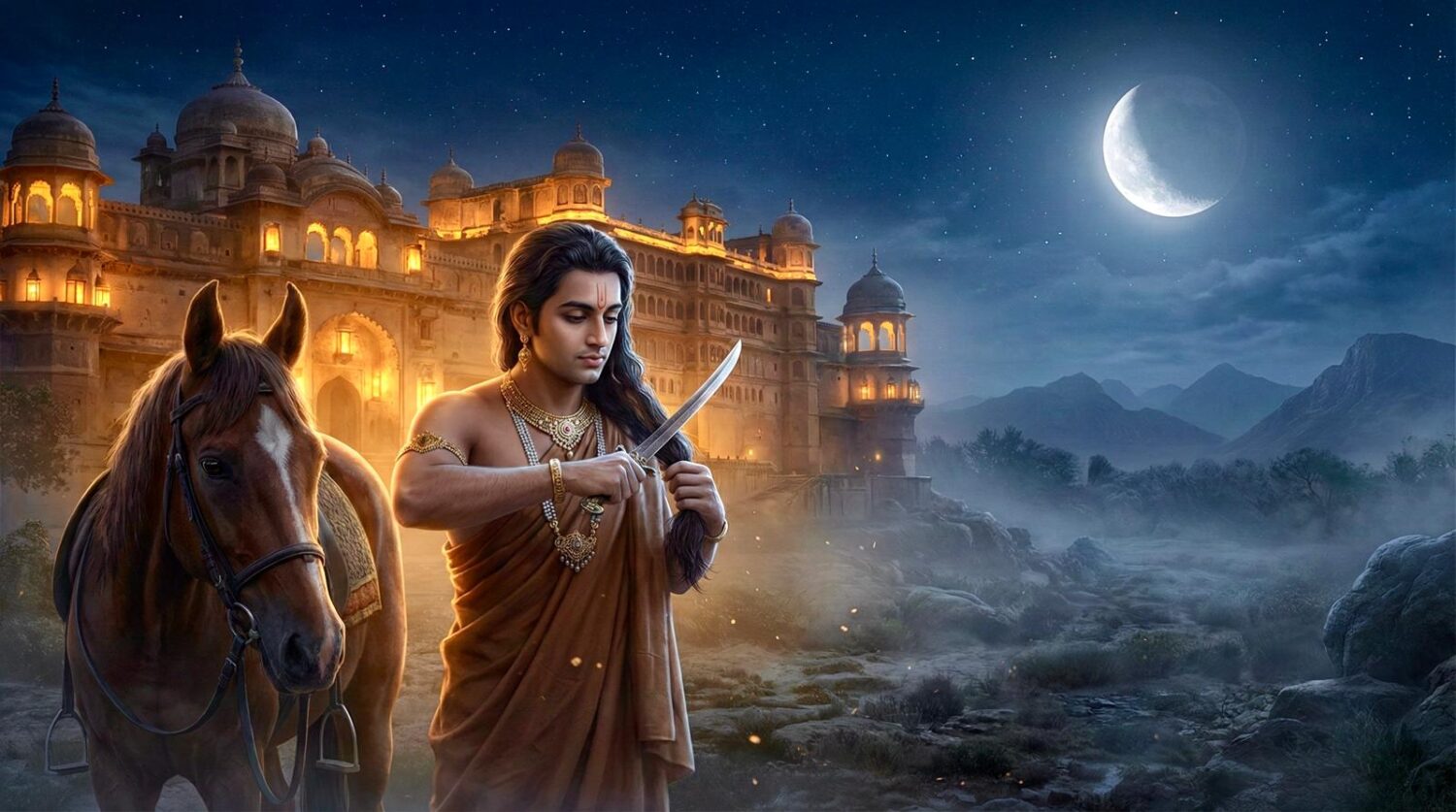
太子悉达多的出家
太子悉达多的出家,常被误读为逃避现实、否定家庭或否定社会责任。这种理解源于以道德情绪或宗教叙事替代历史与逻辑分析。若回到当时的社会结构与问题背景,悉达多的出家并非个人情绪行为,而是一项高度理性、指向根本问题的选择。
从历史条件看,悉达多并非因贫苦或压迫而离开世俗生活。相反,他出生于迦毗罗卫国的王族,享有当时所能提供的最高物质条件、政治地位与安全保障。他所面对的,并不是“生活太苦”,而是“生活是否必然如此运转”的问题。正因为条件优越,他才有条件清楚地看到:财富、权力与享乐,并不能解决生老病死这一结构性事实。
悉达多出家前的关键触发,并非情绪崩溃,而是认知冲击。对老、病、死的直面,使他意识到一个根本矛盾:人类社会的所有制度设计,都是在假设生命可以被稳定、延续或控制,而现实却不断证明这种假设是错误的。若这一矛盾无法被解释,任何社会角色的成功都只能是暂时的。
因此,悉达多的问题并不是“我如何活得更好”,而是“生命为何必然走向衰败与终结”。这是一个结构性问题,而非个人命运问题。继续留在王位继承的轨道上,只会让他成为问题的一部分,而不可能成为问题的解答者。
出家在此并非否定责任,而是对责任对象的重新界定。作为王子,他的责任止于一国一族;作为求道者,他试图面对的是对所有众生同样成立的苦与不安。出家不是对家庭的抛弃,而是对“仅靠家庭角色无法解决根本问题”的清醒判断。
在方法上,悉达多并未诉诸祈祷或神力,而是选择系统性探索。他依次学习当时已存在的禅定体系,验证其极限,又通过苦行检验身体压迫是否能带来解脱。正是这些实践的失败,使他得出一个重要结论:极端享乐与极端苦行同样无法解决问题。这一结论直接奠定了中道思想的基础。
因此,悉达多的出家不是宗教意义上的献身行为,而是一次彻底的问题转向:从社会角色转向存在结构,从继承秩序转向理解秩序。他离开的不是世界,而是对世界运作方式的错误预设。
从结果看,若悉达多未曾出家,他会成为一位合格的统治者,但不会出现佛法这一体系。佛法并非源于宫廷智慧,而是源于对生命问题不妥协的追问。出家,是这一追问在行动层面的必然结果。
Date: 02/17/2024 02/18/2024
Location: Star Lake Meditation Center
Teacher: Sara
Dharma Knowledge
The Renunciation of Prince Siddhattha
Prince Siddhattha’s renunciation is often misunderstood as escapism, emotional withdrawal, or rejection of family and social responsibility. Such interpretations arise from moral sentiment or religious storytelling rather than historical and logical analysis. When examined within its social context and problem structure, Siddhattha’s departure was not an impulsive act, but a deliberate and rational response to a fundamental question.
Historically, Siddhattha did not renounce the world because of deprivation. He was born into the ruling clan of Kapilavatthu and enjoyed political security, material abundance, and social prestige. His problem was not that life was too difficult, but that even under ideal conditions, life remained structurally unsatisfactory. Precisely because his life was comfortable, he could clearly observe that wealth, power, and pleasure failed to address aging, illness, and death.
The decisive trigger for renunciation was not despair, but cognitive rupture. Confrontation with old age, sickness, and death revealed a core contradiction: human societies are built on the assumption that life can be stabilized, prolonged, or controlled, while reality consistently contradicts that assumption. If this contradiction cannot be resolved, all success within social roles remains provisional and fragile.
Siddhattha therefore did not ask how to live better within the system, but why existence itself unfolds toward decline and death. This was a structural problem, not a personal one. Remaining on the path of kingship would have made him an efficient participant in the system, not an investigator of its foundations.
Renunciation, in this light, was not a rejection of responsibility, but a redefinition of its scope. As a prince, his responsibility was limited to a kingdom; as a seeker, his concern extended to a condition shared by all beings. Leaving the household was not abandonment of family, but recognition that familial and social roles cannot resolve existential instability.
Methodologically, Siddhattha did not rely on prayer or divine revelation. He systematically explored the available contemplative disciplines of his time, mastering deep meditative absorption, and later tested extreme asceticism to determine whether bodily suppression could yield liberation. The failure of both approaches led to a decisive insight: neither indulgence nor self-mortification resolves suffering. This insight formed the basis of the Middle Way.
Thus, Siddhattha’s renunciation was not religious devotion, but a radical shift of inquiry—from social order to existential structure, from inherited roles to direct understanding. What he left behind was not the world itself, but an unquestioned acceptance of how the world was assumed to function.
In outcome, had Siddhattha remained a ruler, he may have become an effective king, but the Dharma would not have emerged. The Dharma did not arise from political wisdom, but from uncompromising investigation into the human condition. Renunciation was not a sacrifice for belief, but the logical consequence of refusing to ignore the deepest problem of existence.