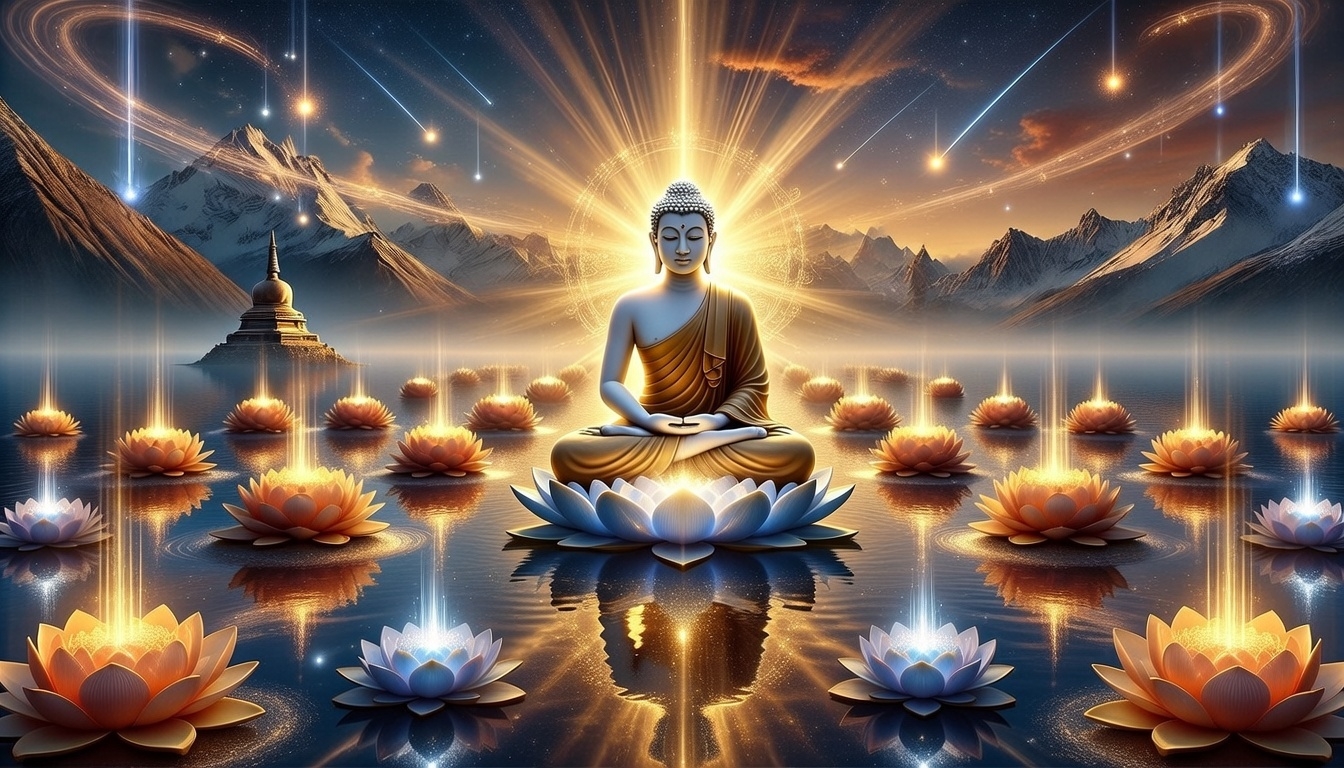
时间:12/02/2023 12/03/2023
地点:星湖禅修中心
主讲:净真
佛法知识
什么是佛法
佛法不是宗教意义上的信条体系,也不是对超自然力量的崇拜对象。佛法是一套关于现实如何运作的认识体系,以及在这种认识基础上形成的实践路径。它关心的不是“世界应当如何”,而是“世界事实上如何”,以及人在误解现实结构时,为什么必然产生困惑、冲突与痛苦。
佛法中的“佛”,并非神的概念,而是觉悟者的称谓;“法”,指的是规律、法则、真实状态。合而言之,佛法就是觉悟者对生命与存在真实结构的如实揭示。它不是由意志制定,也不随文化改变,而是任何人只要具备足够清醒的观察力,都可以验证的经验事实。
佛法源于释迦牟尼佛的觉悟经历。他并未宣称自己创造真理,而是发现并指出一种早已存在、却长期被忽视的生命法则。因此,佛法不是权威命令,而是可被重复理解与验证的认识模型。你不需要“相信”,只需要“如实观察”。
佛法首先直面一个被普遍回避的事实:人生以不圆满为常态。无论物质条件多么优越,情感多么丰盈,生命始终处在变化之中。变化意味着不确定,而不确定本身就是不安与痛苦的根源。佛法不否定快乐的存在,而是指出任何依赖条件的快乐,都必然伴随失去的可能。
佛法进一步指出,痛苦并非来自外境本身,而来自心对外境的错误理解。人误以为事物可以恒常、关系可以永远、自我可以固定,于是产生执取、排斥与恐惧。当现实不符合这些预设时,冲突便出现。佛法将这种根本性的误解称为“无明”。
在无明的基础上,欲望与执著不断运作。欲望本身不是问题,问题在于对欲望的绝对化与身份化——把“我想要”误认为“我必须拥有”。佛法指出,正是这种持续的抓取,构成了轮转不息的心理压力系统。
佛法并不止于诊断问题,也提出止息痛苦的可能性。当人通过直接观察,看清一切现象皆依因缘而生、依因缘而灭,看清自我只是经验的暂时组合,而非独立实体,执著便会自然松动。解脱并非获得某种状态,而是不再被错误认知牵引。
在实践层面,佛法以戒、定、慧作为基本路径。戒不是道德控制,而是减少干扰认知的行为噪音;定不是逃避现实,而是让心具备稳定与持续观察的能力;慧不是概念堆积,而是对无常、无我、缘起的直接洞察。这三者共同作用,指向认知结构的根本调整。
佛法的一大特点,是它的非强制性与可检验性。它不以恐惧、奖惩或身份认同作为推动力,而是以理解本身作为动力。当理解发生,行为与态度自然改变。这也是佛法可以跨越文化、时代与语言的原因。
在日常生活中,佛法并不要求远离世界。相反,情绪波动、人际冲突、欲望起伏,正是最真实的修行场域。能否在这些情境中保持觉察,而非自动反应,是佛法是否真正被理解的标准。
归根结底,佛法不是一套世界观装饰,而是一种去幻的过程。它不断削弱人对永恒、安全、固定自我的幻想,使人以更清醒、更柔软的方式面对现实。佛法不承诺完美人生,只提供不再被根本误解支配的可能性。
Date: 12/02/2023 12/03/2023
Location: Star Lake Meditation Center
Teacher: Sara
Dharma Knowledge
What Is the Dharma
The Dharma is not a religious belief system in the conventional sense, nor is it the worship of a supernatural authority. It is a framework for understanding how reality actually functions, and a practical path grounded in that understanding. Rather than describing how life should be, the Dharma examines how life truly is, and why misunderstanding this structure inevitably leads to confusion and suffering.
In Buddhism, “Buddha” refers to one who has awakened, not a god, and “Dharma” refers to law, order, or reality as it is. Together, the Dharma is the clear articulation of how existence operates when seen without distortion. It is not created by belief or sustained by culture, but accessible to anyone willing to observe with sufficient clarity.
The Dharma originates from the awakening experience of the Buddha. He did not claim authorship of truth, but discovery. What he pointed out was already present, yet unseen. For this reason, the Dharma does not rely on faith in authority, but on direct verification through experience.
At its foundation, the Dharma confronts a universal yet often avoided truth: life is structurally unstable. Change is constant, and whatever depends on conditions is vulnerable to loss. Pleasure exists, but it is inseparable from impermanence. The Dharma does not deny happiness; it clarifies why conditional happiness cannot provide lasting security.
According to the Dharma, suffering does not arise from circumstances themselves, but from misunderstanding them. When people assume permanence where there is change, or cling to a fixed identity where there is only process, attachment and resistance follow. This fundamental misperception is called ignorance.
From ignorance arise craving and clinging. Desire is not inherently problematic, but when desire becomes absolute—when “wanting” turns into “I must have”—psychological tension becomes continuous. The Dharma reveals how this cycle perpetuates dissatisfaction regardless of external success.
The Dharma also shows that suffering can cease. When phenomena are seen as dependent, transient, and without a fixed self, attachment loosens naturally. Liberation is not the acquisition of a special state, but the ending of compulsive misinterpretation. It is the absence of distortion, not the presence of something new.
Practically, the Dharma is expressed through discipline, mental stability, and insight. Ethical conduct reduces behavioral noise; concentration allows sustained observation; wisdom penetrates the actual nature of experience. These are not ideals to admire, but tools for restructuring perception.
One defining feature of the Dharma is its openness to examination. It does not operate through fear, reward, or identity enforcement. Understanding itself is the catalyst. Because of this, the Dharma remains compatible with inquiry, psychology, and empirical observation across cultures and eras.
In everyday life, the Dharma is not separate from ordinary situations. Emotional reactions, interpersonal friction, and desire are not obstacles but data. Whether one responds with awareness or automatic habit determines whether the Dharma is being applied.
Ultimately, the Dharma is not about adopting beliefs, but about dissolving illusions. It systematically dismantles assumptions about permanence, control, and selfhood. It does not promise a perfect life, but it offers freedom from being unconsciously governed by fundamental misunderstanding.