时间:10/04/2025 10/05/2025
地点:星湖禅修中心
主讲:龙示林
佛法修行
贪着利养自取灭亡
佛陀的弟子中有一位名叫「调达」(提婆达多)的比丘,非常聪明好学,十二年中,修息所有的禅定都能够成就,也能遵循十二头陀的苦行,修不净观、数息观,得暖、顶、忍、世第一等成就,并且诵经六万部,无人能出其右。但是,随着修行时间愈久,调达逐渐希望藉由这些成就获得利养。他想了想,觉得唯有学会神通变化,才能够让大家敬畏自己。
这天,调达独自来到释迦牟尼佛的处所,顶礼佛足后退坐一旁,迫不及待地表示自己想要修习神足通,飞行变化至他方世界弘扬佛法、广度众生。世尊早已洞悉他的动机,淡淡地说:「你先放下这样的欲望,思惟一切世间无常、苦、空、无我的道理。」
调达心想:「哼!你就是怕我学会神通之后胜过你,才会密藏而不传授。」于是调达比丘离开佛所,又来到人称智慧第一的舍利弗尊者前作了同样的请求。已经证得阿罗汉的舍利弗当然明白调达的心性,亦规劝他修学「无常、苦、空、无我」。
调达听不进去,骄傲地认为:「舍利弗号称智慧第一,跟我比起来,就如萤火比于日月。没有人能像我一样能诵读六万部经,我尚且不解神足之道,舍利弗又怎会懂得呢?」
第三次,调达找上了神通第一的目连尊者,却被尊者以同样的理由所拒绝。调达立刻起了瞋恚之心,心想:「目连自夸神足第一,就是恐怕我得了神足通,令其失去神足第一的盛名。」他觉得这些人既自私又小气,不教便罢,还要他思惟「无常、苦、空、无我」这么简单的道理,实在看不起人。
最后,他想到了自己的弟弟──阿难。阿难虽然广学多闻,仁慈善良,但因还未证得圣果,不知调达的心思,故不疑有他地教授调达修习神通的次第与方法。
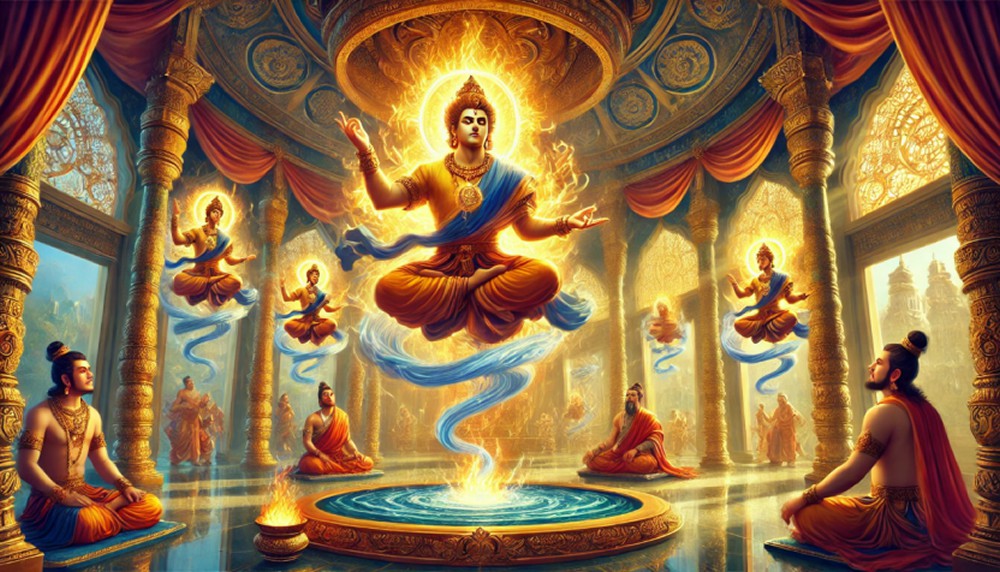
好不容易得到教法的调达,在闲静偏僻的地方专心一意地修法,运用之前禅定的基础,心念从粗到细,由细还粗,身心和合渐渐离地,飞升屋顶乃至虚空,作十八种神变,身上出火、身下出水,身下出火、身上出水;从东而没、从西而出,从西而没、从东而出;或化多分身还合为一,或穿墙越壁,了无障碍。
调达知道自己已经修习成功,便从空中而下,进入宫廷谒见频婆娑罗王的儿子阿阇世太子,并在太子眼前化作小儿,面如桃花,庄严无比,跳坐太子的膝上任其抚玩。阿阇世太子欢喜无比,认为调达比父亲所尊崇的世尊还要伟大,便每日赏他五百金,日日形影不离,随时供养不令匮乏。
许多弟子见到调达自由出入宫中,富贵荣华不可言喻,心生羡慕,相率前来求见世尊,世尊对众弟子开示道:「你们不要贪爱这种名闻利养,名利不仅会陷自己于罪网中,更会坑害他人。」世尊接着以譬喻说明,山中鹫鸟对刚孵出的雏鸟说:「你们学飞时不要贪多,飞得过高会被强风所伤。」雏鸟不听规劝,率性飞至高空,结果被风吹落、肢节分离。
又如,龟告其子:「不要贪玩,外有猎人虎视眈眈,钓取你们分而为五。」龟子不从其教,在外嬉戏无有戒心,见有长线逐在身后却不知逃避,后多被捕捉丧身失命。世尊说道:「调达比丘贪求供养就如这般,造诸罪业必受苦果。」
世尊为了让弟子更明白利欲害人的道理,再举证说明:「过去,大月氏国风俗以生酥和麦煎熟来喂养猪只,当时宫中有马驹闻到香酥的味道而向其母抱怨:『我们为国王卖命,驰骋四处,不问远近,为什么待遇却不如一只猪仔,每天要吃了无滋味的水草?』母马回答:『你们千万不要有这样的想法,这样的待遇是祸不是福,不久之后即当验证。』其后,年关将近,家家皆捉猪只投于镬汤沸炉之中,猪群哀嚎之声远近皆闻。
这时,母马复问其子:『你们还想再吃酥煎麦吗?』小马们个个心惊,纵使遇上好麦粮也让而不食。世尊再告诫大众:「调达心性如何,大众皆知,如此的供养并非德行的感召,过后必将获罪无量。」
日后,调达果然唆使阿阇世杀老王作新王,自己并欲害世尊而作新佛,毁谤三宝、出佛身血,造了五逆重罪后,大地迸裂,应时身堕地狱。
Date: 10/04/2025 10/05/2025
Location: Star Lake Meditation Center
Teacher: Shilin Long
Dharma Talk
Greedy for Profit and Support, Bringing About One’s Own Destruction
Among the disciples of the Buddha there was a monk named Devadatta. He was very intelligent and diligent. For twelve years he practiced all kinds of meditation and attained success. He also observed the twelve ascetic practices, cultivated meditation on impurity and mindfulness of breathing, and reached the stages of warmth, summit, patience, and worldly foremost.
He recited sixty thousand sutras, with none who could surpass him. However, as time went by, Devadatta gradually wished to use these attainments to gain wealth and fame. He thought that only by mastering supernatural powers could he make others fear and respect him.
One day, Devadatta came alone to Śākyamuni Buddha. After bowing at the Buddha’s feet, he sat aside and eagerly expressed his wish to cultivate the miraculous power of supernormal abilities, to fly and transform himself in order to travel to other worlds, spread the Dharma, and save beings.
The World-Honored One, who already knew his motives, calmly said: “First put down such desires and contemplate the truths of impermanence, suffering, emptiness, and non-self.”
Devadatta thought: “Hmph! You are only afraid that if I gain supernatural powers I will surpass you, so you keep them hidden and refuse to teach me.” Then he left the Buddha and went to Śāriputra, known as foremost in wisdom, to make the same request.
Already an Arhat, Śāriputra clearly knew Devadatta’s nature and likewise advised him to contemplate impermanence, suffering, emptiness, and non-self. Devadatta would not listen, proudly thinking: “Śāriputra is praised as foremost in wisdom, but compared to me he is like a firefly before the sun and moon. No one can recite sixty thousand sutras as I can. If even I have not mastered the way of supernatural powers, how could Śāriputra possibly know it?”
A third time, Devadatta went to Maudgalyāyana, foremost in supernatural powers, but was refused again for the same reason. At once he grew angry: “Maudgalyāyana boasts of being foremost in miraculous powers, but he fears that if I master them, his reputation will be lost.”
He felt that they were selfish and petty. Not only would they not teach him, but they even told him to think about such “simple truths” as impermanence, suffering, emptiness, and non-self. He felt belittled. Finally, he turned to his younger brother Ānanda.
Although Ānanda was learned, compassionate, and virtuous, since he had not yet attained enlightenment, he did not understand Devadatta’s mind and therefore unsuspectingly taught him the steps and methods to cultivate supernatural powers.
With difficulty gaining these instructions, Devadatta retreated to a secluded place and practiced diligently. Relying on his foundation of meditation, his thoughts went from coarse to subtle, then subtle to coarse. His body and mind became unified, gradually rising from the ground, soaring above rooftops, even into empty space.
He performed eighteen transformations: fire issuing from his body above while water flowed below; then water above, fire below; disappearing in the east, reappearing in the west; or vanishing in the west, reappearing in the east; multiplying into many forms and then merging into one; walking through walls without obstruction.
Knowing he had succeeded, Devadatta descended from the sky and entered the palace of Prince Ajātaśatru, son of King Bimbisāra. In front of the prince, he transformed into a beautiful child with a face like a peach blossom, solemn and radiant, and leapt into the prince’s lap to be fondled.
Ajātaśatru was overjoyed, believing Devadatta greater than even the Buddha his father revered. He rewarded Devadatta daily with five hundred gold pieces, provided endless offerings, and never let him lack for anything.
Many disciples saw Devadatta freely entering the palace, enjoying immense wealth and honor, and they became envious. They went to the Buddha. The Buddha admonished them: “Do not covet such fame and profit. Fame and profit not only ensnare oneself in the net of sin, but also harm others.”
He then gave a parable: In the mountains, a vulture told its chicks, “When learning to fly, do not go too high, or strong winds will harm you.” But the chicks ignored the advice, soaring into the sky, and were blown down, their bodies shattered. Likewise, a turtle warned its young, “Do not play carelessly outside. Hunters are watching, ready to catch you with hooks and divide you into five parts.”
The young ignored him, played without caution, and when they saw long strings trailing behind them, they did not flee, and many were caught and killed. The Buddha said: “Devadatta, greedy for offerings, is just the same. Creating evil karma, he must reap bitter results.”
To further explain the harm of greed for profit, the Buddha gave another example: “In the past, in the country of the Great Yuezhi, people fed pigs with fresh ghee and cooked barley. A colt in the palace, smelling the fragrance, complained to its mother: ‘We labor for the king, running everywhere without rest, yet our food is tasteless grass.
Why is a piglet treated better than us?’ The mare replied: ‘Never think that way. That treatment is a disaster, not a blessing. Soon you will see.’ Later, near year’s end, families seized their pigs and threw them into boiling cauldrons. Their wails were heard far and near.
The mother horse then asked her son: ‘Do you still want to eat barley cooked in ghee?’ The colts trembled, and even when offered good grain, refused to eat. The Buddha concluded: ‘Everyone knows Devadatta’s nature. Such offerings do not come from virtue. In the end, they bring endless guilt.’”
Later, Devadatta indeed incited Ajātaśatru to kill his father and seize the throne. He even sought to harm the Buddha and replace him as the new Buddha. He slandered the Triple Gem and caused the Buddha’s body to bleed, committing the five heinous crimes. The earth split open, and he immediately fell into hell.