时间:08/16/2025 08/17/2025
地点:星湖禅修中心
主讲:龙示林
佛法修行
慈悲化鲸度众生
释迦牟尼佛在过去生行菩萨道时,曾经是一位商人,名叫贫窭,他经常在国与国之间做买卖。这一次,贫窭与一群好朋友们又乘船远至他国去做生意。
在海上航行的途中,贫窭不时来到甲板,站在这里透气,当贫窭望向海洋时,忽然见到海中的大鱼追食着小鱼群,只见大鱼群快速的张开大嘴不断的吞食着,小鱼们仓皇的逃避,却躲不过被大鱼吞食的命运,成群的小鱼很快就消失在大鱼的口中,它们的生命就这样消失。
贫窭感叹着小鱼的无助与弱肉强食的无奈,他想着:「生命源远流长,在不断的变换外形中绵延,不知道这个道理的众生却在每一生中互相争夺与杀伐,造成后世更深的怨怼与仇恨,冤冤相报无尽。我愿以自己的色身布施给鱼儿们,以换取无数的小生命,不再被大鱼所追杀。」
于是贫窭跳入海中,舍身布施行菩萨道。在这一生命终之后,转世投胎为身体巨大的鲸鱼王,领导着海中的鱼群自在的生活。
在靠近海边有一小国,正遭逢严重的旱灾,人民无以为食,竟然互相杀害,彼此啖食人肉维生。慈悲的鱼王知道了,心里想「这是多么悲惨的事啊!旱灾什么时候才会结束呢?他们这样互相啖食,终会走上绝境的。」
于是鱼王游到浅滩上,希望以自己的身体维持大众的生命。海边的居民看到这么大的鱼,喜出望外,他们感谢天神送来了食物,纷纷互相走告:「大家快来啊!有一条大鱼停在岸边,大家赶快去食用。」
就这样,每天都有人带着刀,在鲸鱼王的身上任意的割下他们所需要的鱼肉来维持生命,鲸鱼王庞大的身躯被刀切割得遍体鳞伤。几个月过去了,鲸鱼王忍着痛,居然还活着。
鱼王牺牲自己以救活大众的这种大慈悲心感动了天神,天神从天界来到鲸鱼王的身边,合掌问道:「慈悲的鲸王啊!您用自己的身体养活大众,每天还要忍受人们一刀一刀的割切,这样的痛苦是无法形容的!您为什么不舍离这个报身,只要留下鱼身给大众就可以了!」
鲸王回答:「我不能这么做啊!如果我死了,这鱼身很快就会腐烂掉,人民将再度陷入饥饿的困境,又会开始互相杀害、啖食人肉以生活。我实在不忍心见到这种惨状再度发生,所以,我一定要坚持活下来。」天神被鲸王这种舍己救人的愿心所感动,由衷的赞叹:「鲸王啊!您这么样的慈心广大,将来一定能成就无上佛果,广度无量无边的众生。」
有一天,一位村民拿着斧头,爬到鲸王的头上,用力的砍下鲸王的头带回家烹食,鲸王才因此结束了这一世的生命。
舍报的鲸王转世为皇太子,太子生来聪慧,在成长过程中,处处都流露出悲天悯人的胸怀,深受国人的爱戴。
有一年,国内旱灾,农作没有收成,国人贫困潦倒,皇太子于是建议父王免除国人的税收,自己也是粗食淡饭,尽力的救助人民。他深深的忏悔,自己没有福报,所以不能福庇子民;由于自己的罪业,使人民生活在灾难中,不能安居乐业。
太子于是长跪发愿:「我愿意用自己的生命换取上天的甘露润泽,期望能解除国人的灾难,人民都能丰衣足食,生活得无忧无虑。」太子哀恸的忏悔,他真诚的希望人民能安乐的生活。他至诚的发愿,感召了大慈悲的佛陀带领五百位出家比丘来到太子的国家,让他们培植福田。
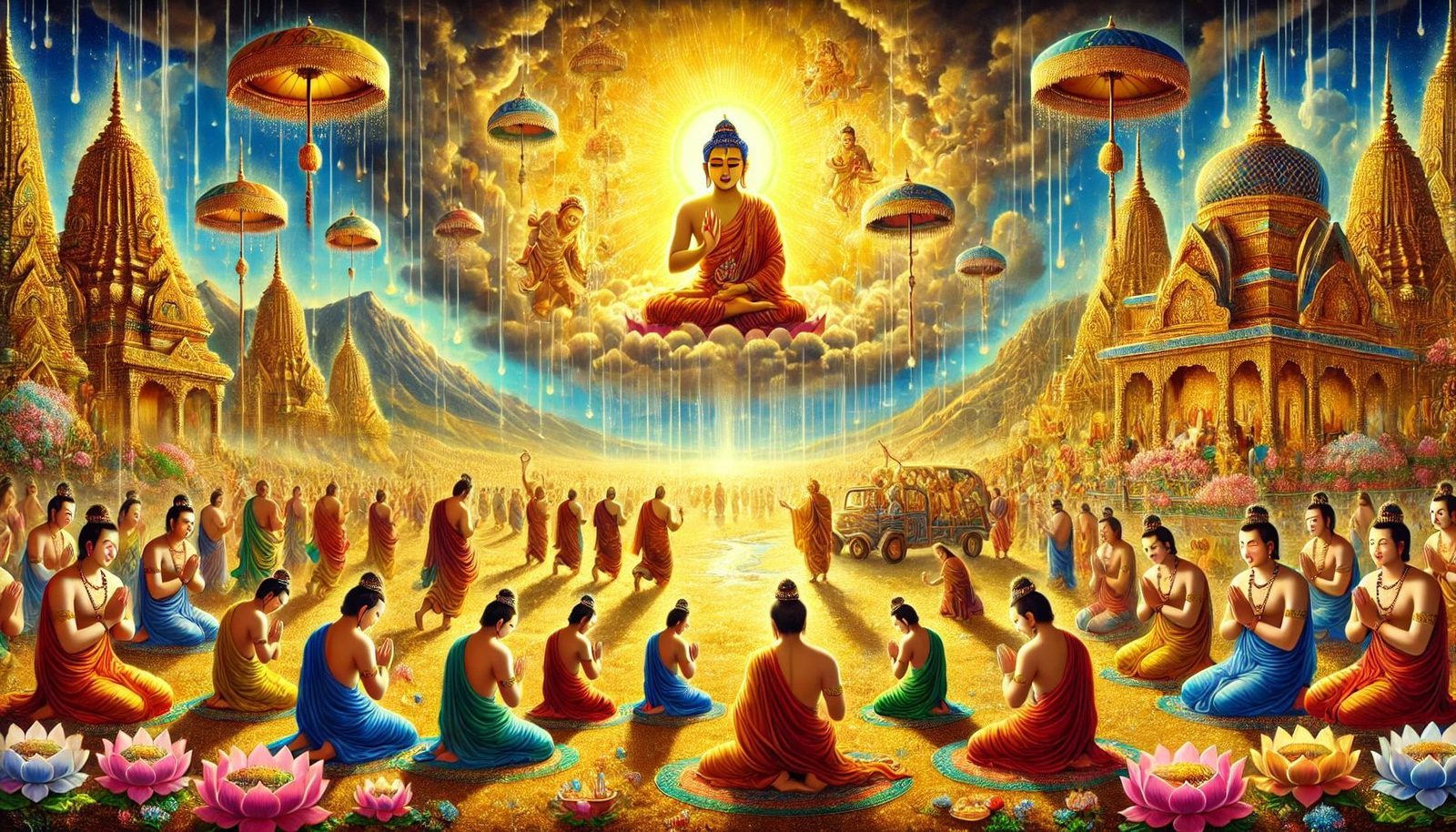
佛陀与众比丘才刚踏上边界,国王、太子带领着皇族都来恭迎佛陀到皇宫接受供养,一路上,百姓们欢喜得匍匐于地,恭敬的顶礼佛陀。当佛陀安详徐步的走过时,大众感受到佛陀的慈祥与光明,他们觉得灾难即将过去了。
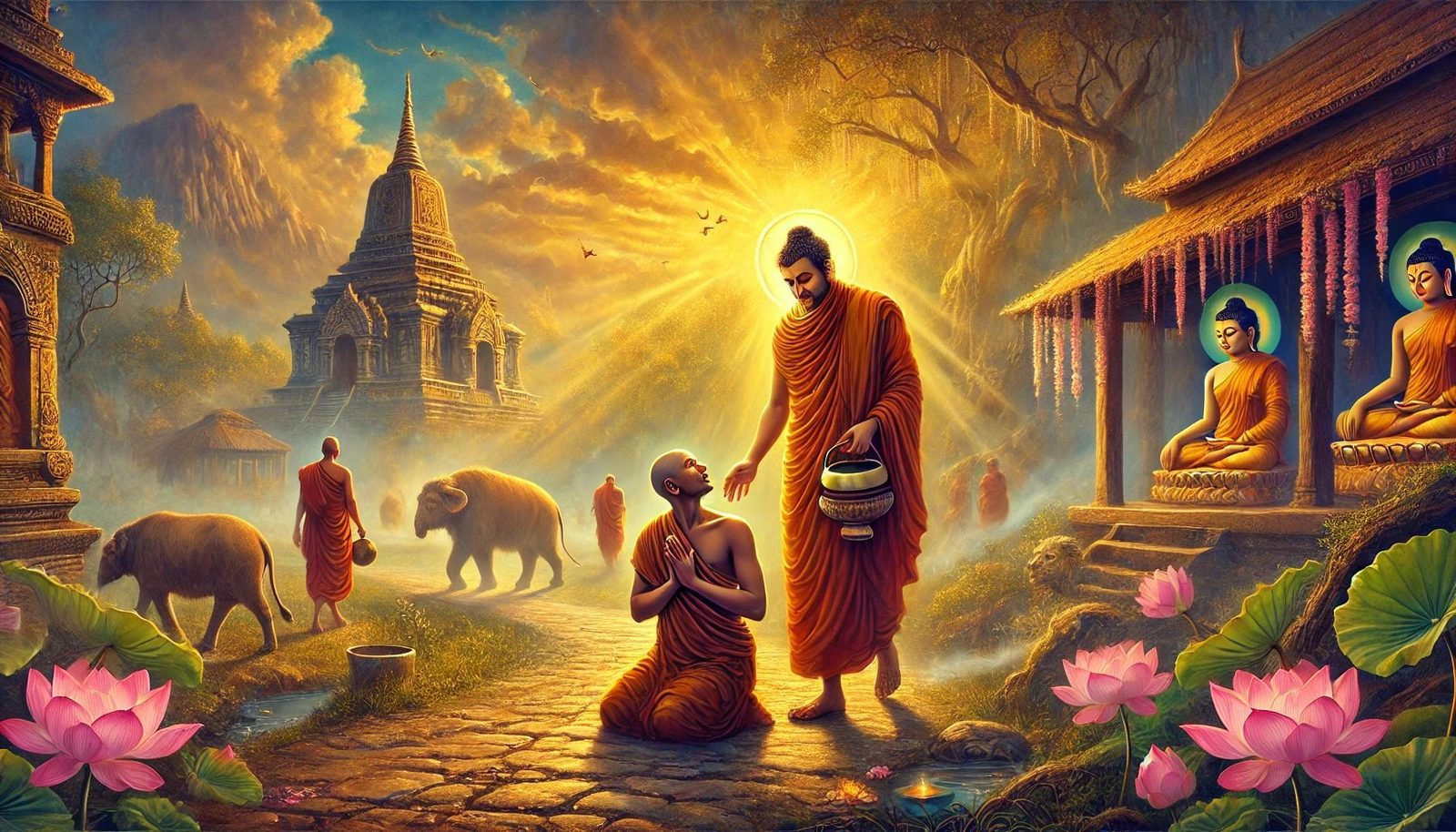
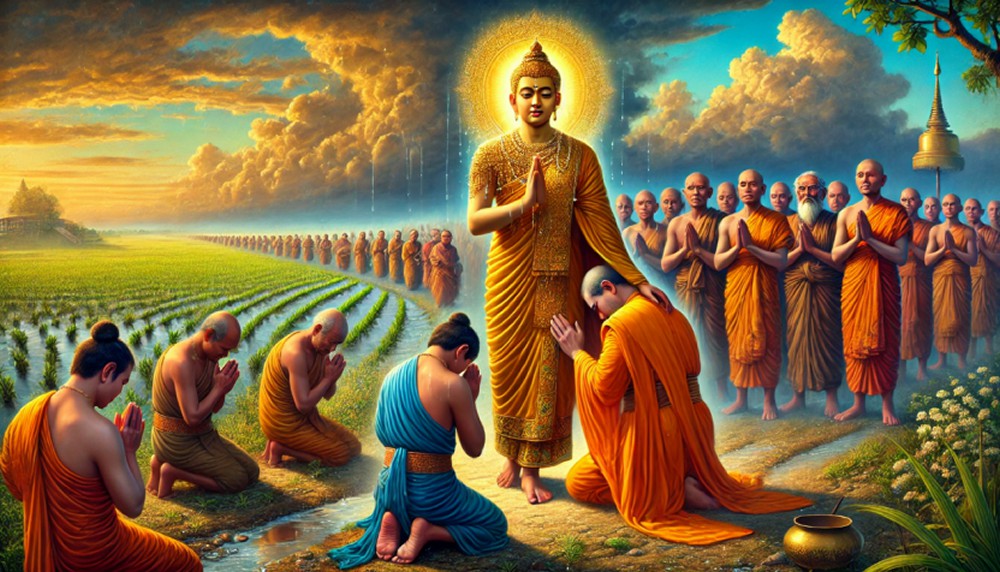
见到佛陀的太子,悲喜交集;悲的是由于自己的罪业深重,使人民遭受饥馑之灾,喜的是佛陀慈悲普照,为人民种福。太子在佛陀面前涕泪悲泣,长跪顶礼的说道:「佛啊!国家久旱不雨,至使五谷不收,这都是我没有福报,我的罪业带给子民的是灾难。慈悲的佛啊!我愿意牺牲自己以换取人民的安泰。」佛陀回答说:「太子啊!你的慈悲喜舍是十方诸佛菩萨都知道的啊!你真诚的忏悔与发愿,即将解除国内的灾难。」
不多时,天上降下甘霖,解除了长久的旱象,人民感恩佛陀的普照与仁心爱民的君王。由于佛的教化,大众学到了唯有互相帮助、彼此体谅,化解心中彼此的分别、嫉妒与仇恨,才能使这个共同生活的地方免于灾难。国家中所有人民更加恭敬三宝、深信佛法,真正做到信受奉行。从此以后,风调雨顺,国泰民安。
Date: 08/16/2025 08/17/2025
Location: Star Lake Meditation Center
Teacher: Shilin Long
Dharma Talk
Compassionately Transforming into a Whale to Save Sentient Beings
In a past life, when Śākyamuni Buddha was practicing the bodhisattva path, he was a merchant named Pinju, who often traveled between countries for trade. This time, Pinju and a group of friends sailed to a distant land for business.
During the voyage, Pinju frequently stood on the deck to get some fresh air. One day, as he gazed at the ocean, he saw a large fish chasing and devouring a school of small fish. The large fish opened their mouths wide, swallowing continuously, while the small fish fled in panic, unable to escape their fate. Soon, the small fish vanished into the mouths of the big fish, their lives extinguished.
Pinju lamented the helplessness of the small fish and the inevitability of the strong preying on the weak. He thought, “Life is vast and enduring, continuously changing forms. Yet, beings unaware of this truth fight and kill each other in every life, creating deeper resentment and hatred, leading to endless cycles of vengeance. I vow to offer my body to the fish to save countless small lives from being hunted by larger fish.”
Thus, Pinju jumped into the sea, sacrificing himself on the bodhisattva path. After this life ended, he was reborn as a massive whale king, leading the sea’s fish to live freely.
Near the coast, a small country was suffering from a severe drought. People, lacking food, resorted to killing and eating each other to survive. The compassionate whale king learned of this tragedy and thought, “How dreadful! When will this drought end? If they continue cannibalizing, they will face extinction.”
The whale king swam to the shallows, hoping to sustain the people with his body. Coastal residents, seeing such a large fish, were overjoyed, thanking the gods for the food. They spread the news: “Everyone, come quickly! A big fish is on the shore; let’s eat it.”
Every day, people brought knives to cut the whale king’s flesh for sustenance. His massive body was covered in wounds. Months passed, and despite the pain, the whale king remained alive. His selfless act moved the gods, who descended to ask, “Compassionate whale king, you feed the people with your body, enduring daily cuts. Why not abandon this body and leave it for them?”
The whale king replied, “I cannot do that. If I die, my body will quickly rot, and the people will face hunger again, leading to more killing and cannibalism. I cannot bear to see such tragedy recur, so I must stay alive.”
The gods, moved by his selfless vow, praised him: “Whale king, your vast compassion will lead you to attain supreme Buddhahood, saving countless beings.”
One day, a villager climbed onto the whale king’s head and, with an axe, severed it to take home for food, ending the whale king’s life.
The whale king was reborn as a crown prince, wise from birth, showing compassion throughout his upbringing, earning the people’s love.
One year, a drought struck the nation, leading to failed crops and widespread poverty. The crown prince advised the king to exempt taxes and lived frugally himself, aiding the people. He deeply repented, believing his lack of merit caused the people’s suffering.
The prince knelt and vowed: “I offer my life in exchange for heavenly rain to relieve the people’s suffering, hoping they can live without worry.” His sincere repentance moved the compassionate Buddha, who led 500 monks to the prince’s country to cultivate blessings.
As the Buddha and monks arrived, the king, prince, and royal family welcomed them to the palace. Along the way, citizens joyfully prostrated, feeling the end of their suffering.
Seeing the Buddha, the prince was overwhelmed with emotion. He knelt, weeping, and said, “Buddha, the prolonged drought and crop failure are due to my lack of merit, bringing disaster to the people. Compassionate Buddha, I am willing to sacrifice myself for their peace.”
The Buddha replied, “Prince, your compassion is known to all Buddhas and bodhisattvas. Your sincere repentance and vow will soon end the nation’s calamity.”
Soon, rain fell from the sky, ending the drought. The people were grateful for the Buddha’s compassion and the benevolent king.
Through the Buddha’s teachings, they learned that only by helping and understanding each other, and eliminating jealousy and hatred, can they avoid disasters. The nation’s people revered the Three Jewels and deeply believed in the Dharma, practicing faithfully. From then on, the country enjoyed favorable weather and peace.