时间:03/08/2025 03/09/2025
地点:星湖禅修中心
主讲:龙示林
佛法修行
优波离尊者
未出家前,优波离尊者是个剃头匠,既细心又认真,专门为释迦族的王子们理发。有一年,佛陀回到故乡迦毗罗卫城,手艺极佳的优波离自然是为佛陀理发的人选。对优波离来说,这可是个大考验呢!想到要面对众所尊敬的大觉悟者,再想到自己身为「首陀罗」的身份(印度四个种姓中最下贱,相当于奴隶的阶级),优波离就不禁紧张起来。
为佛陀剃发的那天,优波离的母亲陪着他一块儿去。佛陀的慈悲让优波离松了一口气,不再感到那么紧张。当优波离正小心翼翼地为佛陀剃发的时候,站在身后的母亲便请问佛陀:「优波离的手艺怎么样呢?」
「他的手艺很好,只是身子太弯了。」佛陀回答。优波离一听见佛陀指正,一心专注,改正姿势,当下就入了初禅。
过了一会,母亲又问:「现在如何呢?」佛陀说:「现在身体又太仰了。」优波离一听,再调整姿势,便入了二禅。
「现在怎么样呢?」母亲接着又问。「吸气稍微粗重了些。」佛陀回答。优波离立刻专注于呼吸上,又入了三禅。
母亲再次请问佛陀,这次佛陀说:「吐气稍微粗重了些。」当下,优波离连呼吸的念头也放下,当下就入了四禅。
这时,佛陀便对身旁的比丘们说:「你们快把他手上的刀子拿起来吧!优波离已经入到四禅了,好好的扶着他,别让他倒在地上。」
由于优波离一心专注敬慎,在听闻佛陀教导的当下,便证到四禅。
后来,佛陀回到迦毗罗卫城为大众说法,年轻的王子们听到无上的真理都十分欢喜,发起了出离心,愿意随佛出家。众王子们请优波离为他们剃发,并将身边珍贵的财宝都留给了优波离,但优波离并不因为得到了钱财而高兴。他想:「王子们都能舍下荣华富贵的生活去出家,我还有什么放不下的呢?」于是,他也决定向佛陀请求出家;但仍然为自己的身份担心着……
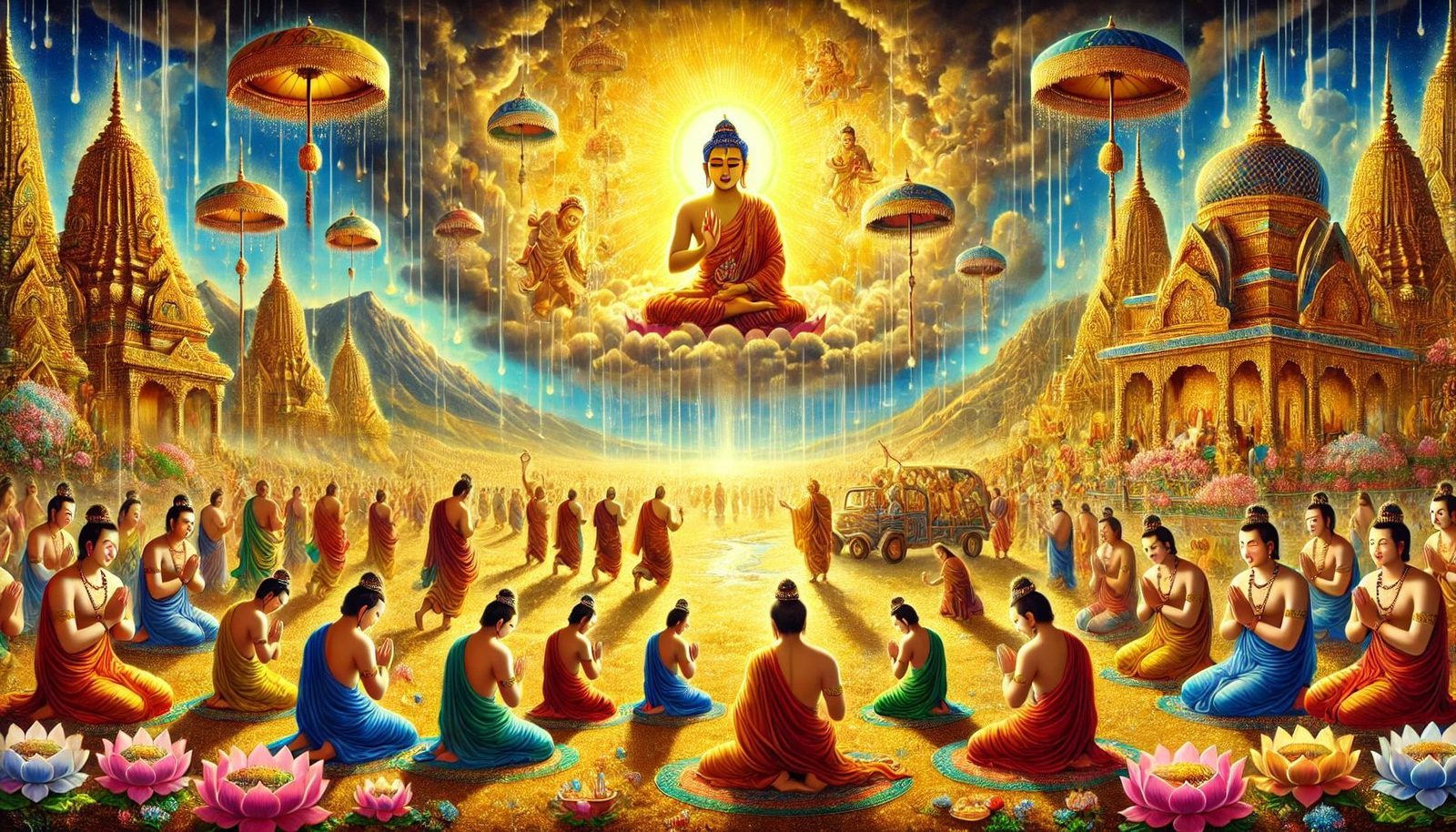
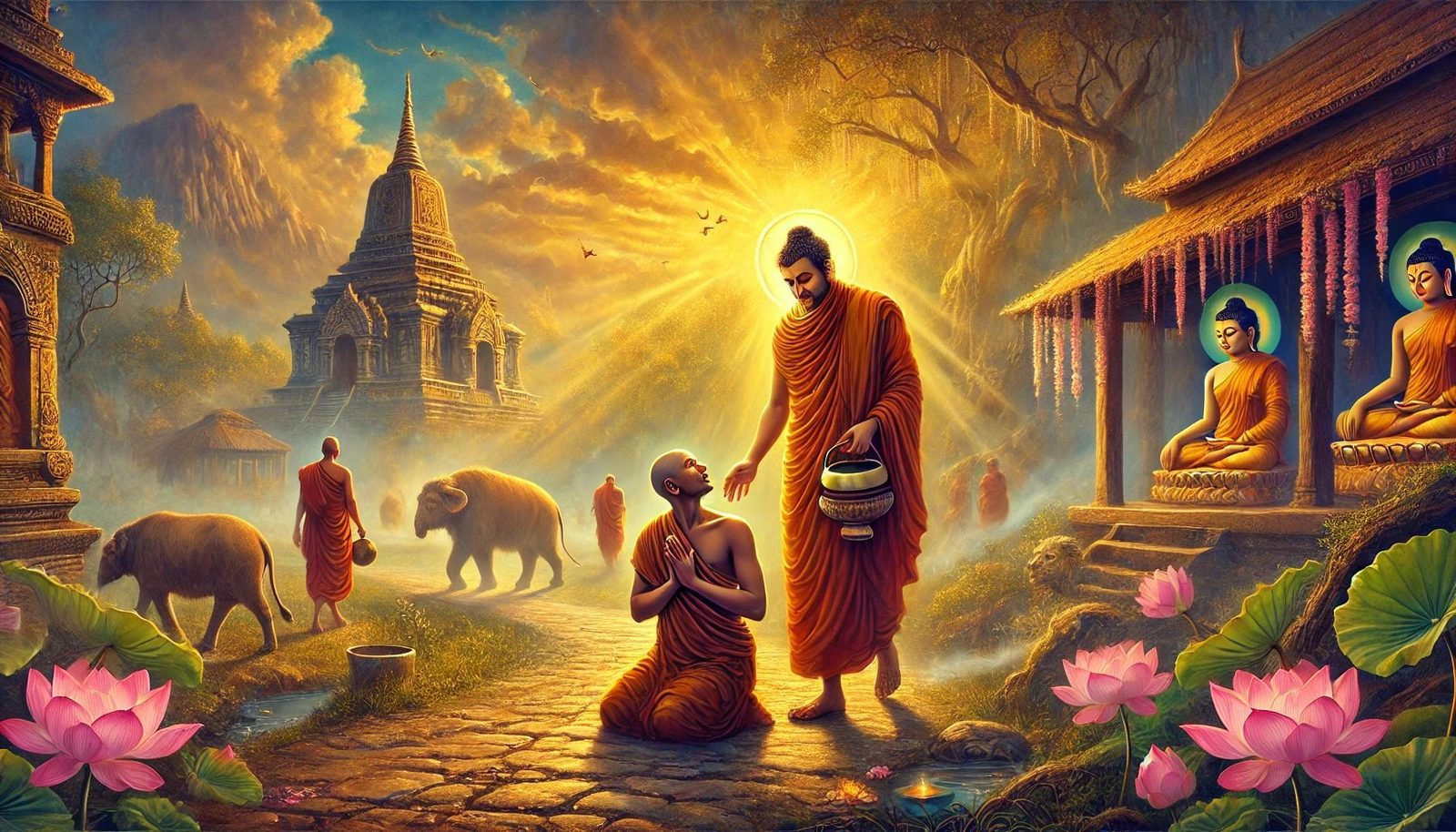
佛陀不但没有因为优波离的奴隶身份而拒绝他,并且让王子们向先出家的优波离礼拜。王子们见到优波离出家都很欢喜,也能降伏憍慢的心,向优波离恭敬地顶礼。如此平等和合的行径,在当时种姓阶级分明的印度,实在非常不容易。
出家后的优波离,对于僧团的戒律都能持守得非常清净,丝毫也不违犯,所以在佛陀弟子中被誉为「持戒第一」,尊为上首,许多比丘们在戒律上有疑问,也常会请教优波离尊者。
有一次,一位比丘生病了,必须以酒作为药物,但比丘宁愿病死也不愿意破戒饮酒。尊者知道了这件事,便去请示佛陀。佛陀说:「若为治病之药需酒,则可开缘。」于是尊者便带酒给生病的比丘,并为他说法,病比丘不仅身体恢复了,在听闻尊者说法的时候,当下也证得了四果阿罗汉!佛陀知道了这件事,赞叹优波离尊者是「真持律者」,不仅能持戒,也能懂得戒律的开遮持犯。
佛陀灭度后,迦叶尊者集合五百罗汉结集佛所说的教法,而持戒第一的优波离尊者,被大众公推上座,诵出律藏部份,尊者对于佛陀制戒的因缘及当时的人、事、时、地都详细的诵出,共诵了八十次才将律藏结集完毕,也就是后来的《八十诵律》。
Date: 03/08/2025 03/09/2025
Location: Star Lake Meditation Center
Teacher: Shilin Long
Dharma Talk
Venerable Upāli
Before ordaining as a monk, Venerable Upāli was a barber who was meticulous and diligent, specializing in haircuts for the princes of the Śākya clan. One year, when the Buddha returned to his hometown of Kapilavastu, the highly skilled Upāli was naturally chosen to shave the Buddha’s hair.
For Upāli, this was a great test! Thinking about facing the greatly revered enlightened one, and then recalling his own status as a Śūdra (the lowest caste in India’s four-caste system, equivalent to a slave), Upāli could not help but feel nervous.
On the day he shaved the Buddha’s head, Upāli’s mother accompanied him. The Buddha’s compassion relieved Upāli’s anxiety, making him feel less nervous. While Upāli was carefully shaving the Buddha’s head, his mother, standing behind him, asked the Buddha, “How is Upāli’s skill?”
”His skill is very good, but his posture is too hunched,” the Buddha replied. Upon hearing the Buddha’s correction, Upāli focused his mind, adjusted his posture, and at that moment, entered the first jhāna (meditative absorption).
After a while, his mother asked again, “How about now?” The Buddha said, “Now his posture is too upright.” Upon hearing this, Upāli adjusted his posture again and entered the second jhāna.
”How about now?” his mother continued to ask. “His inhalation is slightly too heavy,” the Buddha replied. Upāli immediately focused on his breathing and entered the third jhāna.
His mother asked the Buddha once more, and this time, the Buddha said, “His exhalation is slightly too heavy.” At that moment, Upāli let go of even the thought of breathing and entered the fourth jhāna.
At this point, the Buddha turned to the monks beside him and said, “Quickly take the razor from his hand! Upāli has entered the fourth jhāna. Support him well so that he does not collapse onto the ground.”
Because Upāli was wholeheartedly focused and reverent, the moment he heard the Buddha’s teaching, he attained the fourth jhāna.
Later, when the Buddha returned to Kapilavastu to teach the Dharma, the young Śākya princes were overjoyed upon hearing the supreme truth. They developed renunciation and were willing to leave the household life to follow the Buddha.
The princes asked Upāli to shave their heads and left all their precious wealth and treasures to him. However, Upāli did not feel joy over receiving wealth. He thought, “Even the princes can renounce their luxurious and noble lives to become monks, so what is there that I cannot let go of?” Thus, he too decided to request ordination from the Buddha. Yet, he still worried about his caste status…
The Buddha, however, did not reject Upāli due to his low-caste background. Instead, he allowed the princes to pay respects to Upāli, who had ordained before them. Seeing Upāli as a monk, the princes were delighted and were able to overcome their pride by bowing respectfully to him. This act of equality and harmony was extraordinary in ancient India, where the caste system was rigidly enforced.
After Upāli ordained, he strictly upheld the monastic precepts, maintaining perfect purity without any transgressions. Among the Buddha’s disciples, he was honored as the foremost in Vinaya (disciplinary precepts) and was highly respected. Many monks with questions regarding the precepts frequently sought guidance from Upāli.
One time, a monk became ill and had to consume alcohol as medicine, but he refused to drink it, choosing rather to die than break the precept. When Upāli heard about this, he went to consult the Buddha. The Buddha said, “If alcohol is required as medicine for treatment, an exception may be made.”
Following the Buddha’s instructions, Upāli brought alcohol to the sick monk and taught him the Dharma. Not only did the monk recover physically, but upon hearing Upāli’s teachings, he immediately attained Arahantship (the fourth and highest stage of sainthood).
Upon learning of this, the Buddha praised Upāli as a “true Vinaya master”, saying that he not only upheld the precepts but also understood the flexibility and applications of Vinaya.
After the Buddha entered Parinirvāṇa, Venerable Mahākāśyapa gathered five hundred Arahants to compile the Buddha’s teachings. Being foremost in Vinaya, Venerable Upāli was unanimously appointed as the leading reciter of the Vinaya (monastic discipline).
He recited the entire Vinaya Piṭaka with detailed explanations of the reasons for each rule, the people, events, times, and places related to the Buddha’s establishment of the precepts.
He recited the Vinaya a total of eighty times before the compilation was completed, which became known as the Eighty-Recitation Vinaya (Śītavanavāsin Vinaya).