时间:01/04/2025 01/05/2025
地点:星湖禅修中心
主讲:龙示林
佛法修行
闻偈证果的年轻比丘
莫从卑劣法,莫住于放逸,
莫随于邪见,莫增长世俗。
【世品第(167 偈颂)】
这一偈颂是佛陀在祇树给孤独园时,为一年轻比丘所说的。
一天早上,一位长老带领一位年轻比丘到维萨卡家里应供。维萨卡是一位虔信的优婆夷,每天早上、中午分别在家中安排五百比丘的座位,供养五百比丘吃早餐和午饭。
长老在维萨卡家里吃了稀饭后,他把年轻比丘留下,自己再到其他信徒家里。此时维萨卡的孙女也帮忙行堂的事宜,当她在为年轻比丘倒水的时候,偶然在年轻比丘装着水的钵里看到自己的脸,她觉得很有趣,不觉就笑出声来。
年轻比丘看到她笑,以为是对他笑,自己也跟着大声笑,谁知维萨卡的孙女看见年轻比丘笑,就骂道:「秃头驴!你笑什么?」年轻比丘听这一骂,也生气地反唇相讥:「你也是秃驴,你父母也是秃驴。」女孩被骂,就哭着去向祖母维萨卡「告状」,维萨卡来到年轻比丘的面前,看到他仍旧一脸怒容,就安慰他说:「师父,不要生气了,我的孙女看到剃光头、穿袈裟的比丘,都很尊敬的。」
年轻比丘对维萨卡说:「我了解你说的,但我不懂你的孙女为什么要骂我秃驴,她不应该这样骂我的。」维萨卡无法为两人调解,不久长老回来了,了解事情的始末后,长老对年轻比丘说:「因为我们都是光头的缘故,她不是针对你一个人骂的,你不要介意。」年轻比丘生气地说道:「你应该教训他们才对,为什么还说我?你也是出家人,为什么偏袒他们呢?他们应不应该叫我秃驴?你想想看!」
此时,佛陀也来了,维萨卡将事实经过向佛陀说了一遍,佛陀思惟片刻,自忖道:「观此因缘,我如果偏袒年轻比丘,他马上会证初果。」于是佛陀决定偏袒年轻比丘,他故意对维萨卡说道:「维萨卡!你的孙女需要对一个光头的人说他是秃驴吗?」年轻比丘一听,怒气顿消,合掌向佛道:「世尊!还是您比较明理,长老和维萨卡都不清楚。」
佛陀看了年轻比丘的脸色已经好转,才又正色说道:「有关男女欲望的玩笑是低级的、卑劣的。对低级的、卑劣的法,不要跟着它走;也不要整天放逸,迷迷糊糊过日子。这些都是邪见,只会增长世俗的生死轮回、不断地在生死苦海中流浪而已,不能解脱生死。」佛为重宣此义而说偈言:「莫从卑劣法,莫住于放逸,莫随于邪见,莫增长世俗。」
年轻比丘闻偈已,立即证得初果,与会大众亦同沾法益。
Date: 01/04/2025 01/05/2025
Location: Star Lake Meditation Center
Teacher: Shilin Long
Dharma Talk
The Young Monk Who Attained Enlightenment Upon Hearing a Verse
”Do not follow inferior practices, do not dwell in heedlessness.
Do not adhere to false views, do not increase worldly attachments.”
(From the Dhammapada, Chapter on the World, Verse 167)
This verse was spoken by the Buddha at the Jetavana Monastery, directed towards a young monk. The story unfolded as follows:
One morning, an elder monk accompanied a young novice to the home of Visakha, a devout laywoman. Visakha, known for her deep faith, would host 500 monks daily, offering them seats and providing breakfast and lunch.
After the elder monk finished his porridge at Visakha’s home, he left the young novice there and went to visit other lay supporters. At the same time, Visakha’s granddaughter was helping serve the monks. While pouring water for the young novice, she happened to see her own reflection in the water bowl he was holding. Finding it amusing, she laughed aloud.
The young monk, noticing her laughter, mistakenly thought she was laughing at him and burst out laughing as well. The granddaughter, seeing the monk laugh, scolded him harshly, saying, “Bald donkey! What are you laughing at?”
Offended, the young monk retorted, “You’re the bald donkey! Your parents are bald donkeys too!” Hurt by his words, the granddaughter ran crying to her grandmother, Visakha, and told her what had happened.
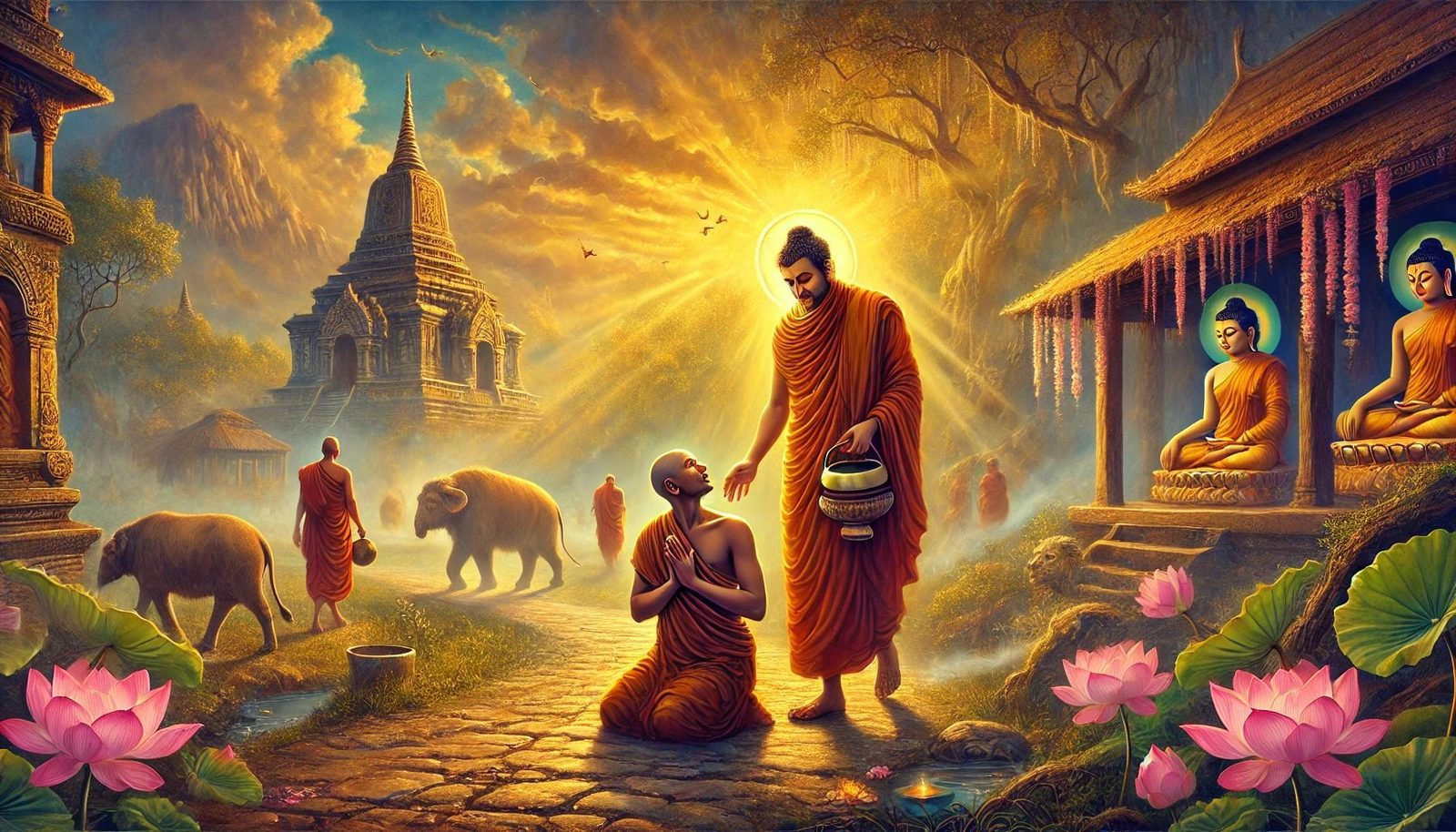
Visakha approached the young monk, who was still visibly angry, and gently tried to console him. “Venerable sir, please do not be upset. My granddaughter respects monks who shave their heads and wear robes.”
The young monk responded, “I understand your point, but why did your granddaughter call me a bald donkey? She shouldn’t have insulted me like that!”
Unable to resolve the conflict, Visakha waited for the elder monk to return. Upon learning the details of the incident, the elder monk explained to the young novice, “She did not single you out; she was simply referring to all of us who have shaved heads. Do not take it personally.”
However, the young monk was still angry and exclaimed, “You should scold them instead! Why are you criticizing me? You are also a monk; why are you taking their side? Think about it—should they call me a bald donkey?”
At this moment, the Buddha arrived. After hearing the account from Visakha, the Buddha contemplated and realized:
”If I show partiality to this young monk, he will immediately attain the first stage of enlightenment (Sotapanna).”
The Buddha then decided to side with the young monk, saying to Visakha:
”Visakha, does your granddaughter really need to call someone with a shaved head a bald donkey?”
Hearing this, the young monk’s anger dissipated, and he folded his hands in respect, saying, “World Honored One, you are truly wise. Neither the elder monk nor Visakha understood me as you do.”
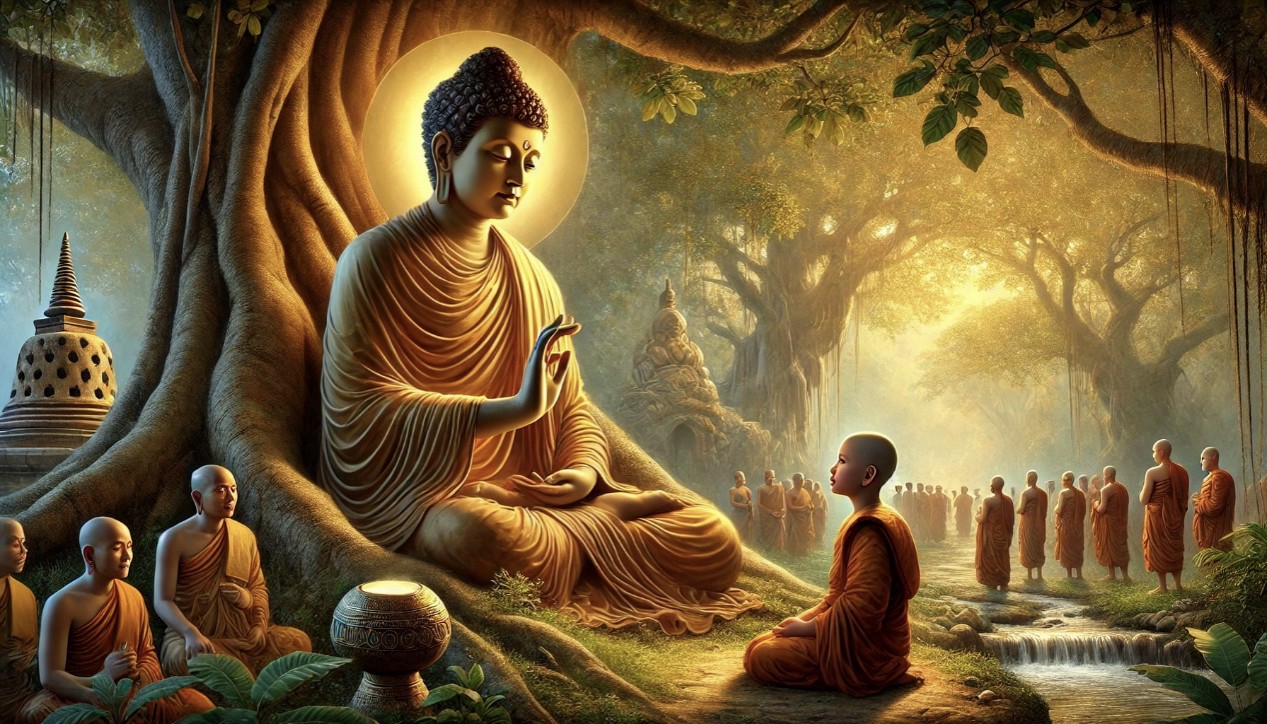
Seeing that the young monk had calmed down, the Buddha solemnly taught:
”Joking about the desires between men and women is lowly and vulgar. Do not follow inferior practices or live a heedless life, drifting through the days aimlessly. Such actions arise from false views and only increase the endless cycle of worldly suffering, keeping one bound to the ocean of birth and death without liberation.”
The Buddha then repeated the verse:
”Do not follow inferior practices, do not dwell in heedlessness.
Do not adhere to false views, do not increase worldly attachments.”
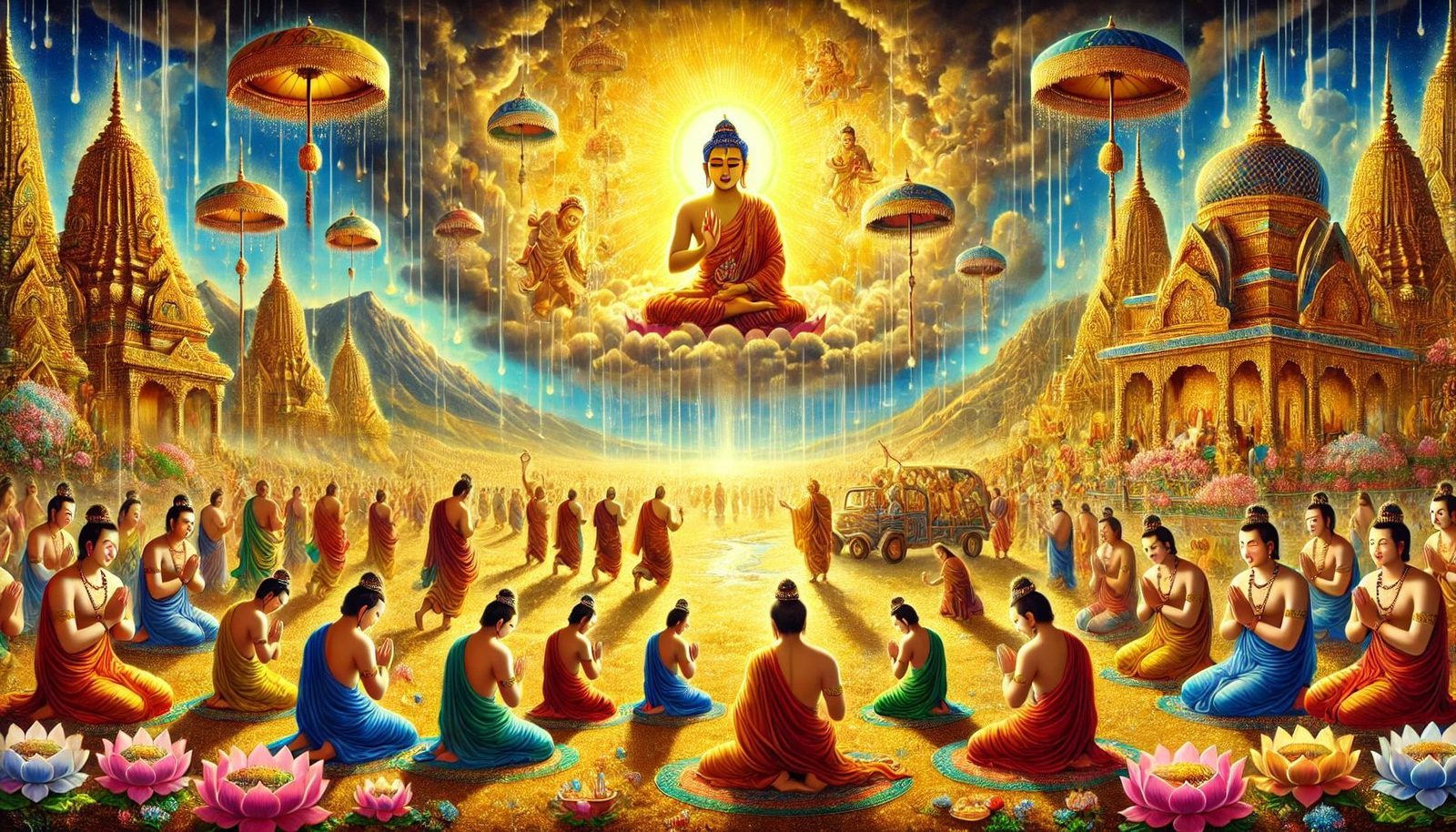
Upon hearing this verse, the young monk immediately attained the first stage of enlightenment (Sotapanna), and the gathered audience also benefitted greatly from the Buddha’s teachings.