时间:09/21/2024 09/22/2024
地点:星湖禅修中心
主讲:Otto Huang
佛法修行
谁受苦乐
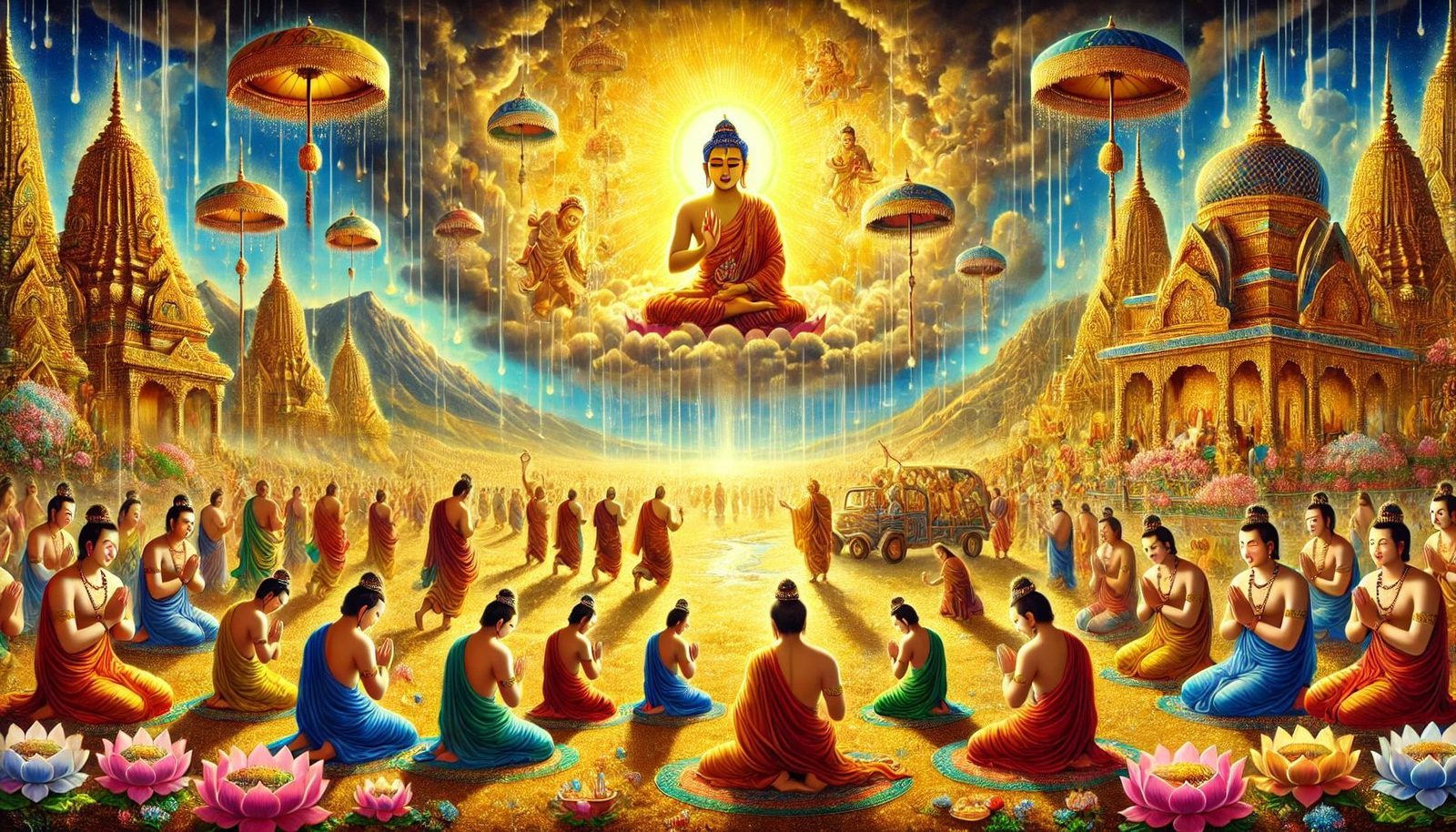
有一次,佛陀与众多比丘在前往摩揭陀国首都王舍城的途中,遇见了专程前来迎接的摩揭陀国国王频婆娑罗王。
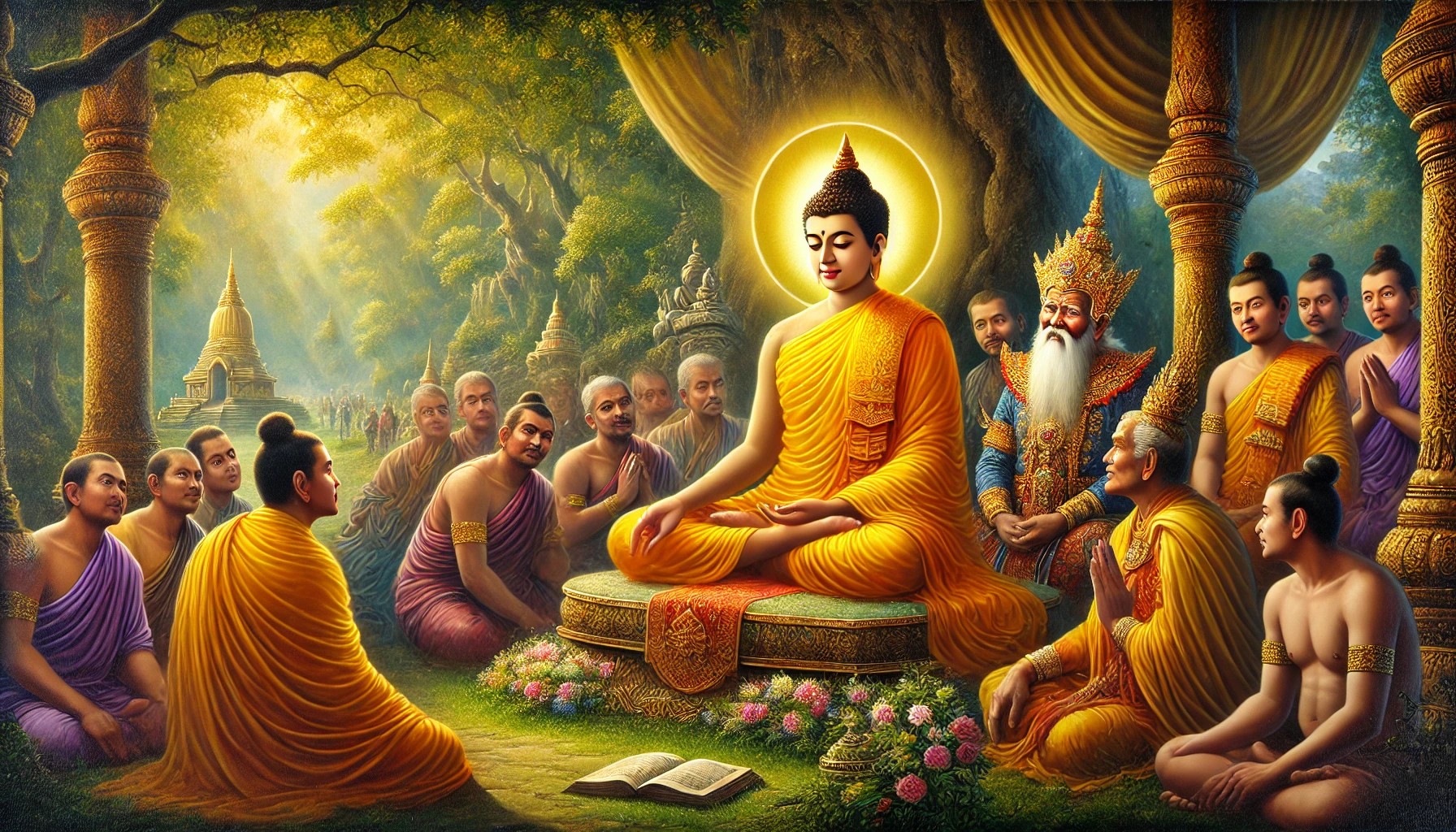
频婆娑罗王带领着众多的摩揭陀人,礼见了佛陀。国王慎重地三次自称姓名,自我介绍后,其它的摩揭陀人,也纷纷上前礼见佛陀,然后围坐在佛陀的四周。
这时,摩揭陀人所尊敬爱戴的尊者郁毘逻迦叶,也在跟随佛陀的比丘众中。摩揭陀人都认得尊者郁毘逻迦叶,知道他是一位无所执着的圣者,但对佛陀却还陌生,因而摩揭陀人都在怀疑:尊者郁毘逻迦叶是不是佛陀的老师,直到尊者郁毘逻迦叶尊称佛陀为老师之后,才不再怀疑。
佛陀知道摩揭陀人不再怀疑了,就开始为他们说法。佛陀先引发他们欢喜学习的兴趣与意愿,然后再教导有关布施、持戒、生天之法,说明五欲的堕落与危险,生死的污秽,离欲的功德,佛法修学方法的清净等这一类「端正法」,使他们具备接受佛法核心法义的欢喜、柔顺、耐性、向上、专注、无疑、明净之心境,接着才说「正法要」,教导苦、集、灭、道等四圣谛。佛陀说:
「大王!应当要知道色、受、想、行、识是生生灭灭的,就像下大雨时,雨滴落在水面上,被打起水泡的生生灭灭一样。
大王!如果能如其真实地了知色、受、想、行、识等五蕴,那么就能对色、受、想、行、识不执着、不计较、不染污、不恋住,不乐于以色、受、想、行、识是我,这样,就不会再有来世的色、受、想、行、识,而成就『无量、不可计数、无限、止息、寂静』的解脱境界。一旦舍离了此生的五蕴,就不会再有下一个五蕴了。」
听到这里,许多摩揭陀人心想:如果色、受、想、行、识果真都是无常变化着的话,那又是谁活着?是谁在受苦、受乐?
佛陀知道了他们心中的疑惑,接着就说:
「愚痴凡夫不曾听闻正法,以为有一个实在的我而执着,但事实上却是无我、无我所;是缘起空之我、缘起空之我所,一切都是因缘具足则生,因缘消散则灭的。就是所有的苦,也是由因缘的聚集而生起的,所以,如果因缘消散了,苦也就灭除了。如来能见众生生死相续的因缘,就依此而说:有生有死。
我以天眼如实见众生随其业力,从此世之死到往生来世之种种。如果众生身、口、意作恶,会因为这样的因缘而往生地狱之类的恶处之中;如果众生身、口、意为善,会因为这样的因缘而往生天上之类的善处之中。我深知这些,但我不说其中有一个能说、能感受、能到处经历善、恶行的不变受业报主体。
大王!色、受、想、行、识是常恒不变的呢?还是无常的呢?」
「是无常,世尊!」
「如果是无常,会是苦呢?还是非苦呢?」
「是苦,世尊!」
「如果是无常,是苦,是变易的,多闻正法的圣弟子,会认为『这是我,这是我所拥有的,我就在其中』吗?」
「不会的,世尊!」
「大王!所以,你应当这样学:所有的色、受、想、行、识,这一切都不是我,也不是我所拥有的,更没有我在其中,应当以智能如其真实地了知。
大王!如果有多闻正法的圣弟子,能够作这样的如实观,便能厌离色、受、想、行、识,能厌离就能无欲,能无欲,便得解脱,解脱后,便得解脱之智:我的生死已到了尽头,清净的修行已经确立,该作的都已完成,自己知道不会再有下一生了。」
佛陀说到这里,频婆娑罗王与其它众多的闻法者,远尘离垢,得法眼清净;见法、得法、觉法而自己解决了对法的疑惑,不需要再依赖别人,不再犹豫而证得了初果,于佛陀教导的正法中,无所畏惧。于是,频婆娑罗王从座位起来,向佛陀顶礼,并说:
「世尊!从现在起,我皈依佛、法、僧众,但愿世尊接受我为在家佛弟子!从今天起,终身皈依,直到命终。」
Date: 09/21/2024 09/22/2024
Location: Star Lake Meditation Center
Teacher: Otto Huang
Dharma Talk
Who experiences suffering and happiness
Once, while the Buddha and many monks were on their way to the capital city of Magadha, Rajagaha, they encountered King Bimbisara of Magadha, who had come to greet them.
King Bimbisara, accompanied by many people of Magadha, paid respects to the Buddha. The king solemnly introduced himself by name three times. After his self-introduction, other people of Magadha also came forward to pay respects to the Buddha, and then they sat around him.
At this time, the Venerable UruvilvaKassapa, who was greatly respected and revered by the people of Magadha, was also among the monks following the Buddha. The people of Magadha recognized Venerable UruvilvaKassapa, knowing him to be an enlightened sage free from attachments.
However, they were unfamiliar with the Buddha and thus wondered if Venerable UruvilvaKassapa might be the Buddha’s teacher. It wasn’t until Venerable UruvilvaKassapa addressed the Buddha as his teacher that their doubts were dispelled.
Seeing that the people of Magadha no longer had any doubts, the Buddha began to teach them. He first aroused their interest and willingness to learn, then taught about generosity, morality, and the path to heaven. He explained the downfall and dangers of sensual pleasures, the impurity of birth and death, the merits of renunciation, and the purity of the methods of learning the Dharma.
These teachings, known as the “proper teachings,” prepared them with joy, docility, patience, aspiration, concentration, certainty, and clarity to receive the core doctrines of the Dharma. Only then did the Buddha teach the “noble truths,” explaining the Four Noble Truths: suffering, the cause of suffering, the cessation of suffering, and the path to the cessation of suffering. The Buddha said:
”Great King! You should know that form, feeling, perception, volition, and consciousness are constantly arising and ceasing, just like raindrops falling on the water’s surface, causing bubbles to arise and burst.
Great King! If one can truly understand the five aggregates (form, feeling, perception, volition, and consciousness) as they are, then one can be free from attachment, clinging, defilement, and craving for them, and not regard form, feeling, perception, volition, and consciousness as oneself.
In this way, there will be no future aggregates, and one will attain the state of ‘immeasurable, incalculable, infinite, cessation, and tranquility’—the state of liberation. Once the five aggregates of this life are abandoned, there will be no next five aggregates.”
Hearing this, many people of Magadha thought: If form, feeling, perception, volition, and consciousness are indeed impermanent and ever-changing, then who is living? Who is experiencing suffering and happiness?
The Buddha, knowing their doubts, continued to explain:
”Ignorant ordinary beings, who have never heard the true Dharma, believe in a real self and cling to it. But in reality, there is no self and nothing that belongs to the self. The self and the notion of ‘mine’ arise from dependent origination and are empty.
Everything arises when conditions are sufficient and ceases when conditions dissipate. Suffering, too, arises from the gathering of conditions, and if conditions cease, suffering is also extinguished. The Tathagata sees the conditions of sentient beings’ birth and death and speaks of ‘having birth and having death.’
With the divine eye, I see sentient beings according to their karma, dying in this world and being reborn in various forms in the next. If sentient beings perform evil deeds with body, speech, and mind, they will be reborn in hellish realms and other evil destinations.
If sentient beings perform good deeds with body, speech, and mind, they will be reborn in heavenly realms and other good destinations. I know this deeply, but I do not say that there is an unchanging entity that experiences karma.
Great King! Is form, feeling, perception, volition, and consciousness permanent or impermanent?”
”They are impermanent, World-Honored One!”
”If they are impermanent, are they suffering or non-suffering?”
”They are suffering, World-Honored One!”
”If they are impermanent, suffering, and subject to change, would a well-learned disciple of the Dharma regard them as ‘This is mine, this is what I am, this is myself’?”
”No, World-Honored One!”
”Great King! Therefore, you should learn that all forms, feelings, perceptions, volitions, and consciousness are not the self, not what belongs to the self, and there is no self within them. You should understand this with wisdom as it truly is.
Great King! If a well-learned disciple of the Dharma can observe in this way, he will become disenchanted with form, feeling, perception, volition, and consciousness. When he is disenchanted, he will become free from desire. When he is free from desire, he will attain liberation.
After liberation, he will have the knowledge of liberation: ‘My birth and death have come to an end, the pure life has been established, what had to be done has been done, I know that there will be no further existence.'”
Hearing this, King Bimbisara and many other listeners, free from defilements, attained the purity of the Dharma eye; they saw, attained, and realized the Dharma, resolving their doubts about it on their own without relying on others, and attained the first stage of enlightenment. They were fearless in the true Dharma taught by the Buddha. King Bimbisara then rose from his seat, paid homage to the Buddha, and said:
”World-Honored One! From now on, I take refuge in the Buddha, the Dharma, and the Sangha. May the World-Honored One accept me as a lay disciple! From today onward, I take refuge for life, until my death.”