时间:12/13/2025 12/14/2025
地点:星湖禅修中心
主讲:龙示林
佛法修行
树神度婆罗门
昔日,佛陀于舍卫国的祇园精舍,为天人、龙、鬼等众说法。当时舍卫国的东方,有个国家名为「郁多罗波提」,国内有五百位婆罗门欲求成仙之法,相约至恒河岸的三祠神池中,沐浴涤秽,裸形修道,如同尼犍子等人,以裸形的方式求仙人救度。
途中,五百婆罗门经过一浩渺无边的沼泽,但见水气氤氲,白雾茫茫,因不辨东西而迷失了方向。他们眼看囊中粮食所剩无几,遥望泽边有一棵大树,神气非凡,猜想必有人居,便速奔至树下,最后才发现空无一人。婆罗门心怀恐惧,深怕因饥渴困顿而共死于荒泽中,于是放声大哭。
哀戚的哭声惊动了树神,树神于是现身关切:「你们从哪儿来?又将往哪儿去?为何这么伤心?」婆罗门回答:「我们本想至恒河边的神池沐浴,修炼仙道,没想到却迷失在此。我们现在又饥又渴,求您哀愍救济我们吧!」树神一听,恻隐之心油然而生,随即将手举起,百味饮食即从手中流出,五百婆罗门得此妙味饮食,悉皆欢喜,个个饱食;剩余的食物亦可作为日后旅途的存粮。
恢复气力的婆罗门们准备再度启程,临行前感激树神相救,并且询问:「您是以何功德,能得如此伟大的神力?」树神自知过去生事,感慨地说:「我前世本是舍卫国的人民,国内有一个财富多饶、好善乐施的大长者,名叫『须达』。
有一天,须达长者为了筹办饮食供养如来与众僧,亲自到市集选购上等的乳酪,因为东西太多,碰巧我在旁边,长者便请我帮忙提酪。因为此缘,我得以跟随长者至祇园精舍供佛及僧,会中协助巡饭送菜,次第斟酌汤水,斋毕便随众听佛说法。
会中,佛陀开示八关斋戒的殊胜功德,大众心生欢喜,各各发愿受持。过后还家,我因持守八关斋戒,过午不食,妻子却因此生疑问道:『莫非你心中对我有所不满而不用餐?』我向她解释:『今日我跟随须达长者至精舍斋供如来,发愿持守八关斋戒,要过午不食。』妻子听后竟生瞋恚,骂言:『这个瞿昙胡言祸乱人心,你何必持守他的戒律?若你听信于他,终将大祸临头。』在她的逼迫下,我不得已只好破斋而食。
没想到,其日夜半正好是我寿终之时,所以命终后我投生至此为树神。由于提酪供僧的功德,感此手出饮食的善报。如果我当时不听从妻子所说,而能严持斋戒至最后一刻,必得超升天界,享乐无极。」言毕,树神为婆罗门说了一首偈语:
「祠祀种祸根,日夜长枝条,
唐苦败身本,斋法度世仙。」
五百婆罗门听完偈语后,疑惑顿除,生敬信心,便转而前往舍卫国寻找须达长者。途中经过拘蓝尼国,遇到一位名为「美音」的长者。美音长者素来敬重修道之人,生性仁慈又好布施,遂留婆罗门于自家中过夜。长者问:「你们从哪儿来?又将往哪儿去?」
于是婆罗门们就将自己在荒泽迷路及遇到树神救难的经过据实相告,并表示将前往舍卫国寻找须达长者,发心受持八关斋戒,希望藉此获得福报。长者一听十分欢喜,因前世善根蒙发,再加上明白了八关斋戒的功德,随即传告宗亲族人:「我今将与梵志同去求福,有谁愿与我一同前往?」结果有五百人应命,各自严整威仪,一同出国。
众人浩浩荡荡行入舍卫国中,与一慈眉善目、气质出众的长者擦身而过,婆罗门问长者的侍者说:「这位长者是谁呀?」侍者回答:「是须达长者。」众人惊喜不已,没想到已经找到长者,便赶紧上前向长者诉说树神等种种因缘,希望长者能指引他们行持八关斋戒的方法。」
须达长者闻后亦生欢喜,向大众说:「我有尊师名号『如来』,具大智慧,慈悲普度一切众生,现在就在祇园精舍,我们可以一起去拜见佛陀!」众人敬心答应,肃恭前往。
行至精舍,遥见佛陀相好庄严,大众欣喜难量,虔诚顶礼佛足后,便于一旁长跪禀白己愿:「佛陀,我们当初离家,要前往恒何岸边的三祀神池沐浴求仙,但因中途迷路,遇到树神解救,所以得以聆听树神的前世因缘及斋戒功德。今日我们特来皈依佛陀座下,请求教化,希望能寻得一条究竟之路。」世尊听完后,依其所行,说了一首偈语:
「虽(人+果)剪发,长服草衣,沐浴踞石,
奈疑结何;不伐杀烧,亦不求胜,
仁爱天下,所适无怨。」
五百梵志听完偈语,法喜非常,纷纷发心出家修行,皆证阿罗汉果;而美音长者与其族人,亦证得法眼。诸比丘见此胜事,便请示世尊往昔因缘。
世尊垂示:「久远劫前,迦叶佛为弟子说五浊恶世之事,时有梵志、长者等千余人共同发愿:希望未来能遇到释迦牟尼佛!』当时的梵志就是今日的五百婆罗门,而长者就是现在的美音长者。由于这样的因缘,所以今日他们见到我,便得证悟。」大众闻说,欢喜奉行。
Date: 12/13/2025 12/14/2025
Location: Star Lake Meditation Center
Teacher: Shilin Long
Dharma Talk
Tree Deity Saves the Brahmins
In the past, when the Buddha was staying at Jetavana Monastery in the city of Śrāvastī, he was teaching the Dharma to devas, nāgas, ghosts, and various beings. At that time, to the east of Śrāvastī, there was a country named Uttarapathī.
Within that country, five hundred Brahmins wished to seek methods for becoming immortals and agreed to travel together to the Three-Shrine Sacred Pond on the bank of the Ganges River, where they would bathe to cleanse defilements and practice austerities in the nude, just like the Nigaṇṭha ascetics, hoping that by remaining naked they would be saved by heavenly sages.
On the way, the five hundred Brahmins passed through a vast and boundless marsh. They saw only misty water vapor and thick white fog and, unable to distinguish east from west, became lost. Their provisions were nearly exhausted, and in the distance they saw a great tree beside the marsh.
The tree looked extraordinary, and they guessed that someone must live nearby, so they quickly ran toward it—only to find no one there. The Brahmins were filled with fear, deeply afraid that they would all die in this desolate marsh from hunger and thirst, so they burst into loud crying.
Their sorrowful cries startled the tree deity, who then manifested and asked with concern: “Where have you come from? Where are you going? Why are you so distressed?”
The Brahmins replied, “We originally intended to go to the sacred pond on the bank of the Ganges to bathe and cultivate the path of immortals, but unexpectedly we lost our way here. Now we are hungry and thirsty. We beg you to take pity on us and save us!”
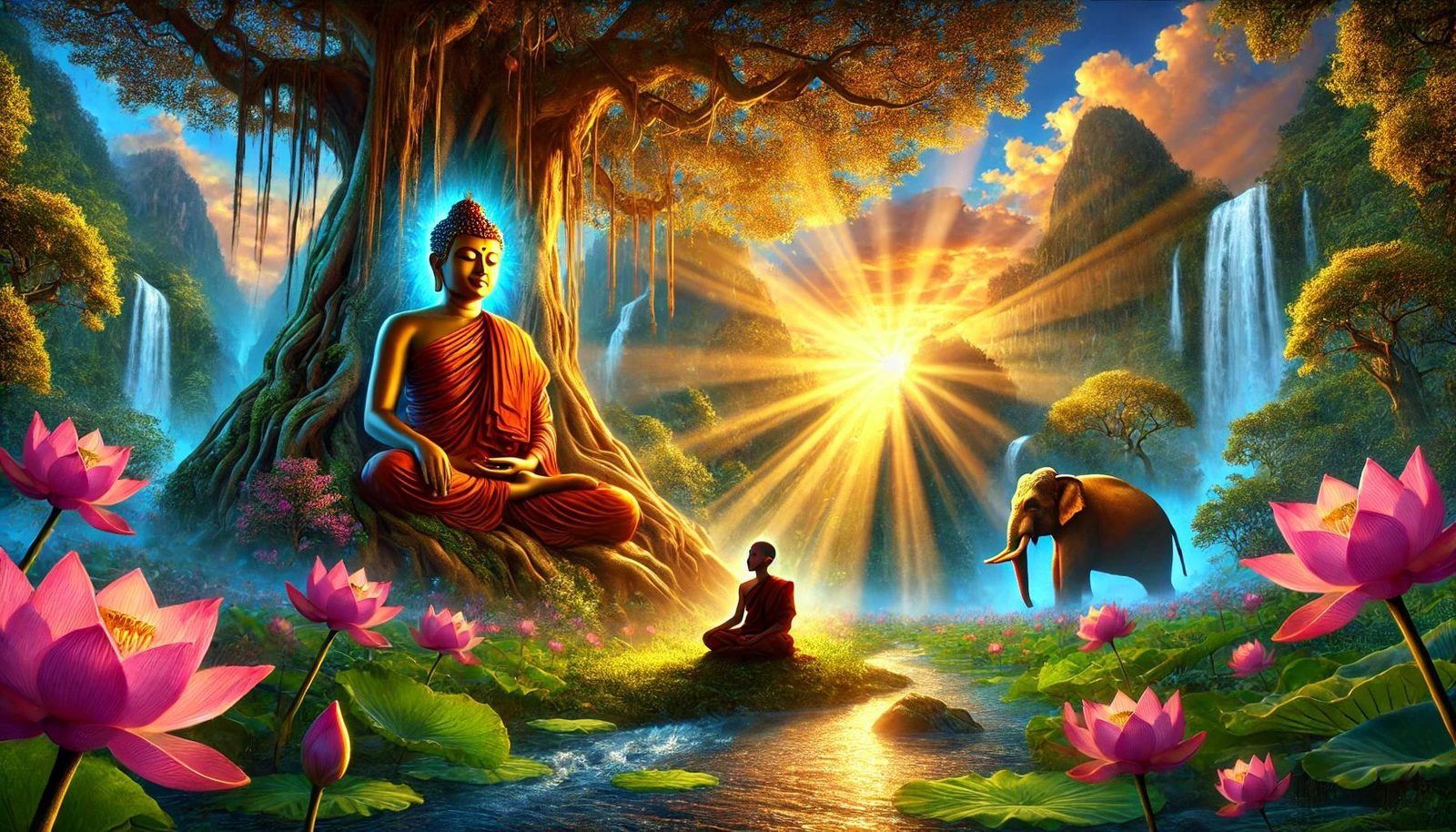
Upon hearing this, compassion arose naturally in the tree deity’s heart. He immediately raised his hand, and from his palm flowed forth various delicious foods. The five hundred Brahmins received the wondrous food and were delighted; everyone ate their fill, and the leftover food could also be stored as provisions for the rest of their journey.
Having recovered their strength, the Brahmins prepared to depart again. Before leaving, they gratefully asked the tree deity: “By what merit have you obtained such great divine powers?”
The tree deity, knowing his past-life causes, replied with emotion: “In a past life, I was a resident of Śrāvastī. In that country there was a wealthy, virtuous elder named Sudatta, who was fond of doing good and enjoyed giving. One day, Elder Sudatta personally went to the market to select the finest dairy products to prepare food to offer the Tathāgata and the Saṅgha.
Because the goods were too many to carry, I happened to be nearby, and the elder asked me to help carry the dairy. Because of this karmic condition, I followed him to Jetavana Monastery to offer food to the Buddha and the monks. During the ceremony, I helped distribute rice, soup, and vegetables in proper order. After the meal, I stayed with the assembly and listened to the Buddha’s teachings.
At that time, the Buddha expounded the supreme merits of the Eight Precept Day (Uposatha). Everyone rejoiced and vowed to uphold it.
After returning home, I kept the Eight Precepts and did not eat after noon. My wife, however, became suspicious and asked, ‘Are you dissatisfied with me and therefore not eating?’ I explained to her, ‘Today I went with Elder Sudatta to the monastery to offer food to the Tathāgata.
I vowed to keep the Eight Precepts and must not eat after noon.’ After hearing this, my wife became angry and scolded, ‘This Gautama speaks nonsense and confuses people’s minds! Why must you follow his discipline? If you listen to him, disaster will eventually come upon you!’ Under her pressure, I was forced to break the precepts and eat.
Unexpectedly, that very night was the time of my death. After dying, I was reborn here as a tree deity. Because of the merit from carrying dairy goods and offering to the Saṅgha, I received this blessing of producing food from my hand. If at that time I had not followed my wife’s words and had kept the Eight Precepts until the final moment, I would have been reborn in the heavens and enjoyed limitless happiness.”
After speaking, the tree deity recited a verse for the Brahmins:
“Sacrificial rites sow the roots of calamity,
Day and night their branches grow.
They bring suffering and destroy one’s life,
But the Dharma of the Uposatha leads beings across, like immortals.”
After hearing this verse, the five hundred Brahmins’ doubts disappeared, and they gave rise to deep faith. They then set out to find Elder Sudatta in Śrāvastī. On the way, they passed through the country of Koliyan and encountered a wealthy elder named Beautiful Voice (Meiyin). Elder Beautiful Voice deeply respected practitioners, was kind and generous, and invited the Brahmins to stay at his home for the night.
He asked, “Where have you come from? Where are you going?” The Brahmins truthfully recounted their experience of getting lost in the marsh and being rescued by the tree deity. They also said that they were going to Śrāvastī to seek Elder Sudatta and hoped to uphold the Eight Precepts and obtain blessings.
Upon hearing this, Elder Beautiful Voice rejoiced. Because his past-life roots of goodness were being stirred and because he now understood the merit of the Eight Precepts, he immediately told his relatives and clansmen: “I shall now seek blessings together with these Brahmins. Who wishes to join me?” As a result, five hundred people agreed, prepared themselves respectfully, and left the country together.
The large assembly entered Śrāvastī. As they walked, they passed a compassionate-looking, dignified elder. The Brahmins asked his attendant, “Who is this elder?” The attendant replied, “This is Elder Sudatta.” The group was overjoyed to have found him and hurried forward to recount the events involving the tree deity and asked the elder to teach them how to uphold the Eight Precepts.
Elder Sudatta was also delighted and said to them: “I have a venerable teacher named the Tathāgata, who possesses great wisdom and compassion, saving all beings. He is currently residing in Jetavana Monastery. We can go together to pay respects to the Buddha!” Everyone agreed respectfully and proceeded solemnly to the monastery.
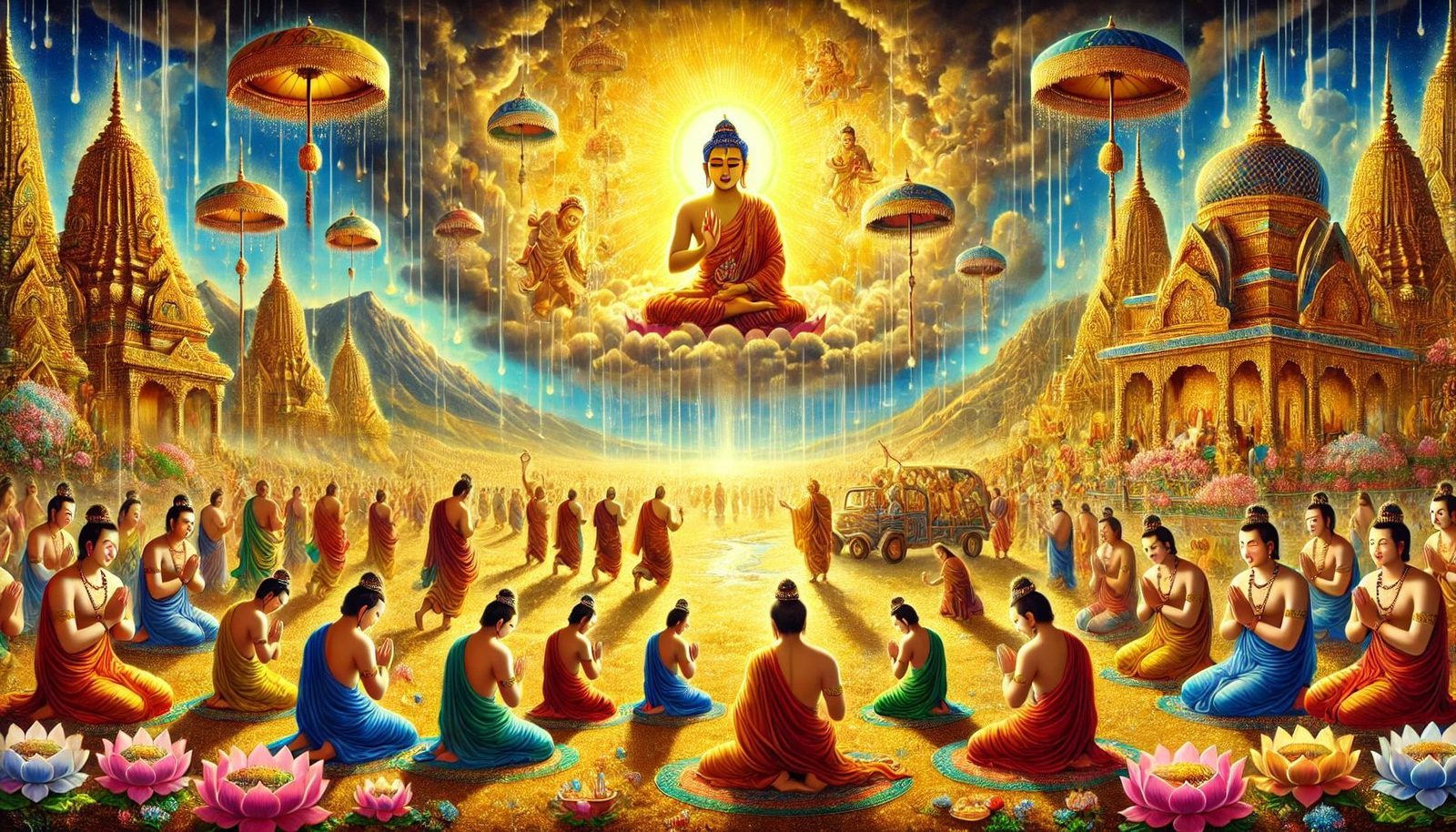
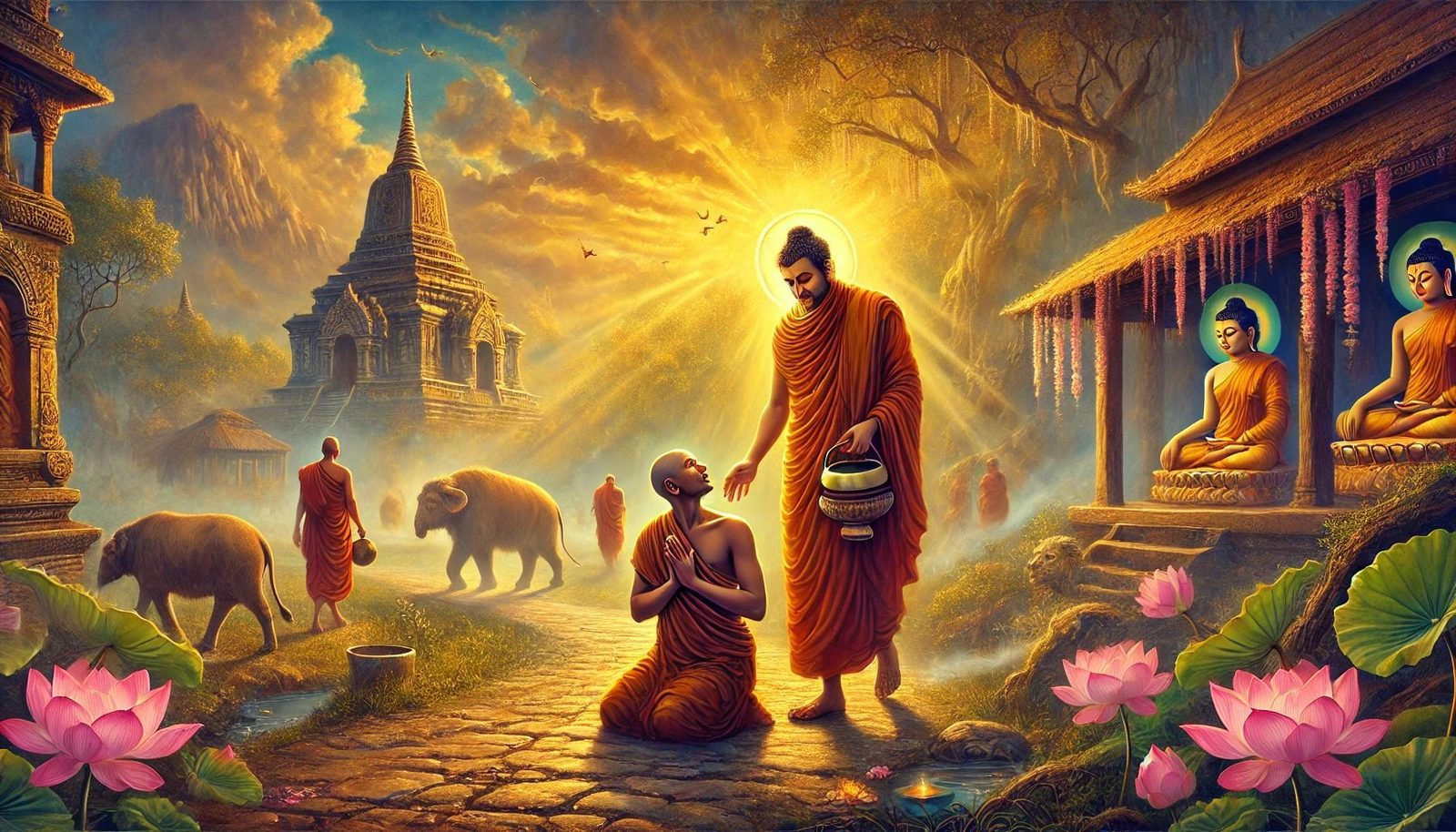
When they arrived and saw the Buddha’s majestic physical marks from afar, they were filled with boundless joy. They knelt respectfully and stated their intention: “O Buddha, we left our homes intending to bathe at the Three-Shrine Sacred Pond on the Ganges to seek the immortal way, but we became lost and were rescued by the tree deity.
Because of this, we heard about his past-life causes and the merit of keeping the precepts. Today, we come to take refuge under the Buddha and request instruction, hoping to find a final path to liberation.”
After hearing their words, the World-Honored One spoke this verse according to their circumstances:
“Though one cuts off hair,
Wears bark garments,
Bathes and sits on rocks,
Still doubt knots bind.
Neither killing nor burning,
Nor seeking victory—
With kindness for the world,
Wherever one goes, no resentment follows.”
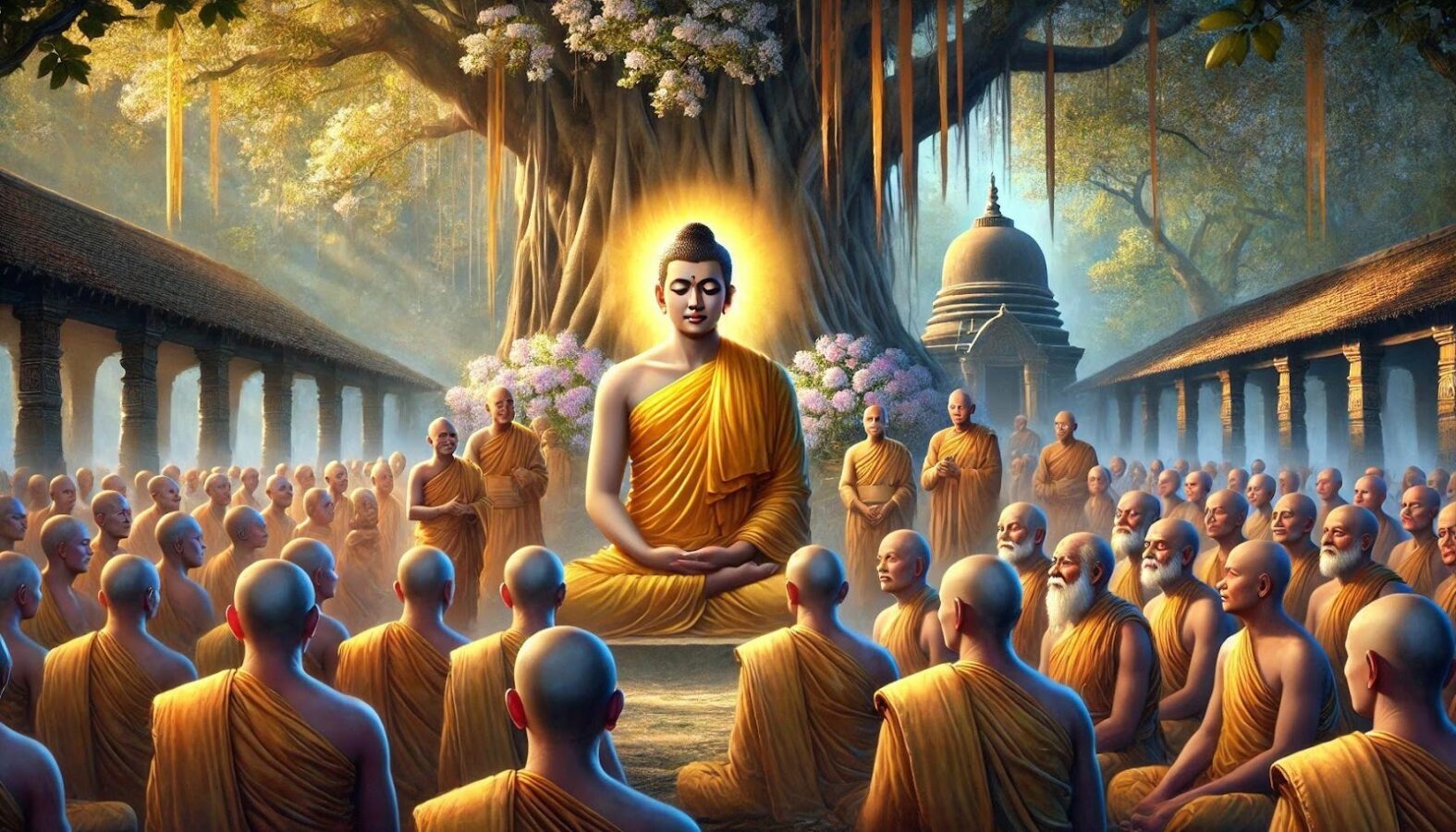
After hearing this verse, the five hundred Brahmins were filled with great joy, and they all resolved to renounce the household life and practice. All of them attained the fruit of Arhatship. Elder Beautiful Voice and his relatives also attained the Dharma-eye.
The monks, seeing this extraordinary event, asked the Buddha about the past-life causes. The Buddha replied: “Long ago, during the time of Kassapa Buddha, that Buddha explained to his disciples the nature of the Five Defilements.
At that time, more than a thousand Brahmins and lay elders made a vow together: ‘May we in the future encounter Śākyamuni Buddha!’ The Brahmins of that time are the five hundred Brahmins of today, and the elder of that time is Elder Beautiful Voice. Because of these karmic conditions, upon seeing me today, they attained realization.”
Upon hearing this, everyone rejoiced and faithfully practiced the teachings.