时间:06/14/2025 06/15/2025
地点:星湖禅修中心
主讲:龙示林
佛法修行
佛度五百年少梵志
过去,印度有一婆罗门教徒聚集的村落,村内有五百多户人家,并有五百位年少梵志。少年们年轻气盛,为人骄慢,不仅目无尊长,且出言不逊,自恃甚高。一天,他们聚在一起讨论:
「听说,瞿昙沙门自称是佛,通达一切世间、出世间的道理,没有人能胜过他呢!」
「真的吗?我不相信!我们何不办一场斋会,趁此因缘和瞿昙辩论一番,这样就可以知道传言是否属实,甚至还可以让他无地自容呢!」
因此,五百年少梵志准备了丰盛的斋饭,请世尊前来应供,世尊也慈悲地接受他们的请求,希望藉此因缘度化他们。于是,世尊带着弟子来到婆罗门村,接受年少梵志的供养。当时,村子里正好有一对老夫妇在路边乞食,佛陀知道他们原本非常富有,而且还做过大官,于是故意问年少梵志:
「你们认识那对乞食的长老梵志吗?」
「当然知道呀!他们原本是国王的大臣,有无数的财富呢!」
「既然他们曾经财富无数,又为什么现在必须乞食维生呢?」
「因为他们不懂节制,任意挥霍,将家产败光,所以今日才沦落为乞丐啊!他们是自作自受。」
佛陀告诉年少梵志:「你们不也是如此吗?不仅自恃甚高,甚至不懂得礼敬长上。要知道世间有四件事情是要谨慎小心的,如果能够注意,自然就能福德具足,免离贫穷,不会像这对夫妇一样落得贫困的下场。
哪四件事呢?
第一、年盛力壮时,切莫骄慢;
第二、年老时要精进,不贪淫欲;
第三、有了钱财珍宝,要常行布施;
第四、要亲近善知识,接受别人的忠告与劝导。
像那对行乞的老者,就是没有做到这四件事,以为世间一切都是恒常不变,有了钱就永远不会变穷,没想过成败是在一瞬之间,一旦家产耗尽,就像池中的天鹅,死守枯竭的池子,永远也抓不到鱼。」佛陀为大众说了一首偈子:
「昼夜慢惰,老不止淫,有财不施,不受佛言。
有此四蔽,为自侵欺,咄嗟老至,色变作耄。
少时如意,老见蹈践,不修梵行,又不富财。
老如白鹄,守斯空池,既不守持,又不积财,
老羸气竭,思故何逮?老如秋叶,行秽鉴录,
命疾脱至,不容后悔。」
接着,佛陀告诉年少梵志:「你们应当要知道,若能在人生中的四个时期精进行道,则能免离一切苦难:第一、年少有势力时,第二、富贵时,第三、得遇三宝能种福田时,第四、思惟万物无常,聚散离别时。如果能把握这四个时节因缘,努力修行,则能所愿皆得,道业也能成就。」于是佛陀又说了一首偈语:
「命欲日夜尽,及时可勤力,世间谛非常,
莫惑堕冥中。当学然意灯,自练求智慧,
离垢勿染污,执烛观道地。」
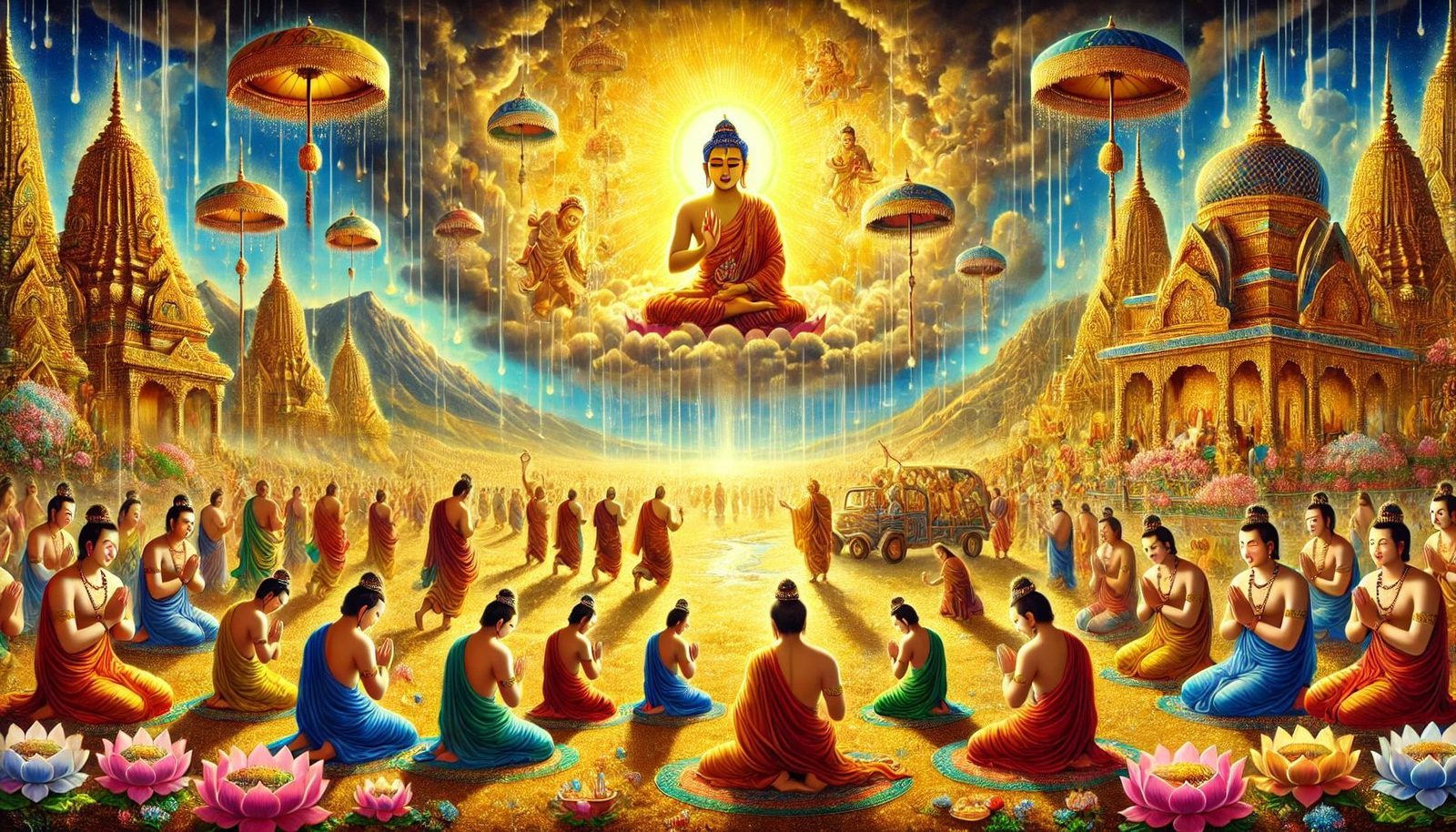
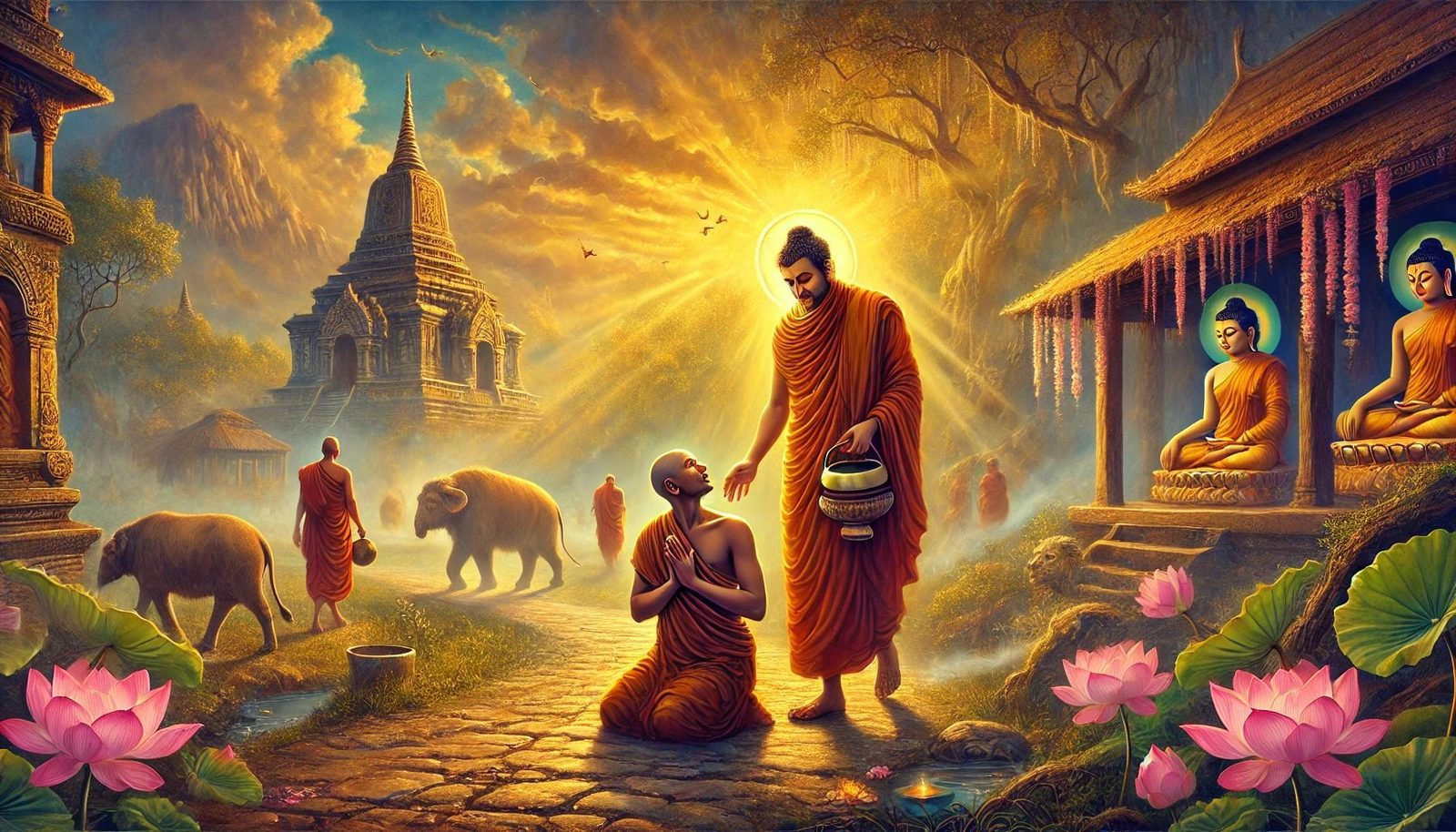
佛陀说完此偈,举身放大光明,普照大地。五百年少梵志顿时心开意解,顶礼佛足,愿为佛陀座下弟子。世尊慈悲应允,说道:「善来比丘,袈裟自着,须发自落。」而这五百位年少梵志也应时成就罗汉圣果。村民们听了佛陀的开示后,亦法喜充满,决心遵照佛陀的教诲,奉行正法。
Date: 06/14/2025 06/15/2025
Location: Star Lake Meditation Center
Teacher: Shilin Long
Dharma Talk
The Buddha Converts Five Hundred Young Brahmins
In the past, in a village in India populated by Brahmin followers, there were over five hundred households and five hundred young Brahmins. These youths, full of youthful arrogance, were proud and insolent—not only did they show no respect for their elders, but they also spoke rudely and thought highly of themselves. One day, they gathered together to discuss:
“We’ve heard that the ascetic Gautama claims to be a Buddha, that he understands all worldly and transcendent truths, and that no one surpasses him!”
“Really? I don’t believe it! Why don’t we host a feast and use the opportunity to debate with Gautama? Then we’ll see if the rumors are true, and perhaps we can even leave him speechless in shame!”
So, the five hundred young Brahmins prepared a sumptuous meal and invited the World-Honored One to accept their offering. The Buddha compassionately accepted their request, hoping to use this opportunity to transform them. Thus, the Buddha brought his disciples to the Brahmin village to receive the young Brahmins’ offering.
At that time, an elderly couple in the village was begging for food by the roadside. The Buddha, knowing that they had once been very wealthy and had held high office, intentionally asked the young Brahmins:
“Do you know that elderly Brahmin couple begging over there?”
“Of course we do! They were once ministers of the king and had countless wealth!”
“If they once had endless riches, why must they now live by begging?”
“Because they lacked restraint and squandered their wealth, so they ended up like this—beggars! They brought it upon themselves.”
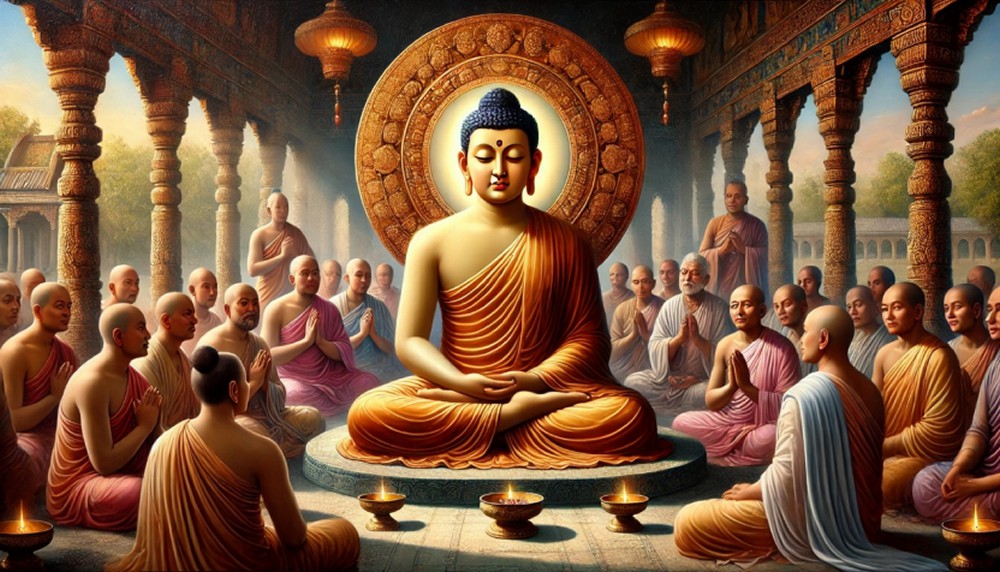
The Buddha said to the young Brahmins, “Are you not the same? You are proud and disrespectful to your elders. You must understand that there are four matters in life that must be approached with caution. If you are mindful of them, you will naturally possess blessings and avoid poverty.
You will not meet the fate of that elderly couple. What are the four? First, in the prime of youth and strength, do not be arrogant. Second, in old age, be diligent and not indulgent in sensual desires. Third, when you possess wealth and treasures, practice generosity. Fourth, associate with wise teachers and accept others’ advice and admonitions.
That elderly couple failed in these four aspects. They assumed everything in the world was constant, that wealth would never disappear. They never considered how quickly fortune can turn. Once their property was exhausted, they were like swans guarding a dried-up pond—forever unable to catch fish.”
Then the Buddha recited a verse for the assembly:
“Idle day and night, aged yet lustful still,
Wealthy but not giving, ignoring the Buddha’s will.
These four obscurations are self-inflicted harm,
Old age arrives suddenly, beauty turns to decay.
Pleased in youth, trampled in age,
Neither cultivating purity nor possessing wealth.
Old like white swans guarding a barren pond,
Neither preserving nor accumulating,
Old and weak, strength exhausted,
How can one attain what one longs for?
Old like autumn leaves, conduct defiled and shameful,
When death strikes swiftly, regret comes too late.”
The Buddha then said to the young Brahmins, “You must realize, if one diligently cultivates the path during the four periods of life, one can be free from all suffering: first, when young and strong; second, when prosperous and wealthy; third, when encountering the Triple Gem and sowing fields of merit; and fourth, when contemplating the impermanence of all things, and the gathering and scattering of people and things.
If you can seize these four opportunities and diligently cultivate, your wishes will be fulfilled, and your spiritual practice will be accomplished.”
The Buddha then recited another verse:
“Life fades day and night, seize the time to strive.
The truths of the world are impermanent,
Do not be deluded and fall into darkness.
Learn to light the lamp of the mind,
Train yourself and seek wisdom.
Be free from defilements, unstained by impurities,
Hold the lamp to illuminate the path of truth.”
When the Buddha finished this verse, his body radiated great light, illuminating the whole earth. The five hundred young Brahmins suddenly awakened in mind and heart. They bowed at the Buddha’s feet and wished to become his disciples.
The World-Honored One compassionately accepted them, saying, “Welcome, monks!” Instantly, their robes appeared and their hair fell off on its own. These five hundred young Brahmins at once attained the fruit of Arhatship.
The villagers, upon hearing the Buddha’s teaching, were filled with Dharma joy and resolved to follow the Buddha’s instruction and uphold the righteous Dharma.