时间:01/18/2025 01/19/2025
地点:星湖禅修中心
主讲:龙示林
佛法修行
柏达尼格笛撒尊者的故事
「若欲诲他,应如己所行;
自制乃制他,克己实最难。」
【自己品 ATTAVAGGO(第 159 偈)】
偈是佛陀住在给孤独园时,为柏达尼格笛撒尊者所说的法句。故事的缘起是这样的:
柏达尼格笛撒在佛陀那里学习了静坐的方法,就带领五百比丘到森林里结夏安居。
他常常教导比丘们:「我们在佛陀的面前学得了静坐的方法,就带领五百比丘到森林里结夏安居。
他常常教导比丘们:「我们在佛陀的面前学得了静坐的方法,要精进不放逸地好好修习。」说了以后,他就径自回房倒身便睡。
比丘们努力精进,初夜经行至将近中夜,才回房休息。
此时柏达尼格笛撒,正好刚睡醒,走出房门视察,发现没有人在经行,就去敲每个房间的门,并训诲说:
「嘿!你们来这里的目的是为了睡觉吗﹖快快起来用功精进!」
比丘们不敢懈怠都赶紧出来,开始中夜修行。而柏达尼格笛撒则又回房继续睡觉。
比丘们中夜修行,将近后夜时已经非常疲累,才刚回房间休息,柏达尼格笛撒则又醒寤,再度敲门催促大家起来用功。
五百比丘日夜精进不放逸,终于因为过度疲倦,使得他们无法读经、修行,连心都不能安静。
有一天,比丘们赞叹说:「哦,我们的老师真是非常努力用功。」有人建议:「我们要暗中察看,他这么用功到底是真是假﹖」
经过调查,他们发现了真相。柏达尼格笛撒都是只教训别人,严厉要求别人,而自己却整个晚上睡觉。比丘们抱怨说:「我们都被骂、被骗,几乎被毁了,他自己却浪费宝贵的时间,无所是事。因为他的苛求,我们都无法休息了,由于疲累过度没有良好的修行效果,快要被淘汰了。」
在结夏安居以后,比丘们回到孤独园的寺院,佛陀问:「你们有没有认真修行﹖」
他们具实以报,佛陀说:「这个比丘不仅这世害你们,前世也害过。」他们问前世的事情,佛陀于是就说前世的故事:
很久很久以前,在波罗奈,国王布拉玛达塔统治的时代,菩萨(佛陀的前身)在贵族婆罗门的家庭出生。当他还很年轻的时候,便已精通十八种学问,在波罗奈成为十方知名的老师。
菩萨教导五百个学生,那些学生养了一只清晨准时啼叫的鸡,大家都靠牠啼叫的声音早起用功背诵经书。
有一天这只准时啼叫的鸡死了,学生们从此没有办法早起,于是他们要再寻找一只会准时啼叫的鸡。
其中一个学生在森林里觅柴时,在坟场上发现一只公鸡,就把牠捉回来,饲养在原先那个鸡笼里。因为这只鸡是在坟场长大的,所以牠搞不清楚什么时候应该啼叫,有时中夜啼鸣,有时后夜大叫,偶尔却等到艳阳高照才啼。
这些学生如果在中夜听到鸡啼,便赶紧起床用功读书,由于睡眠不足感觉很累,往往一边背书一边打瞌睡。有时后夜听到鸡叫,他们也急忙起来用功,可是却前面读的后面就忘记了。如果公鸡太晚啼叫,太阳已经高挂,他们起床都来不及准备上课。
大家都抱怨:「这只鸡啼叫的时间太乱了,扰乱了我们的生活规律,破坏了我们的学习方式。」于是捉住这只乱啼的公鸡,扭断牠的脖子杀了牠。
学生们带着这只鸡去找菩萨,报告这件事。老师告诉学生:「因为这只鸡被丢在坟场,从来没有跟父母一起住过,也没有受教导,所以牠不知道什么时候该啼,什么时候不该啼。由于没有时间观念,所以牠死得这么惨。」
佛陀讲完这个故事就说:「当时那只乱啼的鸡就是柏达尼格笔撒,学生是你们,菩萨是我。」接着又教导比丘们说:「比丘们,一个人要教诲别人之前,应先好好地调整自己,教导自己。制御自己才能制御他人,制御自己真实最难。」
佛陀于是说出这偈法句:
「若欲诲他,应如己所行;自制乃制他,克己实最难。」
听完佛陀所说,五百个比丘成阿罗汉,听闻者皆同沾法益。
Date: 01/18/2025 01/19/2025
Location: Star Lake Meditation Center
Teacher: Shilin Long
Dharma Talk
The Story of Venerable BhaddiyaKaligodha
”If one wishes to admonish others, they should act as they teach;
To restrain oneself before restraining others is truly the hardest task.”
(Dhammapada, Chapter on the Self, Verse 159)
This verse was spoken by the Buddha while residing at Jetavana Monastery, directed towards Venerable BhaddiyaKaligodha. The story behind the verse is as follows:VenerableBhaddiyaKaligodha learned the practice of meditation from the Buddha and led five hundred monks to spend the rainy season retreat in a forest.
He often instructed the monks, “We have learned the meditation method from the Buddha, so we must diligently practice without negligence.” After giving these instructions, however, he would return to his room and immediately fall asleep.
The monks, following his guidance, practiced diligently. They walked in meditation until near midnight and only then retired to their rooms to rest.
At that moment, BhaddiyaKaligodha, having just awakened from sleep, stepped out to inspect the area. Seeing no one walking in meditation, he knocked on each monk’s door and rebuked them:”Hey! Did you come here just to sleep? Get up and practice diligently!”
The monks, fearing reprimand, quickly resumed their practice and began meditating through the middle of the night. Meanwhile, BhaddiyaKaligodhareturned to his room to sleep again.
By the last part of the night, the monks, utterly exhausted from their efforts, finally returned to their rooms to rest. BhaddiyaKaligodha, however, awoke once more and repeated his routine of knocking on doors, urging the monks to rise and practice.
Although the five hundred monks practiced tirelessly day and night, their extreme fatigue rendered them unable to focus on reciting scriptures or meditating effectively. Their minds became restless.
One day, the monks praised BhaddiyaKaligodha, saying, “Oh, our teacher is so diligent in his practice.” But one monk suggested, “We should secretly observe him to see if his diligence is genuine.”
Upon investigation, they discovered the truth: BhaddiyaKaligodha only reprimanded others while strictly demanding their efforts, yet spent the entire night sleeping himself.
The monks complained, “We’ve been scolded and deceived, nearly driven to ruin! He wastes precious time doing nothing while we are unable to rest properly and are now too exhausted to practice effectively.”
At the end of the rainy season retreat, the monks returned to Jetavana Monastery. When the Buddha asked, “Did you practice diligently?” they truthfully reported the events.
The Buddha remarked, “This monk not only harmed you in this life but also in a past life.” The monks asked about the past, and the Buddha told the following story:
Long ago, in the city of Benares during the reign of King Brahmadatta, the Bodhisatta (the Buddha in a previous life) was born into a noble Brahmin family. As a young man, he mastered eighteen branches of knowledge and became a renowned teacher across the ten directions.
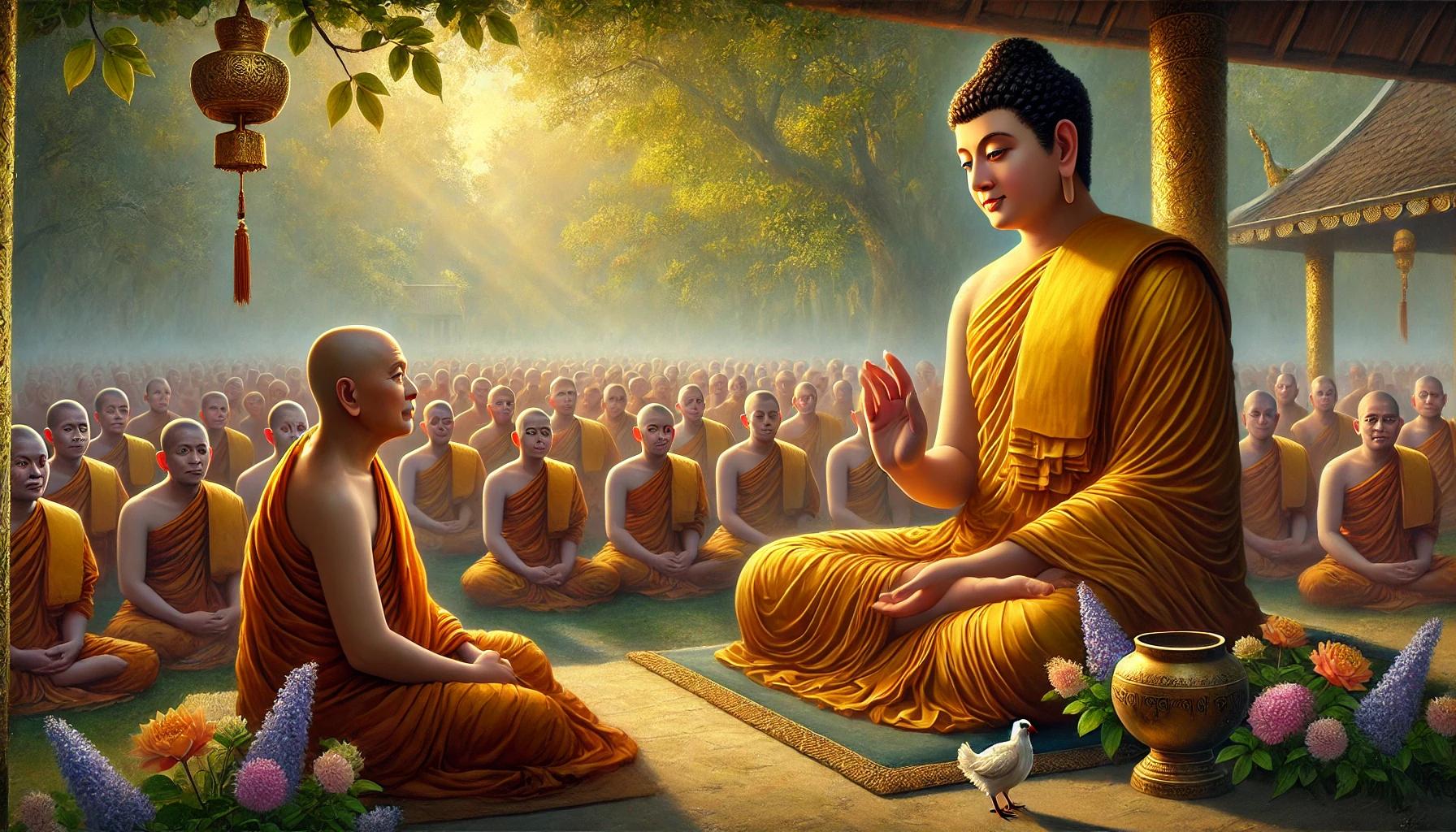
The Bodhisatta taught five hundred students. These students kept a rooster that crowed punctually each morning, helping them wake early to study their texts.
One day, the rooster died, leaving the students without a reliable way to wake early. While gathering firewood in the forest, one student found a rooster at a cemetery, captured it, and placed it in the coop.
However, this rooster, having grown up in the cemetery, had no sense of time. Sometimes it crowed in the middle of the night, sometimes at the end of the night, and occasionally only after the sun was high in the sky.
When the rooster crowed at midnight, the students would rise early to study but, due to sleep deprivation, often fell asleep while reciting texts. When it crowed late, they hurried to prepare for class, feeling rushed and unprepared.
The students, frustrated by the disruptions, said, “This rooster’s erratic crowing has disrupted our lives and ruined our studies.” They caught the rooster, twisted its neck, and killed it.
They brought the dead rooster to their teacher, the Bodhisatta, and explained what had happened. The teacher said, “This rooster was abandoned at the cemetery, never living with its parents or being properly trained. It did not know when to crow and when to stay silent. Without a sense of time, it met such a tragic end.”
After recounting this story, the Buddha said, “At that time, the erratic rooster was BhaddiyaKaligodha, the students were all of you, and I was the teacher.”
The Buddha then instructed the monks:”Monks, before one teaches others, they must first discipline themselves. Only by mastering oneself can one guide others effectively. Restraining oneself is truly the most difficult task.”
The Buddha then recited this verse:”If one wishes to admonish others, they should act as they teach;To restrain oneself before restraining others is truly the hardest task.”
Hearing the Buddha’s teaching, the five hundred monks abandoned their defilements and distractions, strengthening their resolve. They diligently practiced and soon attained Arhatship. All who heard the teaching also gained great benefit.