时间:07/04/2026 07/05/2026
地点:星湖禅修中心
主讲:龙示林
佛法修行
优多罗母堕饿鬼缘
王舍城中有位大富长者,娶了一名贵族女子为妻;长者非常疼爱妻子,每天都请人到家中演奏乐曲、表演舞蹈来娱乐她。后来妻子怀孕,生下一名端正庄严的男孩。长者夫妇非常欢喜,为其取名为「优多罗」。
优多罗渐渐长大,父亲不幸过世。优多罗心想:「父亲一直以来以经商为业,维持家庭生计,但我对生意不感兴趣,倒是对佛法心生敬信,希望今生能出家修行。」于是优多罗请求母亲让他出家。母亲一听,便说:「你父亲已经死了,我现在一无所有,只有你这么一个儿子,你怎么可以舍弃我去出家呢?只要我活着一天,绝不允许你出家,等我死后,再随你的意吧!」
优多罗得不到母亲的同意,非常懊恼,即说:「您不让我出家,我就要永远离开这个世间!」母亲听了非常害怕,只好软言劝他:「你千万别这么说!不如这样,从现在起,只要你想供养修行人,我就为你准备所需,随你所愿供养,好吗?」优多罗听了母亲这番说法,才不坚持出家,而且经常邀请许多沙门、婆罗门等修行人到家里来应供。
当时,优多罗的母亲看到这么多修行人在家中出出入入,觉得很厌烦,便辱骂他们:「你们这些不事生产的人,成天靠在家信众过活,看到你们就令人生气!」当时优多罗正好不在家,所以她将准备好的食物全部倒在地上,还赶走了来家中应供的修行人。优多罗回家后,母亲骗优多罗说:「孩子,你刚才不在家时,我用上好的食物供养了好几位修行人喔!」优多罗听了非常高兴,以为母亲真的布施供养。
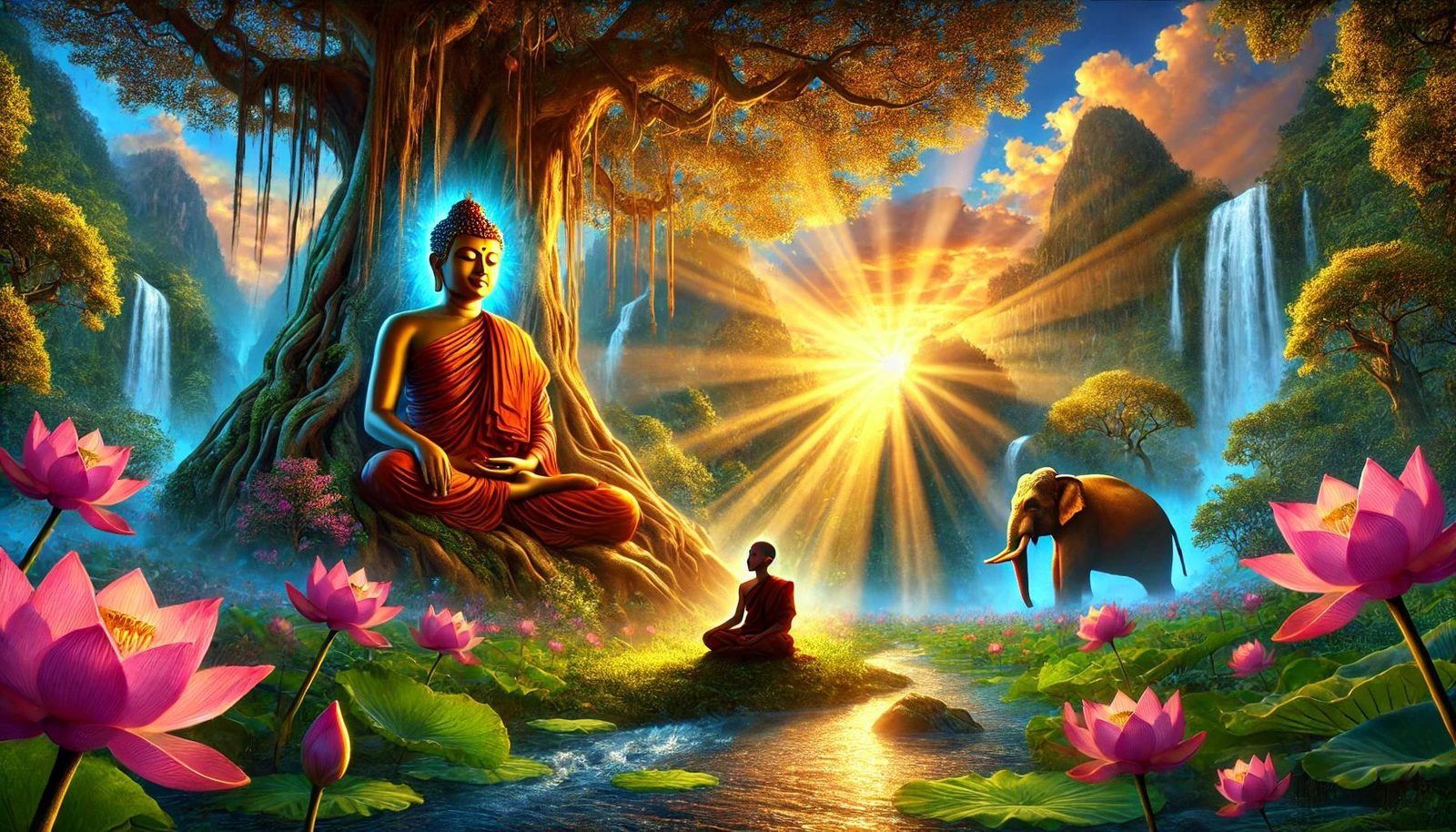
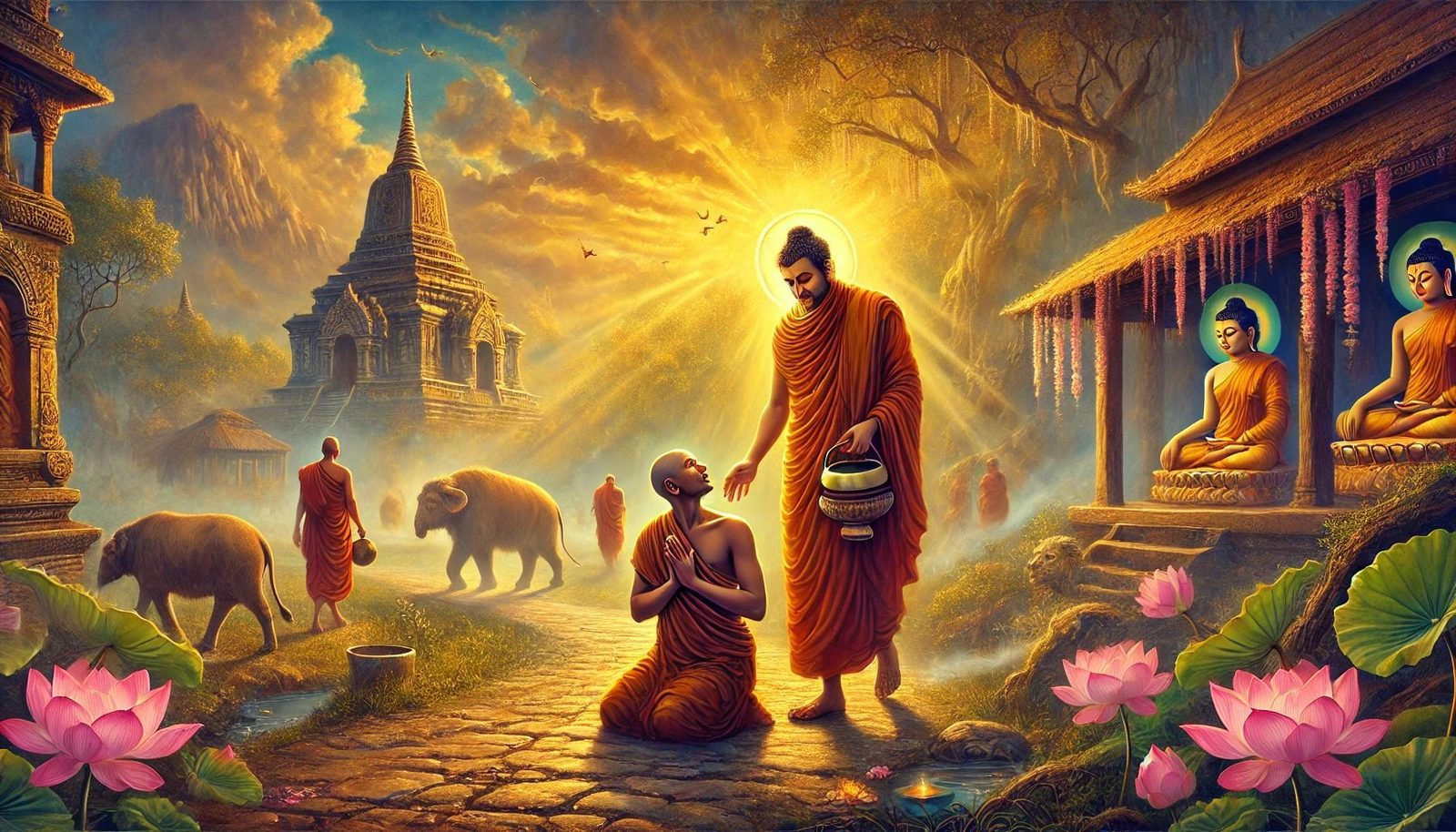
过了不久,优多罗的母亲去世了,死后因生前的恶业而堕到饿鬼道中。优多罗在母亲死后,决定按照先前的心愿,出家修行。由于他非常精进用功,很快就证到阿罗汉果。一天,优多罗比丘在河边的石窟里静坐用功,突然看见一个嘴巴又干又焦的饿鬼,非常饥渴痛苦地走到优多罗面前,对他说:「儿子啊!我是你的母亲。」优多罗不可置信,说道:「不可能,我的母亲生前乐善好施,供养许多修行者,不可能会堕到饿鬼道!」饿鬼回答:「儿子啊!因为我悭贪的缘故,所以你不在家时,我都没有供养他们,死后即堕为饿鬼,二十年来未曾尝过一滴水、一口饭。只要走到河边,河水就立刻消竭,只要靠近果树,果树就马上干枯,我现在所受的苦实在是一言难尽啊!」
优多罗又问:「为什么会这样呢?」饿鬼回答:「虽然我曾布施供养,但内心却是吝惜不舍,甚至还会辱骂修行人,所以才会遭此果报。如果您能为我忏悔,广设斋食,供养佛及出家僧众,我就能脱离饿鬼的果报。」
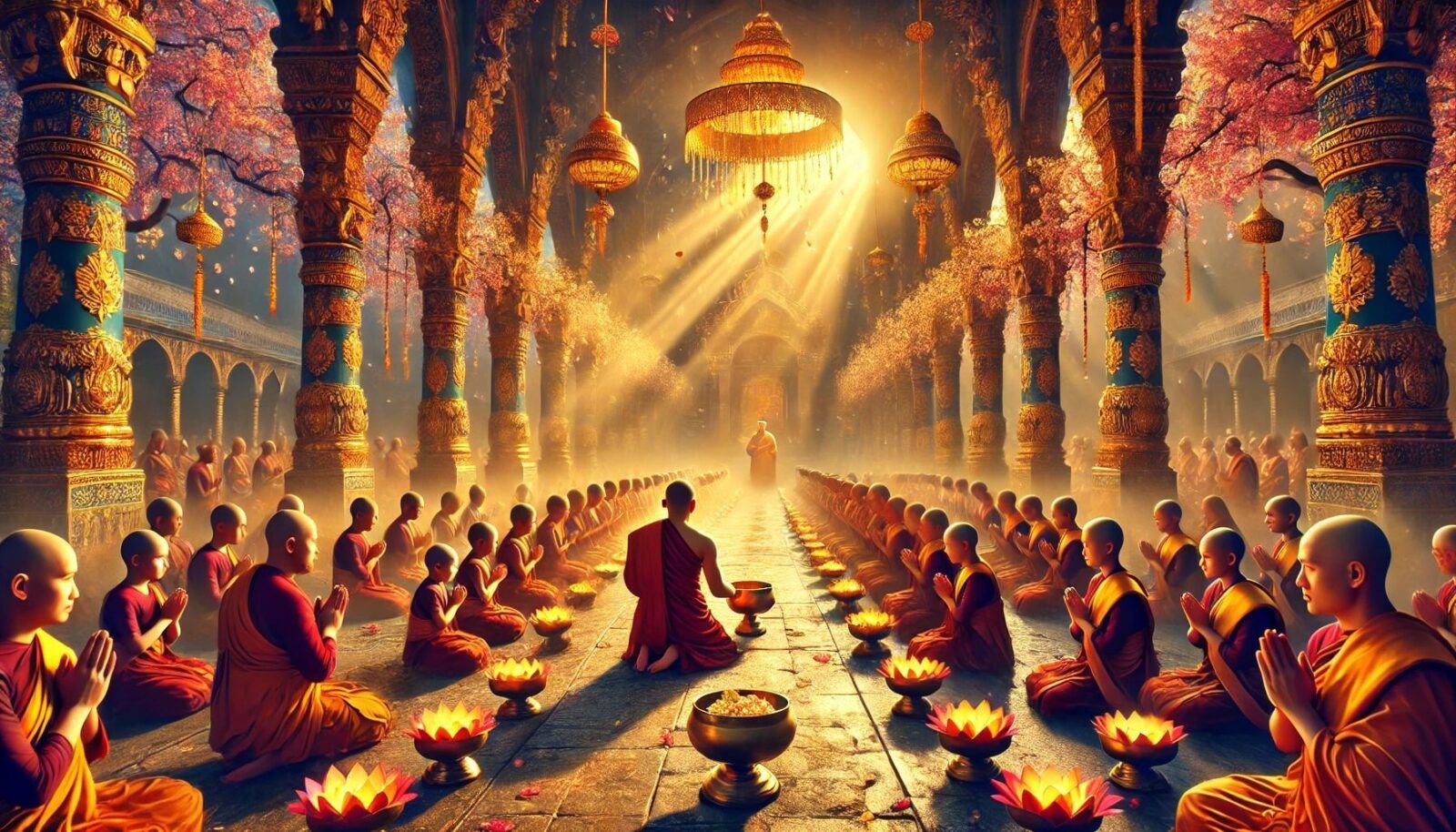
优多罗比丘听完这些话,非常悲愍母亲,于是努力劝化,设斋供佛及僧。斋会结束时,饿鬼现身于会中,至诚地向佛忏悔过失,佛陀亦为其开示说法。饿鬼听了之后,心怀惭愧,当天晚上寿命即尽,投生作飞行饿鬼,头戴天冠,身披璎珞宝珠,再度来到优多罗比丘面前,说道:「我恶报未尽,还不能脱离饿鬼之身,请您再帮我筹设斋会及准备卧具供养众僧,我就能解脱饿鬼之苦。」于是优多罗赶紧再办斋会,并且准备卧具供养所有僧众。当供养结束时,饿鬼再度出现,虔诚地忏悔罪业。
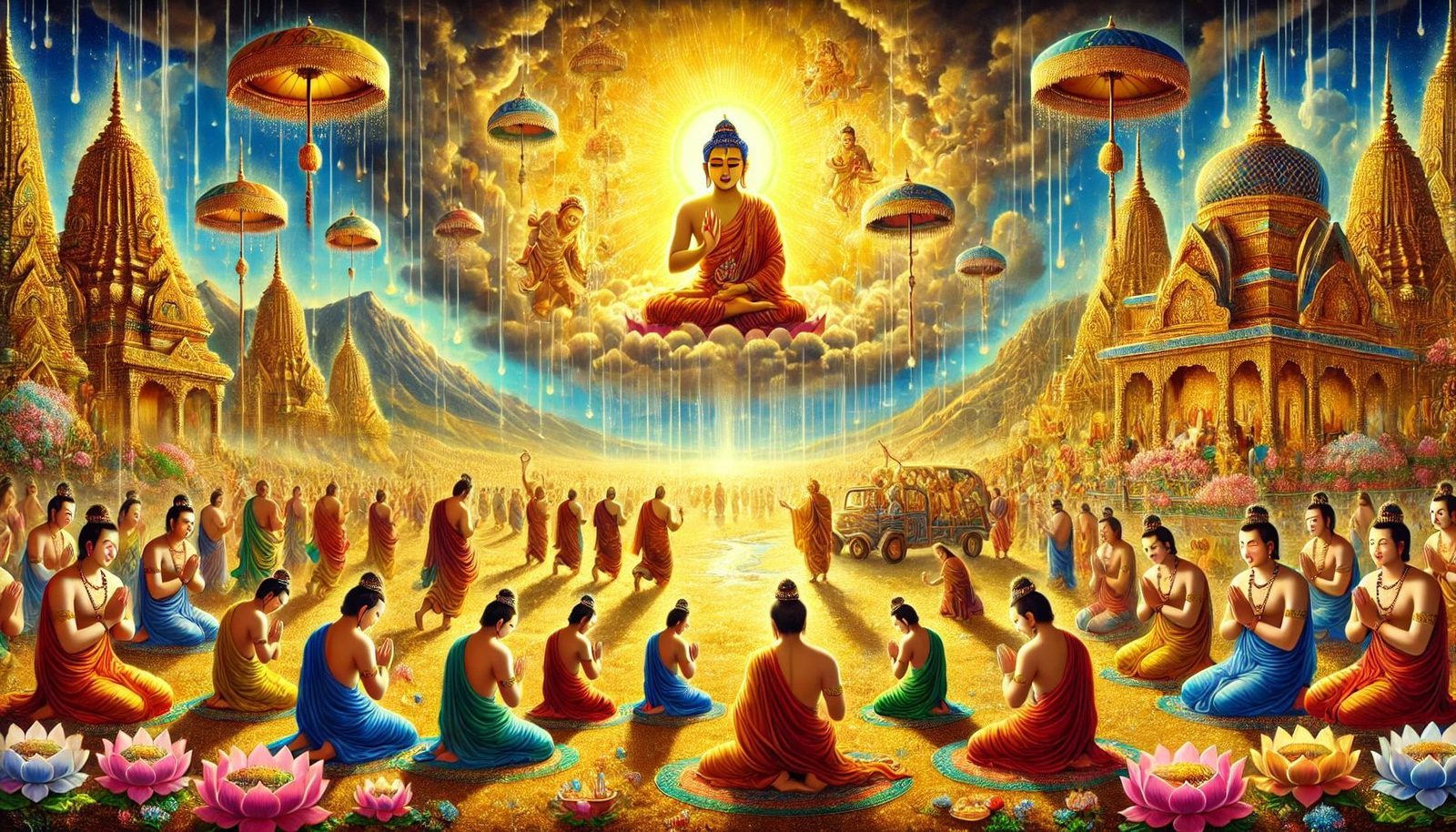
当天夜里,饿鬼命终投生到忉利天。天人心想:「我是造何福德,今生能生到天上呢?」观察过去的因缘后,才发现原来是优多罗比丘为她所做的功德,使她能脱离饿鬼果报。于是她头戴天冠,身着华丽的璎珞,并且手持香花,来到佛陀及众比丘的住处诚挚供养,并随大众聆听佛陀开示。佛陀说法字字珠玑,令她心开意解,当下就证得须陀洹果。法喜充满的她,虔诚地绕佛三匝后,才离开精舍返回天上。
佛陀向在座比丘开示优多罗比丘母亲的事情后,比丘们皆舍离贪欲之心,厌离生死苦恼,当下有证得须陀洹、斯陀含、阿那含、阿罗汉果者,亦有发辟支佛心、无上菩提心者。对于佛陀所说之法,皆欢喜奉行,无有退转。
Date: 07/04/2026 07/05/2026
Location: Star Lake Meditation Center
Teacher: Shilin Long
Dharma Talk
Uttarā’s Mother and Her Rebirth as a Hungry Ghost
In the city of Rājagṛha there lived a wealthy elder who married a noblewoman. The elder loved his wife dearly and arranged daily musical performances and dances to entertain her.
Later, his wife became pregnant and gave birth to a handsome and dignified son. Delighted by the child’s birth, the couple named him Uttarā.
As Uttarā gradually grew up, his father unfortunately passed away. Uttarā thought to himself:
“My father spent his life engaged in business to support the family, but I have no interest in commerce. Instead, I have developed faith in the Buddhadharma and wish to leave home and devote myself to spiritual practice.”
Therefore, Uttarā asked his mother for permission to become a monk.
Upon hearing this, his mother replied:
“Your father is gone. I have no one left except you. How can you abandon me and become a monk? As long as I remain alive, I will never permit you to leave home. After I die, you may do as you wish.”
Unable to obtain his mother’s consent, Uttarā became deeply distressed and said:
“If you do not allow me to become a monk, then I would rather leave this world forever.”
His mother was frightened and gently persuaded him:
“Do not say such things. Let us do this instead: whenever you wish to make offerings to religious practitioners, I will prepare whatever is needed. You may offer as much as you like.”
Hearing this, Uttarā gave up his insistence on ordination and frequently invited ascetics, brahmins, and other practitioners to his home for meals and offerings.
However, whenever Uttarā’s mother saw so many religious practitioners coming and going, she became irritated and would scold them:
“You people do no work and live entirely off the support of householders. Just seeing you makes me angry!”
Whenever Uttarā was away from home, she would throw the prepared food onto the ground and drive away the practitioners who had come to receive offerings.
When Uttarā returned, she would deceive him, saying:
“My son, while you were away, I offered excellent food to several practitioners.”
Hearing this, Uttarā was delighted and believed that his mother had truly been generous.
Not long afterward, Uttarā’s mother died. Because of the evil karma she had created, she was reborn as a hungry ghost (preta).
After her death, Uttarā fulfilled his long-cherished wish and entered the monastic life. Through diligent practice, he quickly attained the fruit of Arhatship.
One day, while Venerable Uttarā was meditating in a cave by the river, he suddenly saw a hungry ghost with a dry and scorched mouth, tormented by hunger and thirst. The ghost approached him and said:
“My son, I am your mother.”
Uttarā found this impossible to believe and replied:
“That cannot be true. My mother was generous and often supported religious practitioners. She could not possibly have fallen into the realm of hungry ghosts.”
The ghost answered:
“My son, because of my stinginess, whenever you were away from home, I never offered food to them. After death, I fell into the realm of hungry ghosts. For twenty years I have not tasted a single drop of water or a mouthful of food. Whenever I approach a river, its waters immediately dry up. Whenever I draw near a fruit tree, it withers at once. The suffering I endure is beyond description.”
Uttarā asked:
“Why has this happened?”
The ghost replied:
“Although I appeared to make offerings, inwardly I was reluctant and attached. I even insulted practitioners. Therefore, I now suffer this retribution. If you will dedicate merit to me, prepare offerings of food, and make offerings to the Buddha and the Sangha, I can be freed from this condition.”
Filled with compassion for his mother, Venerable Uttarā encouraged the faithful and organized a great offering to the Buddha and the Sangha.
At the conclusion of the offering ceremony, the hungry ghost appeared before the assembly and sincerely confessed her wrongdoing before the Buddha. The Buddha then taught her the Dharma.
Upon hearing the teaching, she felt deep remorse and shame. That very night, the life of that hungry ghost came to an end, and she was reborn as a flying hungry ghost adorned with a heavenly crown and jeweled ornaments.
She again appeared before Venerable Uttarā and said:
“My evil karma has not yet been completely exhausted, and I have not fully escaped the realm of hungry ghosts. Please arrange another offering and provide bedding and requisites for the Sangha. Then I shall be liberated from this suffering.”
Venerable Uttarā immediately organized another offering and provided bedding and other necessities for all the monks.
When the offering was completed, the ghost appeared once more and sincerely repented of her misdeeds.
That very night she died and was reborn in the Heaven of the Thirty-Three (Trāyastriṃśa).
As a celestial being, she wondered:
“What merit have I created that I should be reborn in heaven?”
Looking back upon her past causes and conditions, she realized that it was through the merits generated by Venerable Uttarā on her behalf that she had escaped the suffering of the hungry ghost realm.
Therefore, wearing a heavenly crown, adorned with splendid jeweled ornaments, and carrying fragrant flowers, she came to the Buddha and the assembly of monks to make offerings with sincere gratitude.
She then listened to the Buddha’s teaching together with the assembly. The Buddha’s words were profound and illuminating. Her mind opened to understanding, and she immediately attained the fruit of Stream-Entry (Sotāpanna).
Filled with the joy of the Dharma, she reverently circumambulated the Buddha three times before returning to the heavenly realm.
Afterward, the Buddha explained the story of Uttarā’s mother to the assembled monks.
Hearing this account, many monks abandoned thoughts of greed and developed disenchantment with the sufferings of birth and death. Some attained the fruits of Stream-Entry, Once-Returner, Non-Returner, and Arhatship. Others generated the aspiration for Pratyekabuddhahood or for Supreme Enlightenment.
All joyfully accepted and practiced the Buddha’s teaching, never turning back from the path.