时间:12/06/2025 12/07/2025
地点:星湖禅修中心
主讲:龙示林
佛法知识
佛法与生死关怀
生与死,是每一个生命都无法回避的主题。然而在现代社会中,死亡常被回避、隐藏,甚至被视为失败与禁忌。人们在医疗技术与效率逻辑中努力延长生命,却往往忽略了对临终者内心状态的关怀。佛法中的生死关怀,并不只是面对死亡的技巧,而是一种贯穿生与死、关照身心与觉悟的整体智慧。
佛法首先正视生死的真实性。生必然走向死,这是无常的法则,而非个体的失败。佛陀并未回避死亡的痛苦,而是以清醒的态度指出:正因为生命有限,觉醒才显得迫切。生死关怀的起点,不在于消除死亡,而在于帮助人如实面对它。
从佛法的角度看,对死亡的恐惧,往往并非源于死亡本身,而源于对失去、未知与自我的执著。人害怕失去身体、关系、身份与未完成的期待。当“我”的认同牢固,死亡便显得极其可怕。佛法通过智慧的观照,引导人逐渐松开这种执著,使心在面对死亡时不再完全崩溃。
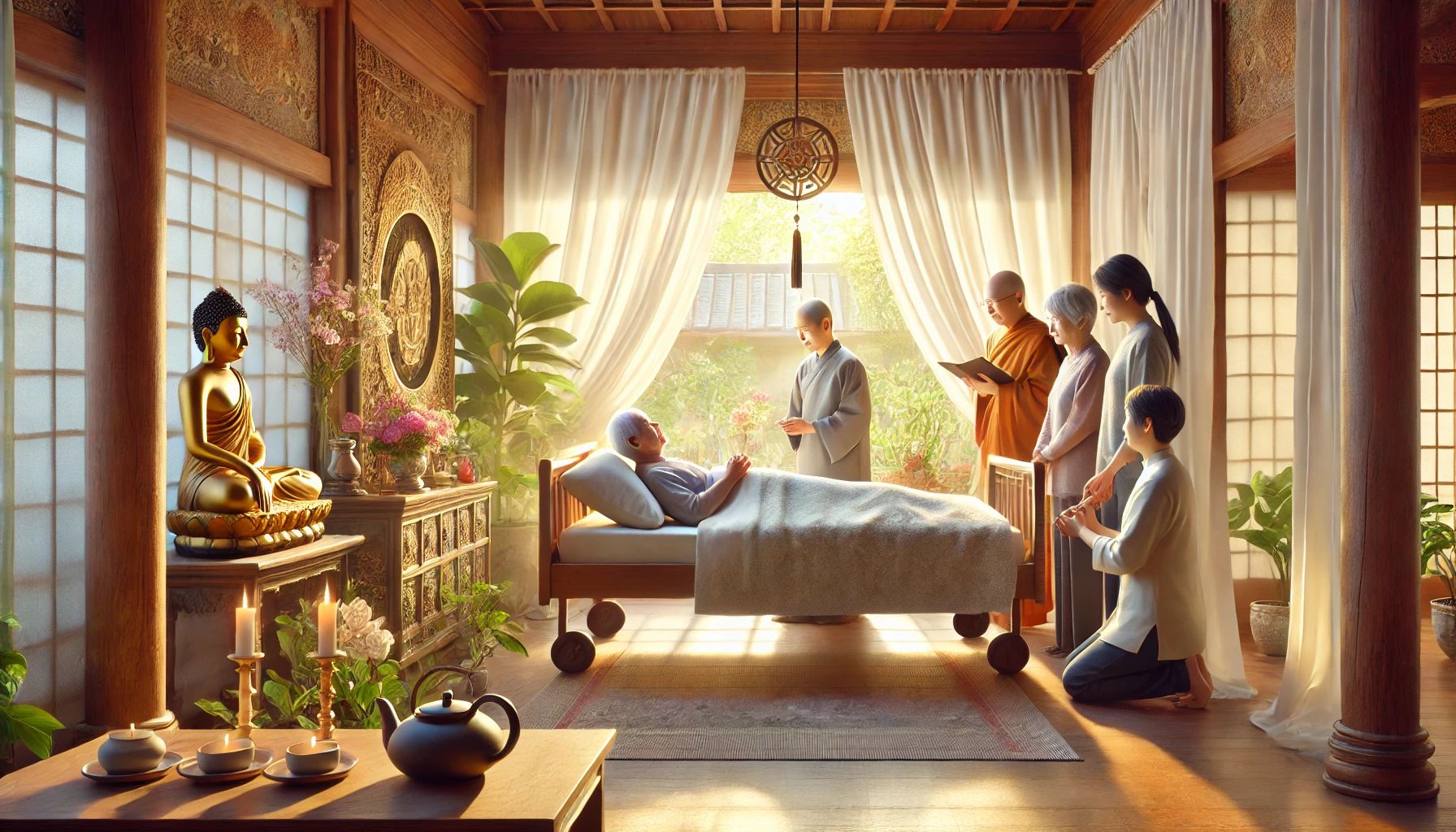
佛法中的生死关怀,尤其重视临终者的心境。一个人如何死,与一个人如何活,密切相关。临终并不仅是生理过程的终结,更是心识状态的重要转折。佛法并不将临终视为纯粹的医疗事件,而视为需要觉知、陪伴与慈悲的关键时刻。安静的环境、温和的语言、稳定的陪伴,往往比过度的干预更有力量。
在佛法中,真正的关怀并不急于安慰或否认痛苦,而是陪伴与理解。面对临终者的恐惧、愤怒或不舍,生死关怀并不是要求其“想开一点”,而是允许这些情绪被看见。被理解的痛苦,往往会自然缓解。慈悲并不是说服,而是愿意与痛苦同在。
佛法的生死关怀,也同样关照家属与照护者。亲人的病重与离世,常伴随着无力、内疚与未竟之言。佛法提醒人,无常并非谁的过错。通过觉知与慈悲,家属可以在陪伴中完成告别,而非陷入长期的自责。生死关怀不只是帮助一个人离开,也是帮助活着的人继续生活。
佛法对生死的理解,并不局限于单一生命阶段,而是一种连续的生命观。生死并非断裂,而是变化。理解这一点,并不意味着否认悲伤,而是为悲伤提供更宽广的容纳空间。当死亡不再被视为彻底的终结,心对失去的恐惧便会有所松动。
在实践层面,佛法式的生死关怀强调觉知当下。临终者未必需要复杂的理论,而需要被尊重、被安住。当心能够回到呼吸、回到当下的感受,死亡便不再完全被想象中的恐惧所主导。这种回归,为内心带来片刻乃至持续的安稳。
佛法也提醒人,最深的生死关怀并非只发生在临终时,而应贯穿一生。若平时习惯逃避无常、压抑恐惧,临终时便难以安住;若平时常观无常、修习觉知,临终时反而更容易放下。生死关怀,其实是生之关怀。
从更深的层面看,佛法中的生死关怀,指向的是尊严。尊严并不来自控制死亡的时间,而来自心是否被恐惧与执著所吞没。当一个人能够在陪伴中被理解、在觉知中被尊重,生命的最后阶段便不再只是衰败,而成为圆满的一部分。
佛法并不承诺“好死”的保证,而是提供一条减少恐惧、增加清明的道路。即使身体充满痛苦,心仍然可以拥有一定程度的安稳。这样的安稳,并非逃避现实,而是对现实最深刻的拥抱。
最终,佛法与生死关怀的关系,并不是技术与结局的关系,而是觉醒与陪伴的关系。佛法不是告诉人死亡之后一定如何,而是帮助人在生死之间,活得清醒、死得安然。当生命被如此对待,生与死不再彼此对立,而共同构成一条完整而有尊严的人生之路。
Date: 12/06/2025 12/07/2025
Location: Star Lake Meditation Center
Teacher: Shilin Long
Dharma Knowledge
Buddhism and End-of-Life Care
Life and death are unavoidable themes for every human being. Yet in modern society, death is often avoided, concealed, or treated as a taboo and even as a failure. While medical systems focus on prolonging life through technology and efficiency, the inner experience of those approaching death is frequently overlooked. From a Buddhist perspective, end-of-life care is not merely a set of techniques for dying, but a comprehensive wisdom that embraces life, death, and awakening as an integrated whole.
Buddhism begins by acknowledging the reality of birth and death. Life inevitably moves toward death; this is the law of impermanence, not a personal failure. The Buddha did not deny the pain of dying, but emphasized that awareness of mortality gives urgency and meaning to life. The starting point of Buddhist end-of-life care is not the elimination of death, but helping individuals face it with clarity.
From a Buddhist view, fear of death rarely comes from death itself, but from attachment to loss, uncertainty, and identity. People fear losing their bodies, relationships, roles, and unrealized expectations. When identification with “self” is rigid, death appears terrifying. Through insight, Buddhism guides practitioners to loosen this attachment, allowing the mind to meet death with less collapse and resistance.
Buddhist end-of-life care places special emphasis on the mental state of the dying person. How one dies is deeply connected to how one has lived. Dying is not only a physiological event, but a significant moment of mental transition. Buddhism does not regard the end of life as merely a medical matter, but as a time requiring awareness, companionship, and compassion. A calm environment, gentle speech, and steady presence often provide more support than excessive intervention.
In Buddhism, genuine care does not rush to comfort or deny suffering. It listens and accompanies. When fear, anger, or regret arise in the dying, end-of-life care does not insist that they “be positive,” but allows these emotions to be acknowledged. Suffering that is understood tends to soften naturally. Compassion is not persuasion, but willingness to remain present with pain.
Buddhist end-of-life care also extends to family members and caregivers. The illness and loss of a loved one often bring helplessness, guilt, and unresolved emotions. Buddhism reminds us that impermanence is not anyone’s fault. Through awareness and compassion, families can grieve while completing their farewells, rather than remaining trapped in self-blame. Care at the end of life supports not only the dying, but also those who continue living.
Buddhism views life and death not as isolated events, but as part of a continuous process of change. Death is not absolute rupture, but transformation. This understanding does not negate grief, but offers it a broader space in which to unfold. When death is no longer seen as total annihilation, fear of loss can gradually loosen.
Practically, Buddhist end-of-life care emphasizes returning to the present moment. Dying individuals often do not need complex philosophies, but respect and grounded presence. When attention rests with breathing and immediate sensation, fear generated by imagined futures diminishes. This return to the present can bring moments of genuine peace.
Buddhism also teaches that the deepest form of end-of-life care is cultivated throughout life. If impermanence is habitually denied, dying becomes overwhelming; if impermanence is contemplated and accepted over time, letting go becomes more natural. Care for death is, in essence, care for life.
At a deeper level, Buddhist end-of-life care is about dignity. Dignity does not arise from controlling the moment of death, but from whether the mind is overwhelmed by fear and attachment. When a person is accompanied with understanding and respect, the final stage of life becomes not merely decline, but completion.
Buddhism does not promise an ideal death, but offers a path that reduces fear and increases clarity. Even when physical suffering is present, the mind can experience a degree of calm. This calm is not escape from reality, but a profound acceptance of it.
Ultimately, the relationship between Buddhism and end-of-life care is not about technique or outcome, but about awakening and presence. Buddhism does not insist on a specific vision of what comes after death; it helps people live consciously and die peacefully. When life is held with such care, birth and death are no longer opposites, but together form a complete and dignified human journey.