时间:09/06/2025 09/07/2025
地点:星湖禅修中心
主讲:龙示林
佛法知识
禅修与情绪管理
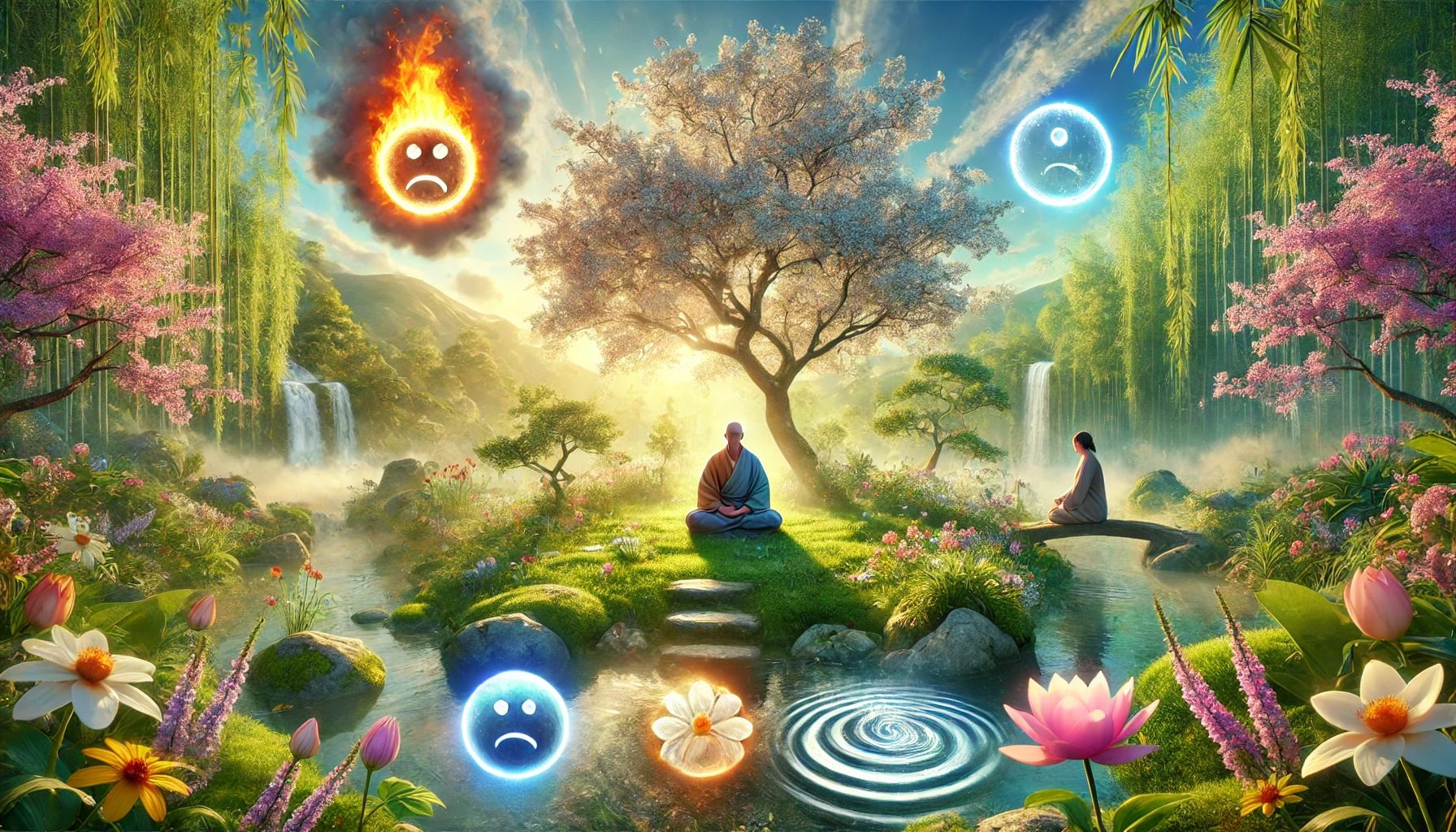
在现代社会中,“情绪管理”常被理解为控制情绪、调整情绪或避免情绪失控。然而,从禅修的角度来看,情绪并不是需要被管理的对象,而是需要被如实认识的过程。禅修并不试图消灭情绪,也不要求修行者始终保持平静,而是引导人看清情绪如何生起、如何变化、如何消失,从而不再被情绪主宰。
情绪本身并不是问题,真正造成困扰的,是人对情绪的无意识反应。当愤怒出现时,立刻被愤怒推动;当悲伤出现时,立刻被悲伤吞没;当恐惧出现时,立刻试图逃避或防卫。禅修所训练的,并不是让这些情绪不出现,而是在情绪出现时,心能够保持觉知,不立刻跟随、不急于排斥。
禅修中的正念,是情绪管理的核心基础。正念并不是分析情绪,也不是告诉自己“不该这样想”,而是在情绪升起的当下,清楚地知道:“此刻有愤怒”“此刻有悲伤”“此刻有不安”。这种觉知,让情绪从“我就是这样”转变为“这是正在发生的状态”。正是在这一点上,自我认同开始松动。
通过禅修,修行者会逐渐发现,情绪是由多种条件组合而成的过程。身体的紧张、感受的苦乐、念头的解释、过去的记忆,共同构成了情绪的体验。当这些元素被逐一觉知,情绪便不再是一个不可分割的整体,而是可以被看清的流动。看清,并不是为了拆解,而是为了不再被整体压倒。
禅修对情绪管理最深刻的帮助,在于让人直接体验情绪的无常。再强烈的愤怒,也会变化;再深的悲伤,也不会恒常存在。当这种无常不只是被理解,而是被反复体验,心对情绪的恐惧与依赖便会减弱。情绪不再被当成必须立即解决的问题,而只是生命流动中的一个阶段。
很多人担心,禅修会让人变得压抑或冷漠。事实上,真正的禅修恰恰相反。当情绪不再被压制,也不再被纵容,心反而变得更加柔软。觉知让情绪被允许存在,却不至于泛滥。正是在这种允许之中,情绪才有机会自然完成它的过程。
在日常生活中,禅修式的情绪管理并不要求脱离情境。当冲突发生时,修行者并不需要立刻做出完美回应,而是先觉知内在的反应正在形成。哪怕只是多出一秒的觉察,情绪的力量便会明显减弱。禅修训练的,正是这一“反应之前的空间”。
随着修行的深入,情绪管理不再是刻意的技巧,而成为自然的能力。愤怒出现时,不再立即伤人;悲伤出现时,不再完全封闭;焦虑出现时,不再被恐慌带走。这并非因为情绪变少了,而是因为心不再被情绪控制。
禅修并不会让情绪消失,但会改变情绪的结局。过去,情绪往往以冲动、后悔或关系破裂收场;在禅修的支持下,情绪更可能以理解、沟通或放下结束。这种改变,并非来自努力管理,而是来自清楚地看见。
最终,从禅修的角度看,情绪管理并不是一个独立的目标,而是觉醒过程的自然结果。当心不再迷失于情绪,情绪便失去了制造苦的能力。情绪依然来去,但心保持清醒、稳定与慈悲。
因此,禅修与情绪管理的关系,不是技巧与对象的关系,而是觉知与自由的关系。禅修不是教人如何“处理情绪”,而是教人如何在情绪中不迷失。当这一点逐渐成熟,情绪本身便不再是问题,反而成为深化理解与慈悲的重要入口。
Date: 09/06/2025 09/07/2025
Location: Star Lake Meditation Center
Teacher: Shilin Long
Dharma Knowledge
Zen Meditation and Emotional Regulation
In modern society, “emotional management” is often understood as controlling emotions, adjusting them, or preventing emotional outbursts. From the perspective of Zen meditation, however, emotions are not objects to be managed, but processes to be clearly understood. Zen does not aim to eliminate emotions or require constant calmness. Instead, it helps practitioners see how emotions arise, change, and pass away, so that they are no longer dominated by them.
Emotions themselves are not the problem. Suffering arises from unconscious reactions to emotions. When anger appears, one is immediately driven by anger; when sadness appears, one is consumed by sadness; when fear appears, one reacts with avoidance or defense. Zen meditation does not seek to prevent these emotions from arising, but trains the mind to remain aware when they do, without instantly following or resisting them.
Mindfulness cultivated through Zen meditation is the foundation of emotional regulation. Mindfulness does not analyze emotion or instruct the mind that it “should not feel this way.” It simply knows, in the moment of arising: “There is anger,” “There is sadness,” “There is anxiety.” This knowing shifts emotion from “this is who I am” to “this is a state that is present.” In that shift, identification begins to loosen.
Through meditation, practitioners gradually see that emotions are conditioned processes. Bodily tension, pleasant or unpleasant feeling, interpretive thought, and memory combine to form emotional experience. When these components are observed clearly, emotion is no longer an overwhelming whole, but a dynamic flow. This clarity does not dissect emotion for control, but prevents being overpowered by it.
One of the deepest contributions of Zen meditation to emotional regulation is the direct experience of impermanence. Even the most intense anger changes; even deep sorrow does not remain fixed. When impermanence is not merely understood intellectually but repeatedly experienced, fear of emotion and dependence on emotion both diminish. Emotions are no longer seen as urgent problems that must be solved immediately, but as phases within experience.
Some worry that meditation leads to emotional suppression or detachment. Genuine Zen practice produces the opposite effect. When emotions are neither suppressed nor indulged, the mind becomes more responsive and humane. Awareness allows emotion to exist without overflow. In this space of allowance, emotions can complete their natural course.
In daily life, Zen-based emotional regulation does not require withdrawal from situations. When conflict arises, practitioners need not respond perfectly, but first recognize the inner reaction forming. Even a brief moment of awareness can significantly reduce the force of emotion. Zen trains precisely this space before reaction.
As practice deepens, emotional regulation becomes less deliberate and more natural. Anger arises without immediate harm, sadness without collapse, anxiety without panic. This is not because emotions have disappeared, but because the mind is no longer ruled by them.
Zen meditation does not remove emotions, but it changes their outcome. Previously, emotions often ended in impulsive action, regret, or damaged relationships. With awareness, emotions are more likely to resolve through understanding, communication, or release. This transformation does not come from effortful control, but from clear seeing.
Ultimately, from the Zen perspective, emotional regulation is not an independent goal but a natural consequence of awakening. When the mind no longer loses itself in emotion, emotion loses its power to generate suffering. Emotions continue to arise and pass, but the mind remains clear, stable, and compassionate.
Thus, the relationship between Zen meditation and emotional regulation is not one of technique and object, but of awareness and freedom. Zen does not teach how to “handle emotions,” but how to remain awake within them. As this maturity develops, emotions cease to be obstacles and become gateways to deeper understanding and compassion.