时间:01/20/2024 01/21/2024
地点:星湖禅修中心
主讲:净真
佛法知识
佛法与科学理性
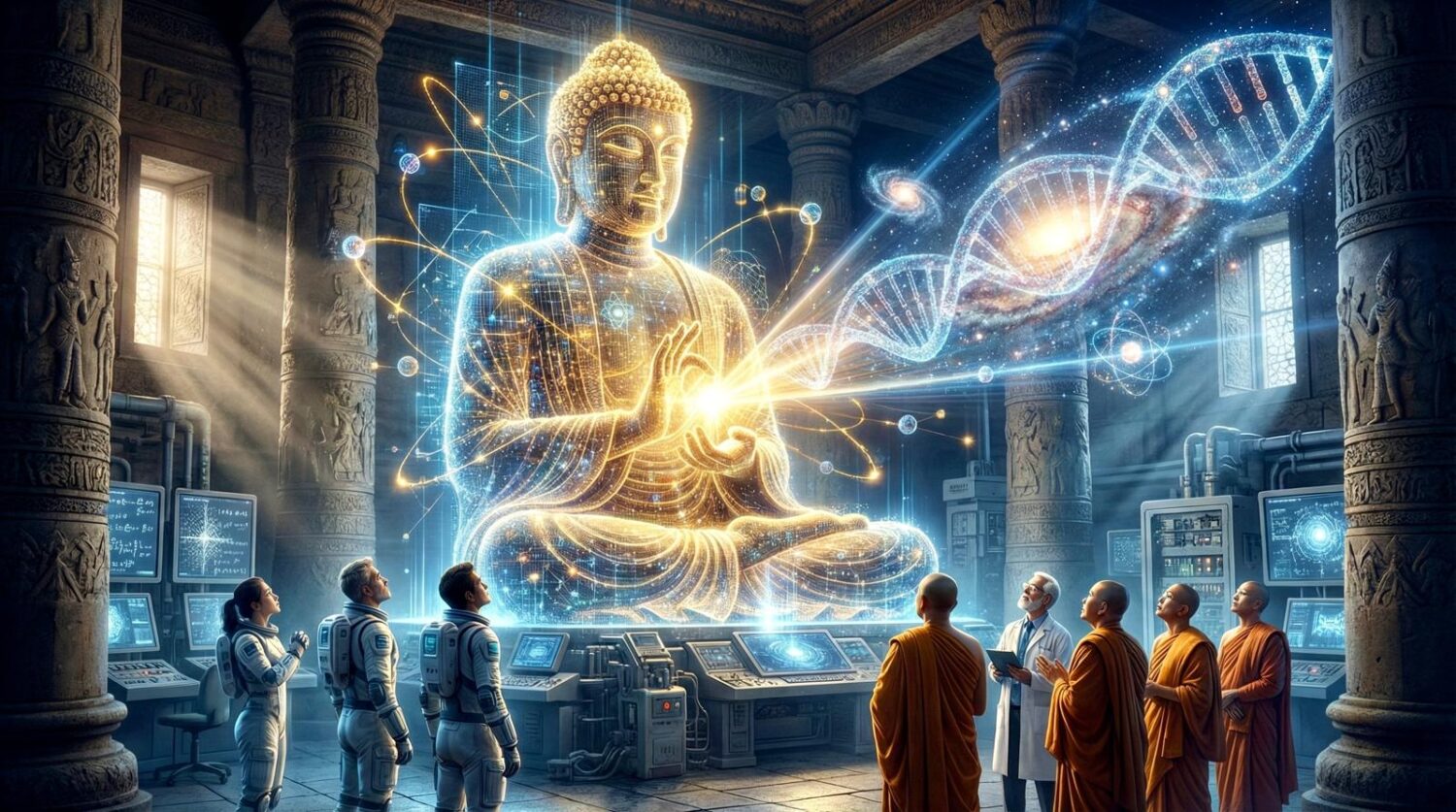
“佛法与科学理性是否相容”这一问题,源于一种表面张力:佛法常被视为传统修行体系,科学理性则被理解为现代知识方法。然而,这种张力多半来自对二者边界的误判。若从方法论、认识论与验证标准出发,而非从文化标签出发,佛法与科学理性的关系并不对立,反而具有高度可比性。
首先需要澄清“科学理性”的含义。科学并不等同于某一组固定结论,而是一种认识世界的方法论,其核心要素包括:经验观察、可重复性、因果分析、假设检验以及对权威的结构性怀疑。科学理性的本质,不在于结论是否“现代”,而在于过程是否开放、可修正、可验证。
以这一标准审视佛法,其理论结构在关键层面上与科学理性高度一致。佛法并不诉诸神的意志来解释世界,也不以超验设定作为因果终点。相反,它从经验事实入手,尤其是对身心经验的直接观察。生、老、病、死,感受、情绪、欲望、恐惧,皆被视为可被观察、分析与理解的现象,而非神秘事件。
在因果观上,佛法采取严格的条件论立场。任何现象的出现,皆依赖特定条件;条件具足,则现象生起,条件解除,则现象止息。苦的产生与止息,被放置在同一因果结构中理解。这种条件依存的解释方式,与科学中“不引入多余假设”的原则在逻辑上相通。
在认识论层面,佛法同样拒绝权威至上。佛陀在经典中多次强调,不应因传统、经典、导师或群体共识而接受某种观点,而应通过亲自观察与实践加以验证。这种立场并不要求否定一切权威,而是要求权威本身接受检验。这一点,与科学理性中对可证伪性的要求高度一致。
佛法的修行实践,也可被理解为一种系统性的“内在实验”。戒、定、慧并非伦理信条或宗教象征,而是用于改变变量的操作方法:通过行为规范减少干扰,通过定力训练稳定观察条件,通过智慧洞见分析结果。其目标并非服从某种价值,而是验证特定认知是否能减少混乱与痛苦。
当然,佛法并不等同于现代科学。二者的研究对象与工具存在明显差异。科学主要研究可外部测量的现象,而佛法聚焦于主观经验结构与认知机制;科学依赖仪器扩展感官,佛法依赖训练心智提升觉察。二者方法不同,但并不存在逻辑冲突。
需要警惕的,是两种常见误解。一种是将佛法神秘化,认为其内容不可理性分析;另一种是将科学绝对化,认为凡不可量化者即不成立。前者遮蔽了佛法的分析深度,后者误解了理性本身的适用范围。佛法并不反对理性,而是指出理性的对象与边界。
因此,佛法与科学理性并非竞争关系。科学擅长解释“现象如何发生”,佛法则专注于“经验如何被建构、为何产生苦”。二者在层次上不同,却在方法精神上相通:都拒绝盲信,都重视验证,都承认认知的可修正性。
结论并不需要调和式语言。佛法不是科学,但它在核心方法上是理性的;科学不是佛法,但它并未否定佛法所处理的经验领域。冲突并不存在于佛法与科学之间,而存在于对二者的概念误用之中。
Date: 01/20/2024 01/21/2024
Location: Star Lake Meditation Center
Teacher: Sara
Dharma Knowledge
The Dharma and Scientific Rationality
The question of whether the Dharma is compatible with scientific rationality arises from an apparent tension between tradition and modernity. Yet this tension is largely the result of misclassification. When examined at the level of methodology, epistemology, and standards of validation—rather than cultural labels—the relationship between the Dharma and scientific rationality is not antagonistic, but structurally comparable.
To begin, scientific rationality must be properly defined. Science is not a fixed body of conclusions, but a method of inquiry. Its core features include empirical observation, repeatability, causal analysis, hypothesis testing, and principled skepticism toward authority. What defines scientific rationality is not the modernity of its claims, but the openness and revisability of its process.
Judged by these criteria, the Dharma aligns with scientific rationality in several fundamental respects. The Dharma does not appeal to divine will to explain reality, nor does it posit supernatural agents as ultimate causes. It begins instead with observable experience, particularly bodily and mental phenomena. Birth, aging, illness, death, sensations, emotions, desire, and fear are treated as phenomena to be examined and understood, not as mysteries to be revered.
In terms of causality, the Dharma adopts a strictly conditional framework. Every phenomenon arises in dependence upon specific conditions; when conditions are present, effects occur, and when conditions cease, effects cease. Suffering and its cessation are explained within the same causal structure. This approach parallels the scientific principle of avoiding unnecessary assumptions and grounding explanations in conditions.
Epistemologically, the Dharma rejects the primacy of authority. Canonical texts repeatedly state that teachings should not be accepted on the basis of tradition, scripture, teachers, or consensus alone. Verification must occur through direct observation and practice. Authority, if it exists, is provisional and testable. This stance corresponds closely to the scientific requirement that claims remain subject to falsification.
The practices of the Dharma can be understood as systematic internal experimentation. Ethical discipline, concentration, and wisdom are not moral commandments or ritual symbols, but operational means of adjusting variables: regulating behavior to reduce noise, stabilizing attention to improve observation, and applying insight to analyze results. The criterion of success is not conformity, but whether confusion and suffering are demonstrably reduced.
This does not mean that the Dharma is identical to modern science. The two differ in domain and instrumentation. Science primarily investigates externally measurable phenomena, while the Dharma focuses on the structure of subjective experience and cognition. Science extends perception through instruments; the Dharma refines perception through mental training. Their methods differ, but they do not contradict each other.
Two common misunderstandings must be avoided. One is the mystification of the Dharma, treating it as beyond rational analysis. The other is the absolutization of science, assuming that what cannot be quantified is therefore invalid. The former obscures the analytical rigor of the Dharma; the latter misunderstands the scope and limits of rational inquiry itself. The Dharma does not reject reason; it clarifies its proper domain.
Accordingly, the Dharma and scientific rationality are not rivals. Science excels at explaining how phenomena occur; the Dharma addresses how experience is constructed and why suffering arises within it. They operate on different levels, yet share a common methodological spirit: rejection of blind belief, commitment to verification, and recognition of the corrigibility of understanding.
The conclusion requires no reconciliation rhetoric. The Dharma is not science, but it is rational in its core method. Science is not the Dharma, but it does not negate the experiential domain the Dharma investigates. Any perceived conflict lies not between the two, but in the conceptual misuse of both.