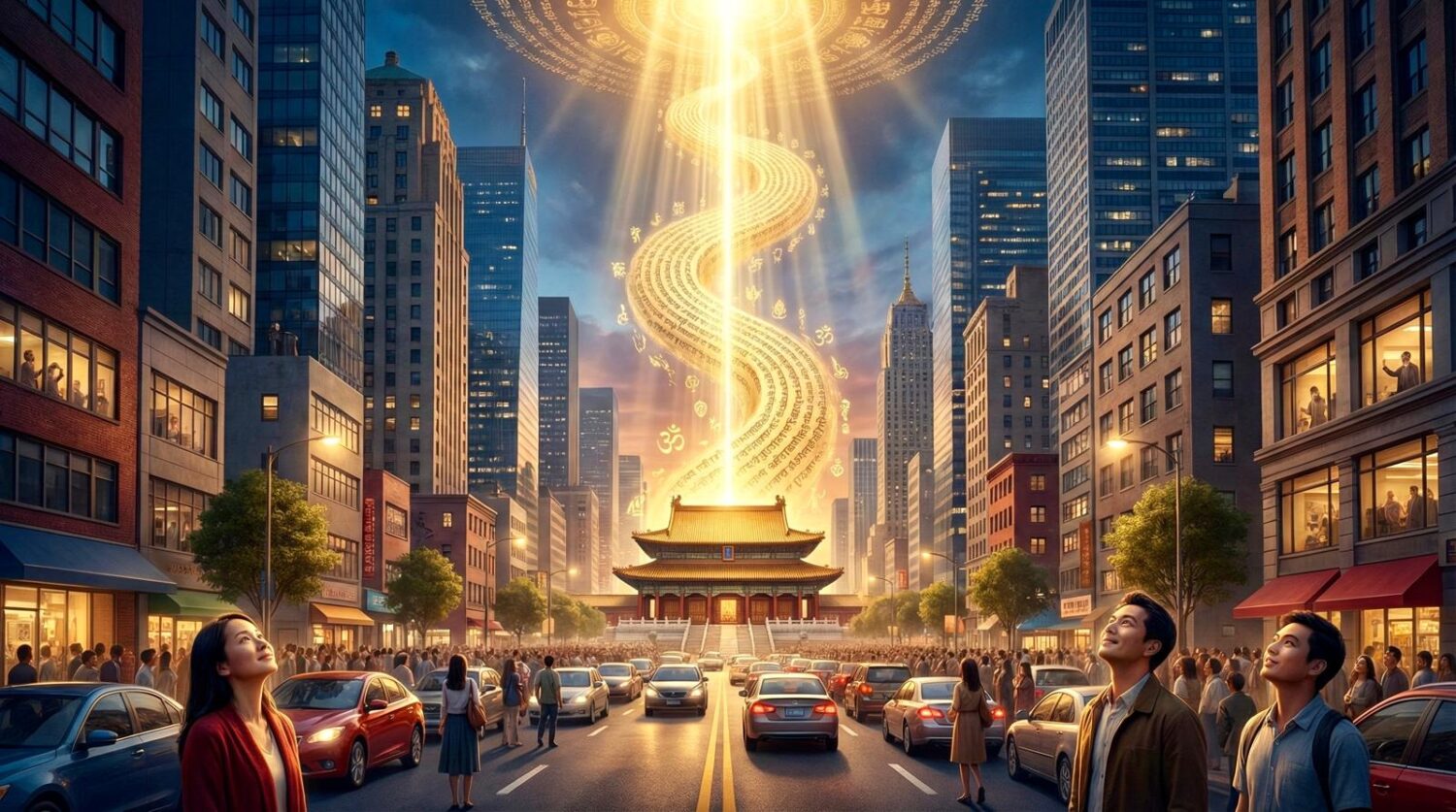
时间:01/13/2024 01/14/2024
地点:星湖禅修中心
主讲:净真
佛法知识
佛法与现代生活
“佛法是否仍适用于现代生活”这一问题,隐含着一个前提假设:佛法产生于古代,其价值可能依赖特定历史与文化条件。因此,讨论佛法与现代生活的关系,不能停留在形式适应或情绪慰藉,而必须回到佛法所处理的核心对象——人的认知结构与苦的生成机制。
现代生活的特征,并不只是科技进步或物质丰富,而是节奏加速、信息过载、身份碎片化与不确定性常态化。在这样的环境中,人的基本困扰并未减少,只是表现形式发生变化。焦虑、空虚、失控感、意义缺失,仍然以不同面貌反复出现。这说明,现代问题并非源自技术本身,而源自人在条件变化中的认知反应方式。
佛法关注的正是这一层面。佛法并不以社会形态为分析单位,而以经验本身为对象。无论是农耕社会还是信息社会,感受的生起、执取的形成、欲望的强化以及失落的循环,其运作逻辑并无本质差异。变化的是外部条件,不变的是错误认知如何将条件转化为苦。
在现代生活中,佛法首先体现为一种对“效率逻辑”的校正。现代社会高度强调速度、产出与比较,这一逻辑容易被内化为自我价值评判的标准。佛法通过无常与无我的分析,直接否定“以结果定义自我”的认知前提。它指出,个体并不存在一个可被固定评价的核心实体,自我只是条件流动中的暂时标记。这一理解并非消极退缩,而是解除长期心理紧张的重要条件。
其次,佛法为现代人提供了一种处理情绪与压力的方法论。佛法并不要求压抑情绪,也不鼓励宣泄,而是训练对情绪的如实观察。情绪被视为可被觉知的过程,而非“必须服从”的命令。当感受被清楚地看见,而不被迅速解释为“我”“我的问题”或“必须解决的对象”,情绪本身便失去主导行为的力量。这种能力在高刺激、高不确定性的现代环境中尤为关键。
在伦理层面,佛法并不以外在规范约束现代生活,而是通过因果理解重构行为选择。佛法的伦理基础不是义务,而是清楚看见行为如何塑造经验。当言语、行为和生活方式不断制造冲突、耗散与混乱时,苦自然累积;当行为趋于减少伤害、简化需求、稳定关系时,心的负担随之降低。这是一种内在一致性的伦理,而非外部强制。
在工作与社会角色中,佛法并不否定竞争或责任,而是区分“行动”与“执取”。现代人普遍的问题不是行动本身,而是将身份、价值与结果紧密绑定。一旦结果不可控,自我便随之受损。佛法通过缘起的视角指出,任何结果都由多重条件构成,个体只对可控部分负责,而不对整体结果承担自我价值判断。这一理解,使参与社会不再等同于被其吞噬。
最后,佛法与现代生活的关系,不是“如何融入”,而是“如何被检验”。佛法从不要求被相信,只要求被实践。若一种理解无法在现代情境中减少混乱、增强清醒、降低无谓的心理消耗,那么它就失去了佛法意义上的有效性。反之,只要苦的结构仍在,认知修正的路径就仍然成立。
因此,佛法并非现代生活的对立面,也不是其装饰品。它是一套与时代形式无关、但能在任何时代接受检验的认知与实践系统。现代生活不是佛法的障碍,而是其有效性的现实考场。
Date: 01/13/2024 01/14/2024
Location: Star Lake Meditation Center
Teacher: Sara
Dharma Knowledge
The Dharma and Modern Life
The question of whether the Dharma is relevant to modern life often assumes that its value is bound to ancient cultural and historical conditions. To address this properly, one must move beyond surface adaptation or emotional comfort and return to what the Dharma fundamentally engages with: the structure of human cognition and the mechanisms through which suffering arises.
Modern life is not defined solely by technological advancement or material abundance. It is characterized by acceleration, information overload, fragmented identities, and persistent uncertainty. Despite these changes, the core human difficulties remain. Anxiety, emptiness, loss of control, and a lack of meaning continue to manifest in new forms. This indicates that modern problems do not originate from technology itself, but from how cognition responds to changing conditions.
This is precisely the level at which the Dharma operates. The Dharma does not analyze society as a historical formation; it examines experience itself. Whether in an agrarian or digital society, the arising of sensation, the formation of attachment, the intensification of desire, and the repetition of dissatisfaction follow the same logic. Conditions change, but the way misperception converts conditions into suffering does not.
In modern life, the Dharma first functions as a correction to the logic of efficiency. Contemporary societies emphasize speed, productivity, and comparison, and these values are easily internalized as measures of self-worth. Through its analysis of impermanence and non-self, the Dharma directly undermines the assumption that identity can be defined by outcomes. It shows that there is no fixed core that can be permanently evaluated. The self is a provisional construct within a flow of conditions. This insight is not withdrawal from responsibility, but a necessary release from chronic psychological strain.
Second, the Dharma offers a method for working with emotion and stress. It neither suppresses emotions nor encourages their discharge. Instead, it trains clear observation. Emotions are understood as processes that can be known, not commands that must be obeyed. When feelings are seen directly, without being immediately interpreted as “me,” “my problem,” or “something that must be fixed,” they lose their power to dictate behavior. This capacity is especially critical in the high-stimulation, high-uncertainty environments of modern life.
On the ethical level, the Dharma does not impose external rules onto contemporary society. It reframes behavior through causal understanding. Ethical conduct is grounded not in obligation, but in seeing how actions shape experience. When speech, behavior, and lifestyle repeatedly generate conflict and agitation, suffering accumulates. When actions reduce harm, simplify needs, and stabilize relationships, mental burden decreases. This is an ethics of coherence rather than enforcement.
In work and social roles, the Dharma does not reject competition or responsibility. It distinguishes action from attachment. The modern difficulty lies not in acting, but in binding identity and worth to results. When outcomes are uncertain, the self is destabilized. Through the lens of dependent arising, the Dharma clarifies that results emerge from multiple conditions. One is responsible for one’s actions, not for using outcomes as measures of personal value. This understanding allows participation in society without being consumed by it.
Ultimately, the relationship between the Dharma and modern life is not about integration, but about verification. The Dharma does not demand belief; it demands application. If a view does not reduce confusion, increase clarity, and lessen unnecessary psychological expenditure in modern conditions, it fails by the Dharma’s own standard. If it does, it remains valid regardless of era.
The Dharma, therefore, is neither opposed to modern life nor an ornament upon it. It is a system of cognition and practice that is independent of historical form, yet fully testable in any time. Modern life is not an obstacle to the Dharma, but the field in which its effectiveness is examined.