时间:04/27/2024 04/28/2024
地点:星湖禅修中心
主讲:Otto Huang
佛法修行
文荼王的丧妻之痛
佛陀曾经这样教导比丘们:
「有五件事,所有的人,包括女人、男人;在家或出家,都应当时常拿来自我警惕:
我会变老;我不能免于变老。
我会生病;我不能免于生病。
我会死亡;我不能免于死亡。
我所拥有的一切,都有离我而去的时候。
我所做过的恶业,终究是会由我来承担。
这样,可以警惕以年轻力壮、没病痛、能活着、能拥有、心存侥幸作恶而自豪的人,免除他们的沉迷与行恶,引导他们走向出世的修学之路。」
摩揭陀国阿阇世王登基后第八年,佛陀入灭了。
摩揭陀国的文荼王,对他的第一夫人跋陀十分宠爱。
有一天,跋陀夫人去世了,噩耗传来,让文荼王哀痛不已,整天不吃不喝,不理朝政,憔悴邋遢地守着跋陀夫人的遗体,还交代他的亲信侍从官披亚卡,将夫人的遗体浸泡在麻油槽中防腐,以方便他时时看望。
披亚卡特别去订制了一个大铁槽,按文荼王的意思办了,但心想,这样下去实在不是办法,应当帮国王找一位可以亲近的沙门或婆罗门,来帮国王拔除心中的忧郁之箭。
那时,尊者那罗陀正好在摩揭陀国的首都华氏城游化,住在一位长者的竹林园中。尊者那罗陀是一位博学识广,辩才无碍,善于教化的大阿罗汉,深受当地人的敬重。
于是,披亚卡向文荼王禀报,建议国王去见尊者那罗陀。
文荼王同意了,差遣披亚卡先向尊者那罗陀求见,展现了当时王者敬重沙门、婆罗门修行者的风气。
尊者那罗陀也同意了,愿意随时接受文荼王的来访。
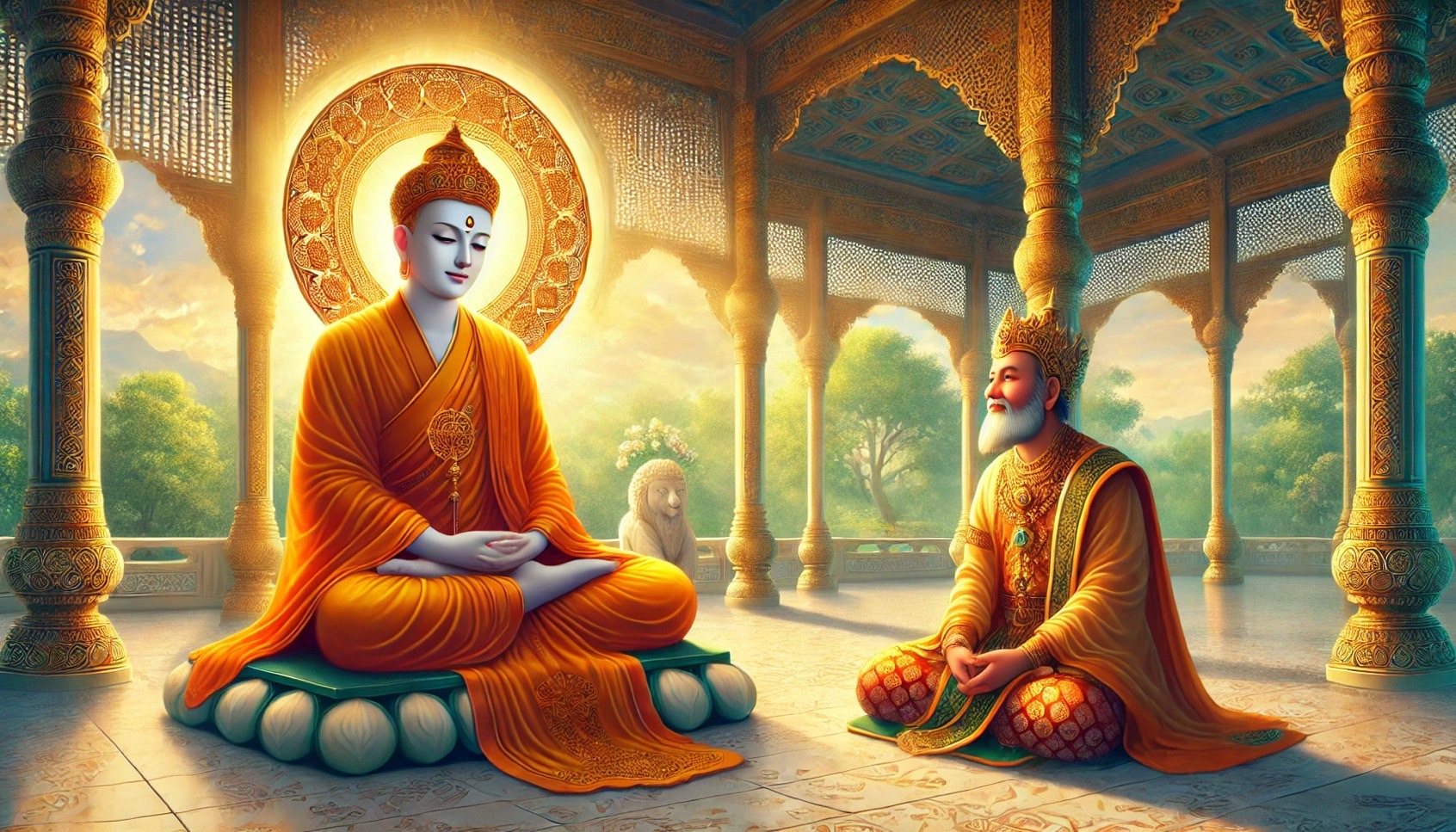
文荼王一行人庄严的车队,来到了竹林园外,大家下车步行进入园内,见到了那罗陀尊者。一番问讯礼敬之后,尊者那罗陀说了:
「大王!不要因为那些像梦境、泡沫、雪堆、幻影般无常不实之事起忧愁,为什么呢?因为所有的沙门、婆罗门、天、魔、梵等,世间一切众生,有五件事最不可得。哪五件事呢?那就是:让我不老、不病、不死、所拥有的不失、不灭,这是世尊的教说。
大王!一般不曾听闻这个道理的人,当他老了、病了,遇到亲人死了,所拥有的失去、坏灭了,他不去想这些情形又不是只有自己才如此,是一切众生都一样的,因而忧愁、苦恼、哀痛不已,甚至于搥胸号泣、食不知味、憔悴邋遢、反应迟钝而陷于迷乱。如此一来,徒增亲友的担忧、怨敌的欢喜。这就像中了浸泡过毒液的忧愁之箭,全然是自寻烦恼。
又,听闻世尊教化的贤圣弟子们,他们深知一切众生都无法避免老、病、死、失去、坏灭,如果自己因此而忧愁、苦恼、哀痛,搥胸号泣、陷于迷乱,只是徒增亲友的担忧、怨敌的欢喜,赔掉了自己的健康,甚至于因而丧命而已。能这样思惟,便能拔除那浸泡过毒液的忧愁之箭,解除生、老、病、死的灾患苦恼了。」
对尊者那罗陀的这一番教说,文荼王听进去了,便询问尊者那罗陀:
「这个法门的名称是什么?应当如何修?」
「这就叫作除去忧愁祸患法门,应当从每一个念头的思惟来修。」尊者那罗陀回答说。
「真是如您所说的,是除去忧愁祸患的法门。为什么呢?因为我听了以后,所有的愁苦都解除了。」文荼王作了这样正面的响应,同时,邀请尊者那罗陀,能常到王宫教说,以使国家人民多多获益,并且劝请尊者能将这个法门广为教化流传,使之永存于世。
最后,文荼王表明要皈依尊者那罗陀。
「大王!不要皈依我,应当皈依佛。」尊者那罗陀说。
「谁是佛呢?」文荼王问。
「大王!迦毗罗卫国的悉达多太子,出家学道,修道成佛,号释迦文,是您应当皈依的佛。」尊者那罗陀说。
「现在释迦文佛在哪里?离这里有多远呢?」
「释迦文佛已经入灭了。」
「怎么这么快就入灭了呢?如果释迦文佛还在世上,不论多远,我都要去见释迦文佛。」
然后,文荼王起身,合掌长跪,发愿今生皈依佛、法、僧,愿为在家佛弟子。
Date: 04/27/2024 04/28/2024
Location: Star Lake Meditation Center
Teacher: Otto Huang
Dharma Talk
The Sorrow of King Vidudabha After Losing His Wife
The Buddha once taught the monks that every person, including women and men, whether laypeople or monastics, should constantly remind themselves of five things:
I will grow old; I cannot avoid aging.
I will become ill; I cannot avoid illness.
I will die; I cannot avoid death.
All that I own will one day leave me.
I will have to bear the consequences of my bad actions.
This teaching serves to caution those who are young, strong, and healthy, who possess things, and who are complacent in their wrongdoing. It helps to prevent them from indulging in evil and guides them on the path of learning and transcendence.
In the eighth year after King Ajatashatru of Magadha ascended to the throne, the Buddha entered Nirvana.
King Vidudabha of Magadha dearly loved his first wife, Queen Bhadda.
One day, she passed away, and the sad news plunged King Vidudabha into deep grief. He spent his days without eating or drinking, neglecting the affairs of state, and remained disheveled and distressed beside the body of his deceased wife. He ordered his trusted officer Piaka to preserve her body in an oil vat to prevent decay, so he could visit her anytime.
Piaka commissioned a large iron vat for this purpose, following the King’s instructions, but he realized that this was not a solution. He thought it necessary to find a close Samana or Brahmin to help the King remove the arrow of grief from his heart.
At that time, the venerable Narada was traveling through the capital city of Magadha and was staying in a bamboo grove belonging to an elder. Venerable Narada, a great Arahant known for his vast knowledge, eloquence, and skill in teaching, was deeply respected by the locals.
Therefore, Piaka reported to King Vidudabha and suggested that the King should meet with Venerable Narada. King Vidudabha agreed and sent Piaka to arrange a meeting, reflecting the reverence that rulers had for spiritual practitioners.
Venerable Narada agreed to meet and was willing to accept King Vidudabha’s visit. When King Vidudabha and his retinue arrived at the bamboo grove, they dismounted and walked inside to meet Narada. After exchanging greetings and respects, Venerable Narada spoke:
”Great King! Do not grieve for things as impermanent and insubstantial as dreams, foam, snow, and illusions. Why? Because it is impossible for any Samana, Brahmin, deity, demon, Brahma, or any being to attain five things: to avoid aging, illness, death, loss of possessions, and ultimate destruction. This is the teaching of the Buddha.
Great King! Those who are unaware of this truth will fall into sorrow and confusion when they grow old, fall ill, lose loved ones, or see their possessions perish.
They do not realize that these are common experiences for all beings and thus succumb to distress and grief. Such reactions only add to the worries of friends and bring joy to enemies. It is like being struck by an arrow soaked in poison, searching for trouble.
Conversely, the wise disciples who have heard the Buddha’s teachings understand that all beings cannot escape aging, illness, death, loss, and destruction. If they themselves become distraught and confused over these inevitabilities, they would only increase the worries of their friends and the joy of their enemies, compromising their health or even risking their lives.
By reflecting in this way, they can remove the arrow of sorrow soaked in poison and free themselves from the afflictions of birth, aging, sickness, and death.”
King Vidudabha was moved by Venerable Narada’s teachings and asked, “What is this method called? How should it be practiced?”
Venerable Narada answered, “It is called the method of removing sorrow and misfortune, and it should be practiced by contemplating every thought that arises.”
”The method truly is as you described, one that removes sorrow and misfortune. Why? Because after hearing it, all my sorrow has been lifted,” King Vidudabha responded positively. He then invited Venerable Narada to teach frequently at the palace to benefit the nation’s people and urged the Venerable to spread this teaching widely so that it may last forever.
Finally, King Vidudabha declared his intention to take refuge in Venerable Narada.
”Great King! Do not take refuge in me, you should take refuge in the Buddha,” said Venerable Narada.
”Who is the Buddha?” King Vidudabha asked.
”Great King! Prince Siddhartha of the Shakya clan in the country of Kapilavastu, who left home to seek the way, attained enlightenment, and became known as Shakyamuni Buddha, is the Buddha you should take refuge in,” Venerable Narada explained.
”Where is Shakyamuni Buddha now? How far is he from here?”
”Shakyamuni Buddha has already entered parinirvana,” replied Venerable Narada.
”How could he have entered parinirvana so quickly? If Shakyamuni Buddha were still in this world, no matter how far, I would go to see him,” said the King.
Then, King Vidudabha stood up, brought his palms together, knelt down, and made a vow to take refuge in the Buddha, Dharma, and Sangha for this life, aspiring to be a lay Buddhist disciple.