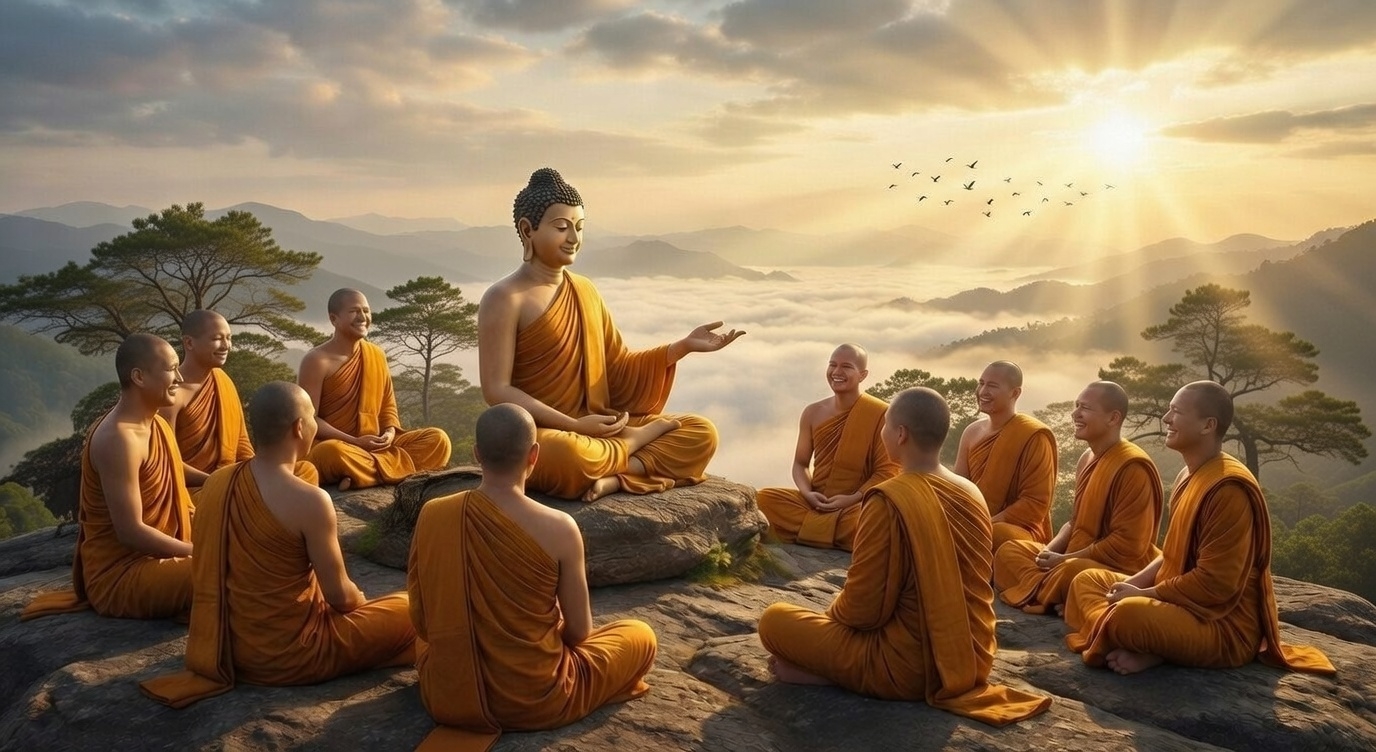
时间:07/13/2024 07/14/2024
地点:星湖禅修中心
主讲:净真
佛法知识
解脱与自由
“解脱”与“自由”在日常语境中常被混用,但在佛法的分析框架中,它们并非同一概念。若不区分两者,容易将佛法误解为追求情绪舒适或社会层面的自主权,从而偏离其核心目标。澄清二者的差异,有助于理解佛法所说的解脱究竟指向什么。
在世俗层面,“自由”通常指外在限制的减少或选择空间的扩大,例如行动自由、言论自由、经济自由。这类自由以条件为前提:制度、资源、身体状态、社会关系。一旦条件改变,自由随之收缩。因此,这种自由本质上是相对的、脆弱的,并且始终受制于无常。
佛法所说的“解脱”并不发生在这一层面。解脱不是获得更多选择,而是终止一种错误的认知运作方式。其对象不是外在约束,而是内在的因果机制——无明与执取。当心智不再将无常之物视为可依附之物,不再将过程误认为实体,不再制造“必须如此”的心理强迫,苦的生成机制便失效。解脱因此是结构性的改变,而非状态性的改善。
从因果上看,自由解决的是“我能不能做”,解脱解决的是“我为何非做不可”。前者仍然保留欲望与恐惧的驱动,只是提供更多通道;后者则直指驱动力本身。当贪、嗔、痴失去根基,行为不再被迫反应,而是自然生起。这种不被推动的状态,才是佛法意义上的根本解脱。
需要强调的是,解脱并不等同于消极或退缩。恰恰相反,解脱使行动更为精准。因为不再被情绪和身份绑架,行为不需通过结果来证明自我,也不需通过对抗来维持立场。此时的行动,既不出于逃避,也不出于补偿,而是基于对因果的清晰理解。
自由与解脱的另一区别在于稳定性。外在自由依赖条件,解脱不依赖条件。环境顺逆、生死存亡、得失成败,都无法重新启动已经被看破的认知错误。因此,解脱并非一种可被剥夺的权利,而是一种不可逆的理解。
这也解释了为何佛法并不以“追求自由”为终极目标。自由可以成为修行的辅助条件,却不能替代解脱。一个人在社会意义上极为自由,仍可能深陷恐惧、焦虑与执取;而一个在条件上受限的人,若已看清苦的因果结构,仍可处于解脱状态。两者不在同一维度。
因此,佛法所追求的不是“想做什么就能做”,而是“不再被迫去做”。当这一点成立,自由不再需要被追求,它自然呈现为行动的从容与心的无负担。解脱不是自由的极端版本,而是自由问题被彻底解决之后的结果。
Date: 07/13/2024 07/14/2024
Location: Star Lake Meditation Center
Teacher: Sara
Dharma Knowledge
Liberation and Freedom
In ordinary language, “liberation” and “freedom” are often treated as interchangeable. Within the analytical framework of the Dharma, however, they refer to fundamentally different issues. Failing to distinguish them leads to the mistaken view that the Dharma aims at emotional comfort or social autonomy, rather than at the cessation of suffering. Clarifying this distinction is essential.
In worldly terms, freedom usually means the reduction of external constraints or the expansion of available choices—freedom of movement, speech, or economic action. Such freedom is conditional. It depends on institutions, resources, bodily capacity, and social circumstances. When conditions change, freedom contracts. This kind of freedom is therefore relative, unstable, and subject to impermanence.
Liberation in the Dharma does not operate on this level. It is not the acquisition of more options, but the termination of a faulty cognitive process. Its target is not external restriction, but the internal causal mechanism of ignorance and attachment. When the mind no longer treats impermanent phenomena as reliable supports, no longer mistakes processes for entities, and no longer generates compulsive “must be” narratives, the production of suffering ceases. Liberation is thus a structural transformation, not a situational improvement.
Causally speaking, freedom addresses the question “What am I allowed to do?” Liberation addresses “Why do I feel compelled to do it?” The former leaves desire and fear intact while widening their channels. The latter dismantles the drives themselves. When greed, aversion, and delusion lose their foundation, action is no longer reactive but responsive. This absence of compulsion defines liberation in the Dharma.
Liberation should not be confused with passivity or withdrawal. On the contrary, it refines action. Freed from emotional coercion and identity defense, behavior no longer seeks validation through outcomes or stability through opposition. Action arises neither from avoidance nor compensation, but from clear understanding of causality.
Another critical distinction lies in stability. External freedom depends on conditions; liberation does not. Favorable or adverse circumstances, gain or loss, even life and death, cannot reinstate a cognitive error that has been fully understood. Liberation is therefore not a privilege that can be revoked, but an irreversible insight.
This explains why the Dharma does not treat freedom as its ultimate goal. Freedom may facilitate practice, but it cannot replace liberation. One may possess extensive social freedom and remain bound by anxiety and attachment; another may live under severe constraints and yet be liberated through clear understanding of suffering’s causes. The two operate on different dimensions.
The aim of the Dharma is not the ability to do whatever one wants, but the end of being driven by wanting itself. When this is accomplished, freedom no longer needs to be pursued. It appears naturally as ease of action and absence of burden. Liberation is not an intensified form of freedom, but the resolution of the freedom problem at its root.