时间:02/10/2024 02/11/2024
地点:星湖禅修中心
主讲:净真
佛法知识
释迦牟尼佛的诞生
“释迦牟尼佛的诞生”在佛教传统中常被赋予象征性叙述,但若不区分历史事实与宗教表达,极易产生误解。本文的目的不是复述神话,而是澄清:释迦牟尼作为历史人物如何诞生,这一事件在佛法体系中具有什么意义,又不具有什么意义。
从历史角度看,释迦牟尼佛原名悉达多·乔达摩,出生于公元前5世纪左右,地点一般认为在迦毗罗卫城附近的蓝毗尼园,其家族属于释迦族,是当时北印度的一个刹帝利阶层部族。他的父亲净饭王是部族领袖,其母摩耶夫人出身贵族。这一出身说明,释迦牟尼并非来自社会边缘,而是在政治、物质条件相对优越的环境中成长。
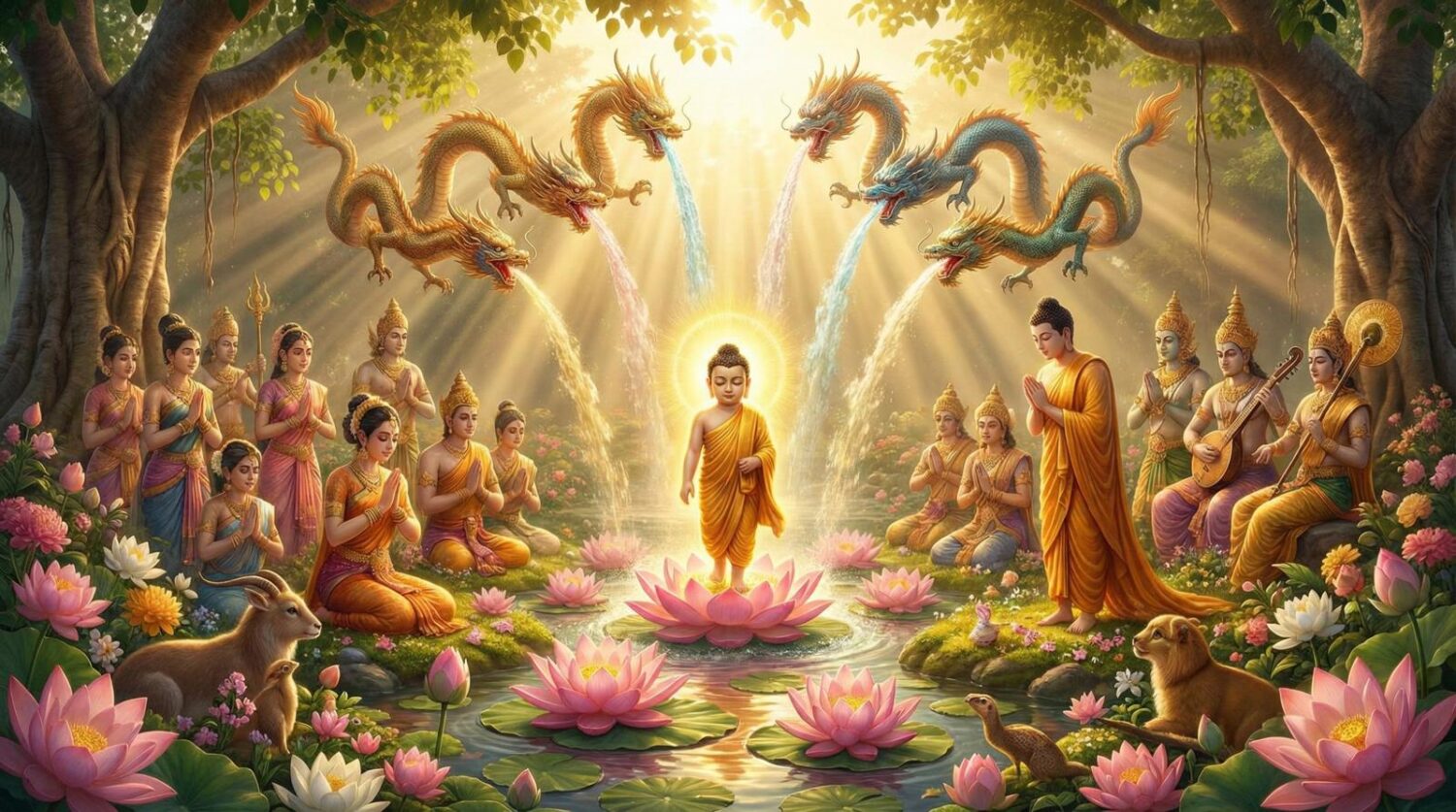
关于其出生过程,早期佛教文本中并未将重点放在神迹本身,而是强调“人”的事实。悉达多并非神的化身,也不是天界降临的存在,而是以人类身份出生、成长、修行与觉悟。后世经典中所描述的瑞相——如步步生莲、九龙吐水——属于象征性叙述,用以表达觉悟者的非凡意义,而非对生理事实的记录。若将这些象征当作字面历史理解,反而会遮蔽佛法的核心立场。
佛法并不以释迦牟尼的“特殊出生”作为其合法性的根据。与许多宗教以神圣血统、神意拣选作为权威来源不同,佛法的权威完全建立在觉悟本身。释迦牟尼之所以成为佛,不是因为他“如何出生”,而是因为他在成道时如实看清了苦、集、灭、道的结构。这一点在逻辑上极为关键:佛法的成立不依赖奇迹,而依赖觉悟是否真实。
正因为如此,释迦牟尼的诞生在佛法中具有明确而有限的意义。它说明觉悟并非超人特权,而是在特定条件下,人类通过实践可以达成的结果。佛陀并未宣称自己的出生使其必然成佛,相反,他强调成佛的原因在于后天的观察、修行与认知转变。如果出生本身决定一切,那么修行路径便失去意义。
从佛法立场看,强调释迦牟尼的“人间出生”具有重要的反神化功能。它防止将佛陀理解为外在拯救者,避免修行者将希望寄托于崇拜而非实践。佛陀的诞生不是信仰对象的起点,而是一个事实前提:有人在此世中发现了解脱之道,并将其如实说明。
因此,正确理解释迦牟尼佛的诞生,关键不在于接受多少神话细节,而在于把握其所否定的内容:他不是神,不因血统而神圣,不因出生而完成使命。他之所以重要,仅因为他完成了觉悟,并指出了同样可被他人验证的路径。
Date: 02/10/2024 02/11/2024
Location: Star Lake Meditation Center
Teacher: Sara
Dharma Knowledge
The Birth of Śākyamuni Buddha
The birth of Śākyamuni Buddha is often surrounded by symbolic and mythological narratives in later Buddhist traditions. Without distinguishing historical fact from religious expression, misunderstanding easily arises. The purpose of this text is not to retell legends, but to clarify who Śākyamuni was at birth, what that event signifies within the Dharma, and what it does not signify.
From a historical perspective, Śākyamuni Buddha, originally named Siddhārtha Gautama, was born around the 5th century BCE near Lumbinī, close to the city of Kapilavastu. He belonged to the Śākya clan, a kṣatriya community in northern India. His father, King Śuddhodana, was a clan leader, and his mother, Queen Māyā, came from a noble family. This background indicates that the Buddha was born into a socially and materially privileged environment, not into marginal or ascetic conditions.
Early Buddhist sources do not emphasize miraculous birth as a foundation of authority. Siddhārtha was born as a human being, lived as a human being, and attained awakening as a human being. Later accounts describing auspicious signs—such as lotus flowers beneath his steps or celestial beings bathing him—are symbolic representations. They express the significance of awakening, not biological or historical claims. Reading such imagery literally obscures the fundamental stance of the Dharma.
The Dharma does not derive its validity from the Buddha’s birth. Unlike religions that ground authority in divine descent or sacred selection, Buddhism grounds authority solely in awakening. Śākyamuni became the Buddha not because of how he was born, but because he directly understood the structure of suffering and its cessation. This distinction is essential: the Dharma stands on insight, not on miracle.
For this reason, the birth of Śākyamuni holds a clear but limited meaning in Buddhist thought. It demonstrates that awakening is not a supernatural privilege, but a human possibility realized under specific conditions. The Buddha never claimed that his birth destined him for awakening. On the contrary, he emphasized disciplined observation, practice, and cognitive transformation as the causes of liberation. If birth alone determined awakening, the path would be rendered meaningless.
Emphasizing the Buddha’s human birth serves an important de-mystifying function. It prevents the Buddha from being misunderstood as an external savior and discourages reliance on worship over practice. The Buddha’s birth is not the beginning of a faith object, but the factual premise that an individual, within ordinary human conditions, discovered and articulated a path to liberation.
To understand the birth of Śākyamuni correctly is therefore not to accumulate mythical detail, but to recognize what it negates. He was not a god, not sacred by bloodline, and not defined by his origin. His significance lies solely in awakening—and in the fact that the path he revealed remains open to verification by others.