时间:12/06/2025 12/07/2025
地点:星湖禅修中心
主讲:龙示林
佛法修行
白净比丘尼
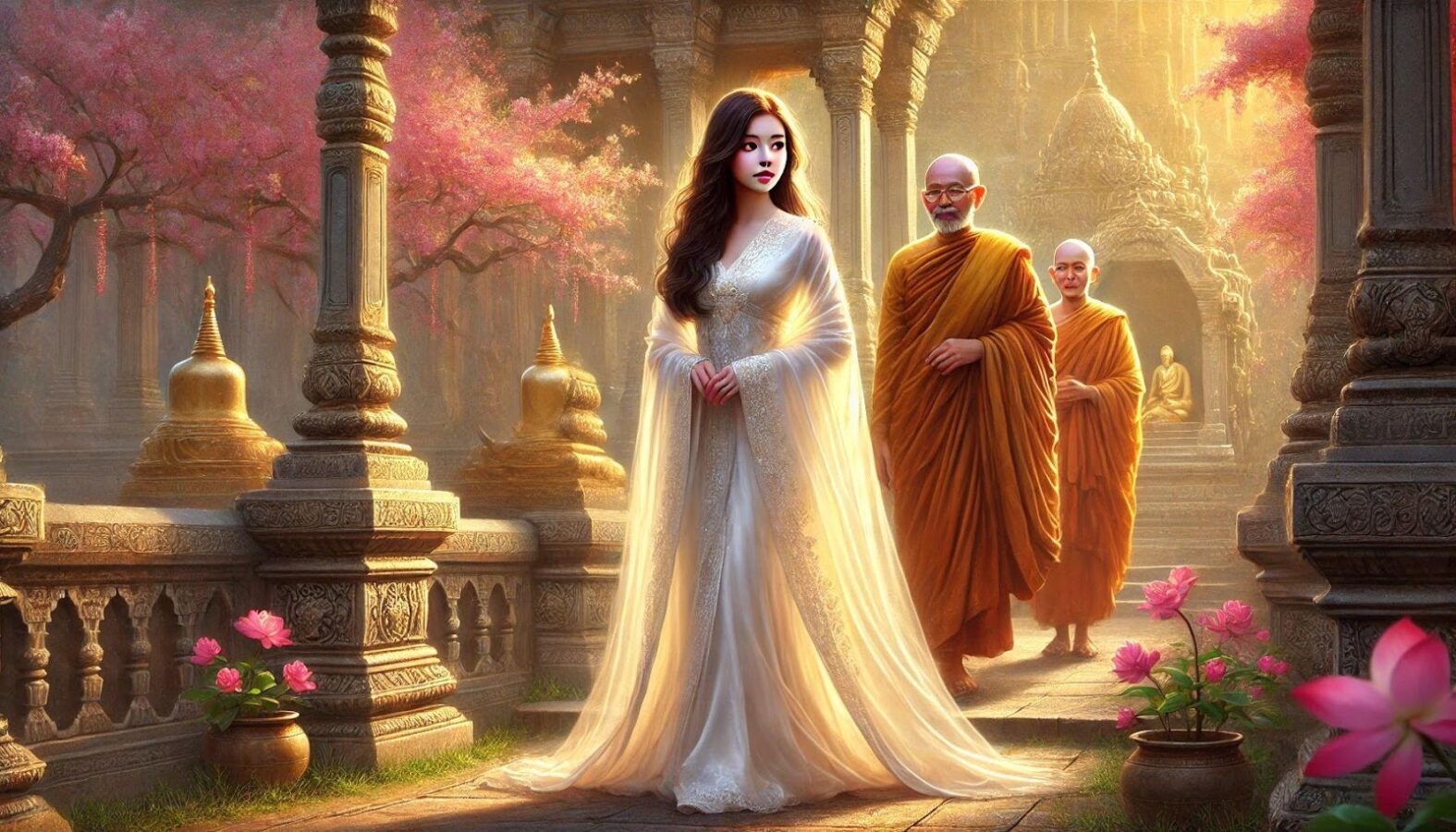
在释迦牟尼佛住世的时代,舍卫国中有一户富豪人家,他们都是佛陀的在家弟子。这位富豪的女儿生得相貌庄严、端丽,最奇特的是,她一出生时身上就裹着一件雪白的柔细软毯,所以双亲特为她取名为「白净」。随着她日渐成长,这件与生俱来的雪白软毯也随着变化而非常合身。
时光流逝,白净一天天地长大,不仅她的美丽无人能比,她典雅的气质更让许多人仰慕,舍卫国很多长者之子争相来礼聘,想要娶白净为妻。白净的双亲也早早的请工匠打制庄严华丽的饰品,为白净准备丰富的嫁妆。这时,白净告诉父母,自己想要出家跟随佛陀修行的心愿。
由于白净的双亲本来就是护持佛法的居士,知道出家修行是出离三界、不受轮回的正确途径;既然爱女有离欲修行的心愿,双亲更是欢喜的祝愿,希望女儿能早日道业成就,于是就吩咐缝匠为白净制做僧服。白净向父母说:「不用为我做僧衣了,我身上所穿的就是了。」
富豪长者夫妇带着女儿前往佛所,向佛请求出家。慈悲的佛陀答应了白净的祈求,对白净说:「善来,头发自落,所着白叠,即成五衣。」白净现了庄严的出家相,身上所着的雪白柔毯即刻变成了僧服。佛陀嘱咐白净比丘尼随着大爱道比丘尼精进用功修行;不久,白净比丘尼就证到了阿罗汉果。
僧团中,大众在讨论着白净比丘尼的殊胜因缘。这一天,佛陀的侍者阿难,合掌请示佛陀:「世尊!白净比丘尼是什么因缘?为什么出生时会有这么奇特之相?出家后又能这么快就证得罗汉果位?恳请佛慈悲为大众开示。」
佛陀说:
久远劫前,在毗婆尸佛的时代,有一对非常贫穷的夫妻,他们真正是家徒四壁、一无所有,能典当的东西早就卖光了,最后只留下一件破旧毯子;白天,夫妻二人轮流裹着这件唯一的毯子出门乞食,另外一人就在屋角的干草堆里遮掩身体。
有一天,一位比丘来到这极为贫穷的夫妻家门口托钵劝化,适巧妇人檀腻伽裹着破旧的毯子出来。比丘不仅为檀腻伽说布施供养三宝的功德,并且劝檀腻伽到毗婆尸佛说法的地方去听佛开示以种植善根。
檀腻伽听了比丘的说法,既感到欢喜又觉得羞愧,因为她连遮身的衣服都没有,怎么去到大众当中听佛开示呢?比丘看出檀腻伽的迟疑,慈悲的询问缘由。檀腻伽说出她们夫妇的困窘,同时问道,何以她们会贫困到这步田地?比丘便为檀腻伽说悭贪的果报。檀腻伽听了以后,恍然大悟,回到屋里向丈夫说:
「我听了外面这位比丘所说的道理,感到非常法喜,也觉得很惭愧,今生这么穷苦是自己过去所造作的因果。所以我想把握佛住世的因缘,将我们唯一的这张毯子供养佛。」
檀腻伽的丈夫说:「这张毯子是我们仅有的财产,没有毯子遮身,以后怎么外出乞食呢?岂不是要坐以待毙了吗?」
檀腻伽回答:「人生难免一死,纵然是有这张毯子裹身乞讨,早晚也是会死去的。我们这么穷困,就是因为过去生不喜欢布施,悭吝的缘故,今生可千万不能再错失供养佛的因缘,来世才能不再这么穷困潦倒啊!与其生生世世不断的受着贫穷的煎熬,我宁可因布施而饿死,也不愿放弃改变命运的因缘。」丈夫想一想,檀腻伽的话不无道理,今生的困窘谁知道要煎熬到何时呢?实在是苦到极处了啊!
于是檀腻伽将仅有的一张毯子请比丘代为供养毗婆尸佛,并且发愿生生世世都能听闻佛法、解脱烦恼。当比丘持着这件毯子来到佛前时,佛亲手接过檀腻伽的供养,并且为他们夫妇祝愿。
来听佛开示的国王、大臣及大众们觉得疑惑:「这么一件垢秽不堪的毯子,佛为什么要亲手持取?还给予这么深厚的祝愿呢?」佛知道大众心里的疑惑,就说:「虽然这件毯子看起来又旧又脏,但却是檀腻伽夫妇的全部财产,除了这件毯子,他们一无所有。至诚的供养,是最清净的大布施。」这时,在场的所有大众纷纷将随身的衣物、用品,布施给檀腻伽夫妇。
过去的檀腻伽就是现在的白净比丘尼;由于檀腻伽是以至诚恳切的清净心供养佛,在往后的九十一劫,每一世出生之时,都有雪白的柔细软毯裹身,并且生生世世衣食丰裕无缺;又由于檀腻伽曾发愿要解脱烦恼、听闻佛法,所以今生能于佛陀住世之时,随佛出家修行,真正的解脱烦恼,证到阿罗汉的果位。
Date: 12/06/2025 12/07/2025
Location: Star Lake Meditation Center
Teacher: Shilin Long
Dharma Talk
The Bhikkhunī Pure White
In the era when Śākyamuni Buddha dwelled in the world, there was a wealthy household in the country of Śrāvastī, and they were all lay disciples of the Buddha. The daughter of this rich man was born with a dignified and graceful appearance, and most remarkable of all, she was wrapped in a snow-white, soft, delicate cloth the moment she was born.
Therefore, her parents specially named her “Pure White.” As she gradually grew up, this snow-white soft cloth that she was born with also changed along with her, fitting her perfectly.
As time passed, Pure White grew day by day. Not only was her beauty unmatched, but her elegant temperament made many people admire her. Many sons of the elders in Śrāvastī competed to propose marriage, hoping to take Pure White as their wife.
Pure White’s parents had long invited craftsmen to make splendid and luxurious ornaments and prepared abundant dowry for her. At this time, Pure White told her parents of her wish to renounce the household life and follow the Buddha to cultivate.
Since her parents were already lay followers protecting the Dharma, they knew that becoming a monastic and cultivating was the correct path to leave the three realms and be free from rebirth. Seeing that their beloved daughter had the intention to cultivate free from desire, her parents joyfully gave their blessing, hoping she would soon accomplish the path.
They then instructed tailors to make monastic robes for her. Pure White said to her parents, “There is no need to make robes for me; what I am wearing is already sufficient.”
The wealthy elder and his wife brought their daughter to the Buddha and asked the Buddha to allow her to renounce the household life. The compassionate Buddha granted Pure White’s request, saying to her: “Come, O Bhikṣuṇī; your hair shall fall by itself, and the white cloth you wear shall become the five robes.”
At once Pure White manifested the dignified appearance of a monastic, and the snow-white soft cloth she wore immediately transformed into monastic robes. The Buddha instructed Bhikṣuṇī Pure White to follow Mahāprajāpatī Bhikṣuṇī and diligently cultivate. Before long, Bhikṣuṇī Pure White attained the fruition of an Arhat.
Within the Saṅgha, many were discussing the extraordinary causes and conditions of Bhikṣuṇī Pure White. One day, the Buddha’s attendant Ānanda respectfully joined his palms and asked the Buddha: “World-Honored One, what causes and conditions led Bhikṣuṇī Pure White to possess such a remarkable appearance at birth, and how was she able to attain the fruit of Arhat so quickly after becoming a monastic? We sincerely ask the Buddha to compassionately explain this for the assembly.”
The Buddha said:
Long, long ago, in the era of the Buddha Vipaśyin, there was a very poor couple. They truly lived in utter poverty, having nothing at all. Everything that could be pawned had already been sold, and only one very old and worn-out blanket remained. During the day, the husband and wife would take turns wrapping themselves in this one blanket to go out and beg for food, while the other hid their body in a pile of dry grass in the corner of the house.
One day, a bhikṣu came to this extremely poor couple’s door carrying his bowl, seeking alms and giving teachings. At that moment, the woman, Dhanikā, came out wrapped in the old blanket. The bhikṣu explained to her the merits of giving and supporting the Three Jewels, and he advised Dhanikā to go to the place where Buddha Vipaśyin was teaching the Dharma, so that she might plant wholesome roots by listening to the Buddha’s teachings.
After hearing the bhikṣu’s teaching, Dhanikā felt both joyful and ashamed, for she did not even have proper clothing to cover herself. How could she go among the assembly to listen to the Buddha’s teaching? The bhikṣu saw her hesitation and compassionately asked the reason.
Dhanikā explained the couple’s miserable conditions and asked why they had become so poor. So the bhikṣu taught her about the karmic consequences of stinginess. Upon hearing this, Dhanikā suddenly awakened and returned inside to tell her husband:
“I listened to the teaching of the bhikṣu outside and felt great Dharma joy but also deep shame. The reason we are so impoverished in this life is the karma we created in the past. Therefore, I want to seize the rare opportunity of a Buddha appearing in the world and offer our only blanket to the Buddha.”
Her husband said, “This blanket is our only possession. Without it to cover ourselves, how will we go out to beg for food? Wouldn’t we simply wait for death?”
Dhanikā replied, “Everyone must face death eventually. Even if we keep this blanket and go begging, sooner or later we will still die. We are so poor now because in past lives we disliked giving and were extremely stingy. In this life, we absolutely must not lose the chance to offer to the Buddha, so that in future lives we will no longer suffer such poverty!
Rather than continuing to suffer poverty life after life, I would rather die from giving than abandon this chance to change our destiny.” Her husband considered her words. What she said was not unreasonable. Who knew how long such misery would last? This suffering was truly extreme.
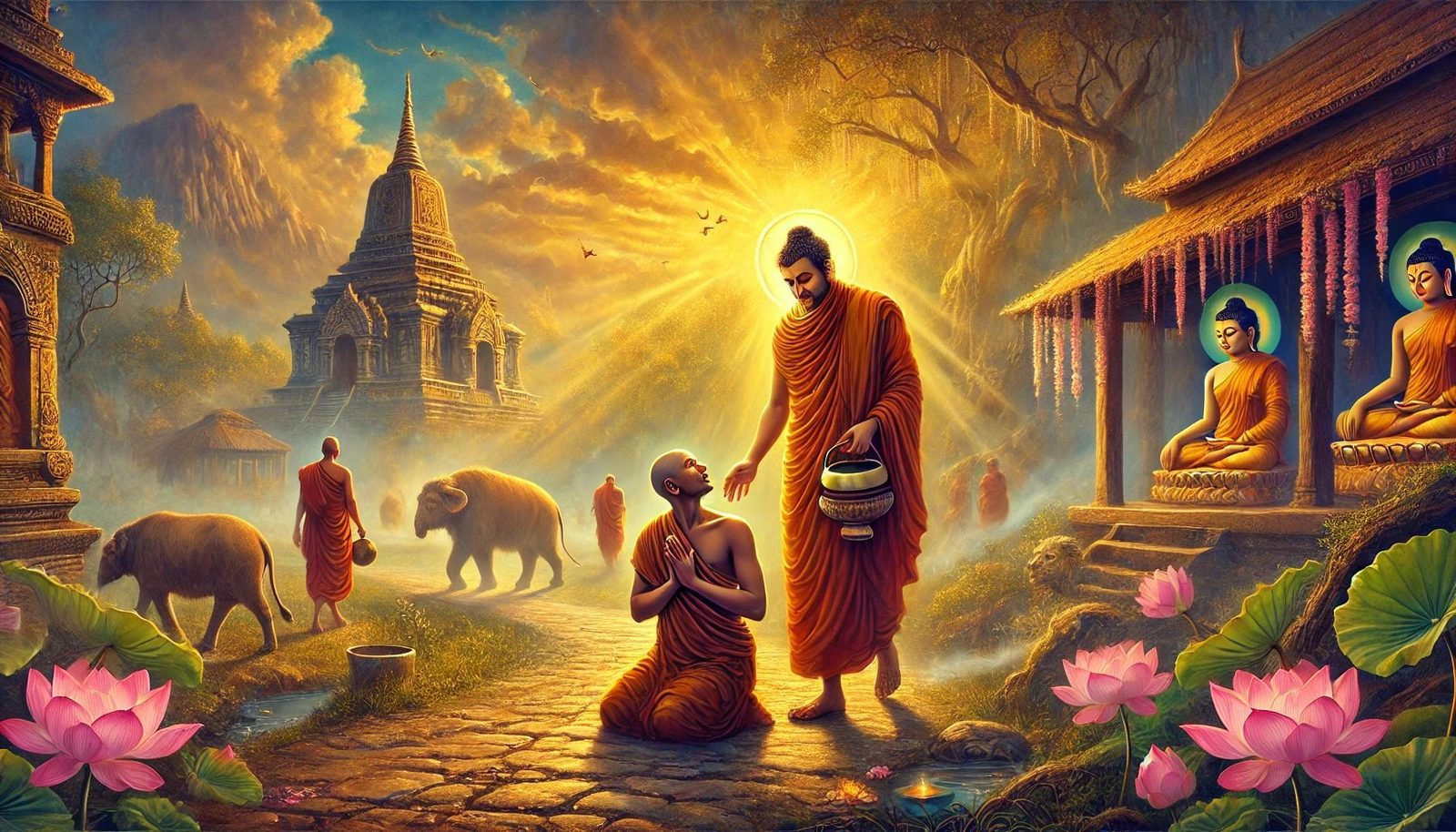
Thus, Dhanikā gave their only blanket to the bhikṣu to offer to Buddha Vipaśyin, and she made a vow to hear the Dharma and free herself from afflictions in all future lives. When the bhikṣu brought the blanket before the Buddha, the Buddha personally received Dhanikā’s offering and made a blessing for the couple.
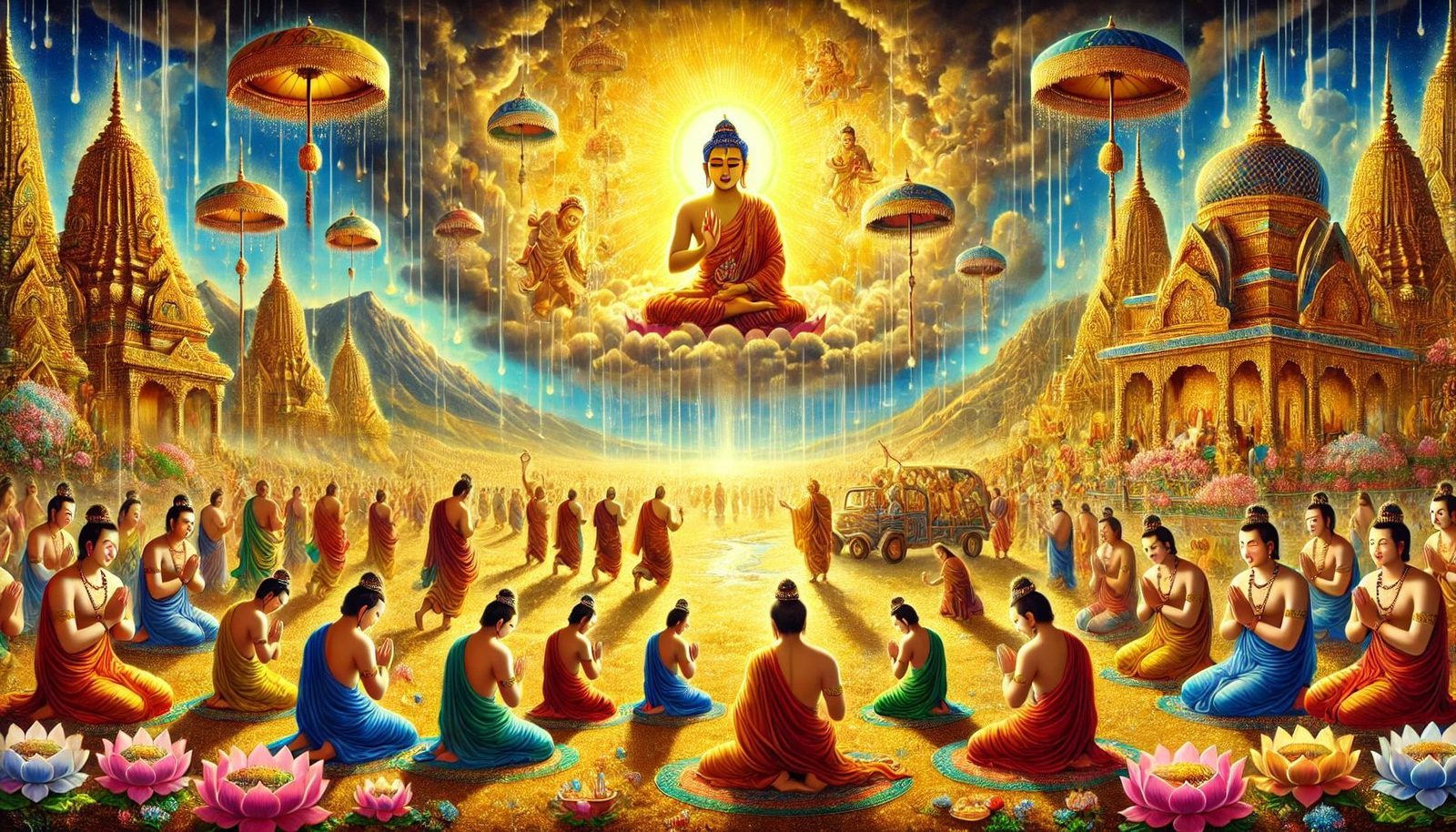
The king, ministers, and the entire assembly listening to the Buddha’s teaching felt puzzled: “Why would the Buddha personally receive such an old and filthy blanket and bestow such profound blessings?” The Buddha knew their thoughts and said: “Although this blanket appears old and dirty, it is the couple’s entire wealth.
Other than this blanket, they own nothing. Such sincere offering is the purest and greatest giving.” At that moment, everyone present took off their own clothing and belongings and gave them to the couple.The Dhanikā of the past is the Bhikṣuṇī Pure White of today.
Because Dhanikā offered to the Buddha with a sincere and pure heart, for the next ninety-one kalpas she was born each lifetime wrapped in a snow-white soft cloth, and in every life she enjoyed abundant clothing and food. And because she vowed to be free from afflictions and listen to the Dharma, in this life she was able to encounter the Buddha, renounce the household life, truly free herself from afflictions, and attain the fruit of Arhat.