时间:05/24/2025 05/25/2025
地点:星湖禅修中心
主讲:龙示林
佛法修行
毗舍离之子
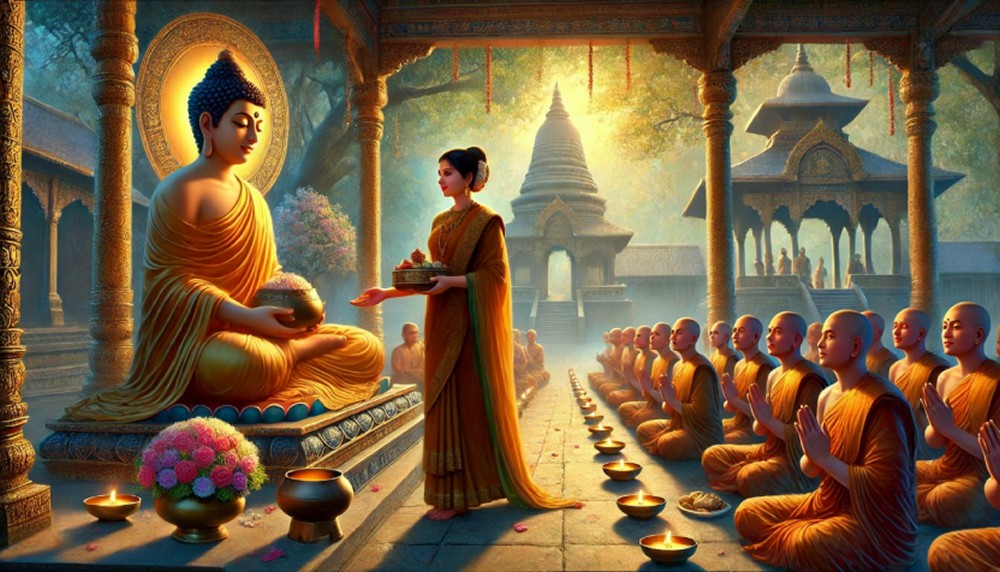
佛陀时代,有一位名为毗舍离的妇人,不仅智慧出众且具贤德,又十分敬信佛法,常恭请佛陀及其弟子来家中供养。当时的国王──波斯匿王,非常赏识她的贤明与智慧,因此以兄妹之名相称。毗舍离生了三十二个儿子,个个相貌端正庄严、挺拔勇健,超绝群伦,所娶妻子皆是国中豪门贤俊的女儿,全国人因此对他们非常敬畏。
一天,毗舍离的小儿子骑着大象出门游玩,在护城河的桥上,正巧遇到宰相的儿子从城外回来,两人互不相让。这时毗舍离的儿子瞋心大发,自恃豪健有力,即捉起宰相的儿子,连人带车地丢进护城河中,摔得头破血流,遍体鳞伤。宰相见到儿子被欺负,既生气又懊恼,但因为对方是皇亲国戚又身强力壮,所以敢怒不敢言,于是便暗自思惟了一个借刀杀人的毒计。
宰相知道毗舍离的儿子们,善于骑术,便用七宝做成三十二条上好的马鞭,并将纯钢制成的软剑暗藏在皮鞭中,然后亲自送到毗舍离家中,对三十二人说:你们英勇善战,身形威武,普通的皮鞭配不上你们。我特别为你们订做这些上好皮鞭,以匹配你们的身份。毗舍离的每一个儿子看了都爱不释手,从此鞭不离身。
当时国家法律规定,晋见国王时不可以携带武器。宰相见献鞭之计已得逞,就在国王面前进谗言:「毗舍离的三十二个儿子想要谋反!」但国王不相信。一天宰相又对国王说:「这三十二人真的想图谋造反,他们都随身携带武器并藏在皮鞭内,而且他们个个身强力壮,勇猛无比,一人可抵千人,如果谋反,后果不堪设想!」
国王这次相信了宰相的谗言,于是对三十二子说:「你们的皮鞭非常庄严,可以借我欣赏吗?」不知情的三十二子献上皮鞭之后,就此惹上杀身之祸!国王一看,果然鞭内暗藏武器。于是一日,在宫中置妥了杀人力士,便一一地将三十二子召集入宫。可怜的三十二子,就这样含冤莫白地丧身失命。
三十二子被杀之后,国王将三十二子的头颅砍下并包裹好,派人送到毗舍离家中。当天,毗舍离正准备供养佛陀及其弟子们,并不知道儿子们已遇害的消息;使者走后,毗舍离以为是国王送来的供僧之礼,正准备开启,此时世尊却说:「毗舍离,你先不要打开,待供养完再看吧!」供养结束,佛陀便为毗舍离开示法要,说道:「我们的身体是四大假合之物,本是无常、苦、空,没有一个真实的我存在。
人生就像在火宅当中,受种种恩爱离别、烦恼无明层层纠葛之苦,世间的情爱没什么可值得留恋的,有智慧的人当急舍离。」毗舍离闻佛说法豁然开悟,即证得阿那含果。世尊离去以后,毗舍离打开盒子,看见盒中竟是三十二个儿子的头颅,由于她心中已无爱欲的情念,所以并不悲恼,只是以平静的语气叹道:「人生有生就有死,只是人们不能觉悟无常的道理,所以恩爱不能断,始终沉沦于轮回中。其实何苦如此呢?」
但三十二人妻子的亲族听闻此事非常愤怒,于是集合军队欲讨伐暴虐无道的国王,为三十二子报仇,国王知道后,害怕地逃至精舍请求佛陀保护。阿难尊者得知此事,于是长跪合掌,请示世尊,以何因缘,国王会杀害毗舍离的三十二个儿子?世尊回答:「这不只是在今生才发生的事,久远劫以来一直都是如此,我现在为你说明缘由,你要铭记在心。」
佛陀告诉阿难,久远劫以前,有三十二人为了满足口腹之欲,共同偷了一头牛,并牵着牛来到一个贫穷老妇人的住所,要求在她家杀牛并烹煮。老妇人不但没有加以劝阻,而且高兴地为他们准备杀牛及烹煮的器具。此时,牛突然跪下求饶,但众人已被贪欲蒙敝了良知,根本无丝毫怜悯之心。
牛在将死之前发下毒愿:「你们今日杀了我,未来我生生世世都要报这个仇!」众人杀了牛,烹煮后与老妇人一起恣意享用,老妇人并高兴地称赞道:「比起过去曾来过我这里的人,你们可算是对我最好的!」当时的牛,就是今日的波斯匿王;那时偷牛的人,就是今日毗舍离的三十二个儿子;老妇人就是现在的毗舍离。
因为这个因缘,在五百世中,三十二人常为今日的波斯匿王所杀;而毗舍离由于当时欢喜帮助杀牛的缘故,在五百世中,常为三十二人的母亲,饱尝儿子被杀的甚深痛苦。但毗舍离今生值遇佛陀住世,因其常行供养、听经闻法的功德,而证得道果,所以现在不再受此苦恼。
阿难合掌再问佛陀:「这三十二人又因何因缘而能得大富贵,豪健勇壮?」佛告诉阿难:在过去迦叶佛时代,有一老妇人,家中非常富有又敬信三宝,时常广修种种供养。一日,她带着上好的香油,准备涂饰佛塔,途中遇到三十二个人,于是请他们帮忙共同前去涂佛塔,修无上福报,三十二人闻言即欢喜同去。
涂塔供养完毕,三十二个人为感恩老妇人让他们修此大福德,便与老妇人齐心发愿生生世世,生在富贵尊荣之家,常为母子,而且同值佛世,闻法证道果。所以在五百世中,皆一直生在尊贵之家为母子。当时的老妇人,即今的毗舍离;三十二人,就是今日的三十二个儿子。
在场的人聆听完世尊开示,皆更加肯定因果的道理,也对世尊所说的法,欢喜奉行无有违背。
Date: 05/24/2025 05/25/2025
Location: Star Lake Meditation Center
Teacher: Shilin Long
Dharma Talk
The Son of Viśākhā
During the time of the Buddha, there was a woman named Viśākhā, who was not only exceptionally wise and virtuous but also deeply devoted to the Dharma. She frequently invited the Buddha and his disciples to her home to make offerings.
At that time, the King of Kosala, Prasenajit, greatly admired Viśākhā’s wisdom and virtue, addressing her as his sister. Viśākhā had thirty-two sons, all of whom were exceptionally handsome, dignified, and strong. They were outstanding among their peers and married the daughters of noble and influential families in the country. Because of this, they were widely revered by the people.
One day, Viśākhā’s youngest son was riding an elephant out for a pleasure ride. On a bridge over the city’s moat, he happened to encounter the prime minister’s son, who was returning from outside the city. Neither was willing to yield to the other.
At that moment, Viśākhā’s son, filled with anger and arrogance, relied on his strength and grabbed the prime minister’s son, along with his carriage, and threw them into the moat, leaving him with a cracked skull, bleeding profusely, and covered in injuries.
The prime minister, seeing his son being humiliated and harmed, was both furious and frustrated. However, since the offender was a royal relative and physically strong, he dared not express his anger openly. Instead, he secretly devised a scheme to have others carry out the killing for him.
The prime minister knew that Viśākhā’s sons were skilled equestrians. He crafted thirty-two exquisite whips made of the seven precious materials, with sharp steel swords hidden inside their handles.
He personally delivered the whips to Viśākhā’s household, saying to the thirty-two sons, “You are all valiant warriors with strong and imposing figures. Ordinary whips are unworthy of you. I have specially commissioned these superior whips to match your noble status.”
Each of Viśākhā’s sons loved the whips, carrying them wherever they went.
At that time, the law of the kingdom stated that no weapons could be brought into the royal court when meeting the king.
Seeing that his plan had succeeded, the prime minister slandered them before the king, saying, “The thirty-two sons of Viśākhā are plotting a rebellion!”
However, the king did not believe him.
A few days later, the prime minister once again persuaded the king, saying, “These thirty-two men truly intend to rebel. They each carry weapons concealed within their whips. Moreover, they are all exceptionally strong and fierce, each capable of defeating a thousand men. If they revolt, the consequences will be unimaginable!”
This time, the king believed the prime minister’s words.
He summoned the thirty-two sons of Viśākhā and said, “Your whips are finely crafted. May I borrow them for a look?”
Unaware of the plot against them, the thirty-two sons obediently handed over their whips, unknowingly sealing their own fate.
Upon examining the whips, the king indeed found the hidden weapons.
On that very day, he stationed executioners in the palace and summoned the thirty-two sons one by one.
Tragically, the thirty-two sons were executed unjustly, perishing with their grievances unaddressed.
After killing them, the king had their heads severed, wrapped up, and sent to Viśākhā’s home.
That day, Viśākhā was preparing to make offerings to the Buddha and his disciples. She was unaware of her sons’ fate.
After the messenger departed, Viśākhā mistook the package for an offering from the king, preparing to open it.
At that moment, the World-Honored One said, “Viśākhā, do not open it yet. Wait until after the offering.”
After the offerings were completed, the Buddha expounded the Dharma to Viśākhā, saying:
”Our bodies are composed of the four great elements. They are impermanent, filled with suffering, and empty of a true self. Life is like a house on fire, consumed by the afflictions of attachment, delusion, and ignorance. The world’s emotions and attachments are not worth clinging to. The wise should hasten to abandon them.”
Upon hearing the Buddha’s teaching, Viśākhā suddenly attained the fruit of Anāgāmī (Non-returner).
After the Buddha departed, Viśākhā opened the package and saw inside the thirty-two heads of her sons.
However, as she had already transcended worldly attachments, she did not grieve, but calmly sighed, saying:
”Birth inevitably leads to death. It is only because people fail to realize the truth of impermanence that they remain entangled in worldly affections, endlessly trapped in the cycle of rebirth. But is there truly a need for such suffering?”
The families of the thirty-two sons’ wives, upon hearing of this tragedy, became enraged. They gathered their troops to attack the cruel and tyrannical king, seeking revenge for the thirty-two sons.
Fearing for his life, the king fled to the monastery, seeking the Buddha’s protection.
Upon learning of this, Venerable Ānanda knelt with palms joined and asked the Buddha, “World-Honored One, what past causes and conditions led to the king killing Viśākhā’s thirty-two sons?”
The Buddha replied, “This event did not only happen in this life. It has been occurring for countless kalpas. Now, listen carefully, and I will explain the causes and conditions behind it.”
The Buddha then told Venerable Ānanda:
Long ago, thirty-two men, in order to satisfy their hunger, stole a cow and led it to the home of a poor old woman, asking to butcher and cook it there.
The old woman not only did not stop them, but she happily provided them with cooking utensils.
At that moment, the cow knelt down and begged for mercy, but the men, blinded by greed, felt no compassion.
Before dying, the cow vowed:
”Since you kill me today, I will seek revenge against you for lifetimes to come!”
After slaughtering the cow, the thirty-two men and the old woman feasted upon it with delight.
The cow at that time was King Prasenajit in this life.
The thirty-two men who stole the cow were Viśākhā’s thirty-two sons.
The old woman who helped them was Viśākhā herself.
Because of this karma, for five hundred lifetimes, the thirty-two men were repeatedly killed by King Prasenajit.
And due to her joyful participation in slaughter, Viśākhā was reborn five hundred times as their mother, experiencing the deep sorrow of losing her sons again and again.
However, in this life, Viśākhā was fortunate to encounter the Buddha.
Due to her continuous practice of offering, listening to the Dharma, and cultivating merit, she attained the path and was freed from further suffering.
Venerable Ānanda then asked the Buddha, “What past causes and conditions led these thirty-two men to be wealthy, strong, and powerful?”
The Buddha replied:
”During the time of Buddha Kāśyapa, there was a wealthy old woman who had great faith in the Three Jewels and frequently practiced generosity.
One day, she carried fine fragrant oil to anoint a stupa. On the way, she met thirty-two men and invited them to join her in making this offering.
Hearing this, the thirty-two men rejoiced and gladly followed her.
After completing the stupa offering, they expressed gratitude to the old woman and together made a vow:
”May we be reborn together in noble and wealthy families, and may we all live in the same lifetime with a Buddha, hearing the Dharma and attaining enlightenment.”
Because of this vow, they were reborn for five hundred lifetimes as noble sons of the same mother.
The old woman at that time was Viśākhā, and the thirty-two men were her thirty-two sons in this life.”
Upon hearing the Buddha’s teaching, everyone gained deeper faith in the law of karma and joyfully embraced the Dharma.