时间:09/27/2025 09/28/2025
地点:星湖禅修中心
主讲:龙示林
佛法知识
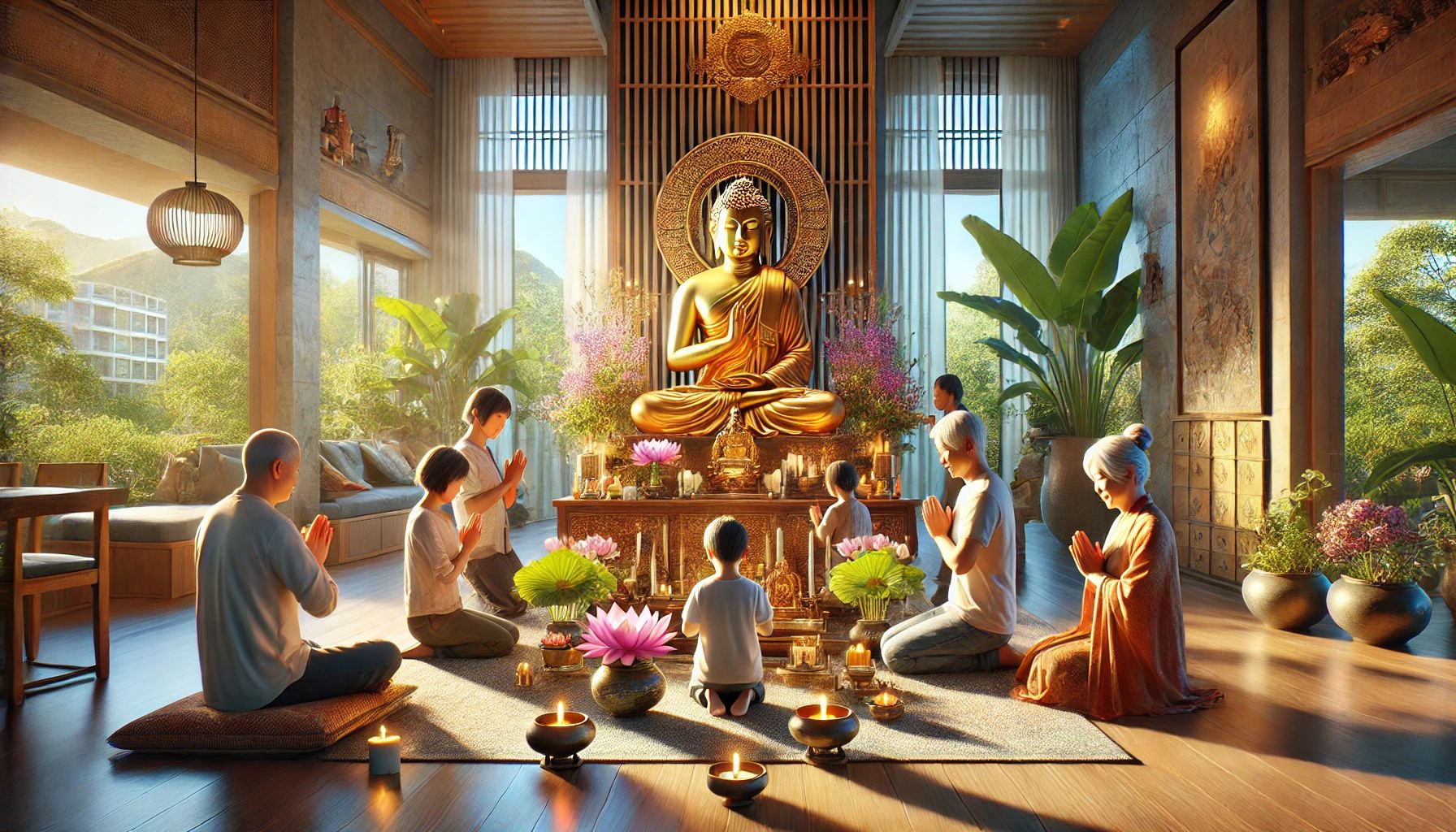
佛法与家庭关系
在许多人的观念中,佛法似乎与家庭生活存在距离,仿佛修行意味着出离、清净与独处,而家庭则充满责任、情感纠葛与现实压力。然而,从佛法的真实精神来看,家庭并不是修行的障碍,而是极其重要、也极其深刻的修行道场。佛法并不要求人逃离家庭,而是引导人以觉知、慈悲与智慧,重新理解和经营家庭关系。
家庭关系之所以复杂,是因为它最容易触及人的执着。亲情、期待、依赖、控制与失望,往往在家庭中被无限放大。正因为彼此亲近,情绪反应也最为直接。佛法并不否认这些现实,而是指出:正是在这些强烈的因缘中,修行才具有真实的深度。
从佛法的角度看,家庭关系首先是一种因缘关系。父母、伴侣、子女,并非偶然相聚,而是在因缘条件下共同出现的生命交集。理解这一点,有助于减少指责与怨怼。当关系被看作因缘的结果,而非“理所当然”或“应该如此”,心便更容易生起包容与理解。
佛法并不要求切断情感,而是转化对情感的执著。爱与执著之间的差别,在家庭中尤为关键。执著的爱往往伴随着占有、控制与期待,而智慧的爱则包含尊重、界限与放手。修行并不是让人变得冷淡,而是让爱不再夹杂恐惧与条件。
在家庭冲突中,佛法最重要的实践,是觉知自己的反应。很多家庭矛盾,并非源于事情本身,而是源于无意识的情绪反射。愤怒、委屈、指责,一旦被觉知,就不再必然转化为语言或行为。哪怕只是暂停一下,关系的走向便可能完全不同。
佛法也强调责任,但这种责任并非来自压迫,而是来自觉醒。照顾父母、扶持伴侣、教育子女,并不是牺牲自我,而是修行慈悲与智慧的具体形式。当责任与觉知结合,付出便不再是怨恨的来源,而成为心量扩展的契机。
在亲子关系中,佛法提醒人们尊重生命的独立性。子女并不是父母的延伸,而是拥有自身因缘与道路的个体。以佛法的眼光来看,真正的关爱,并不是塑造孩子成为理想中的样子,而是陪伴其发展成为真实的自己。这种理解,能够大大缓解家庭中的控制与对立。
夫妻或伴侣关系,同样是重要的修行场。亲密关系最容易触发自我中心的模式,也最容易显露无明。佛法并不保证关系没有冲突,但它提供了一种面对冲突的方式:先照见自己的贪、嗔、怕与执著,再尝试理解对方的处境。在这样的过程中,关系本身成为修行的镜子。
需要澄清的是,佛法并不要求忍受不健康的关系。慈悲不等于纵容,忍让不等于失去界限。智慧包含清楚地知道什么是可承受的,什么需要改变或止损。以佛法为基础的家庭关系,应当同时具备慈悲与清醒。
在日常生活中,将佛法带入家庭,并不需要特殊的仪式。一次耐心的倾听、一句不急于反驳的话、一次对情绪的觉察,都是佛法的实践。家庭并不是修行之外的世界,而正是检验修行是否真实的地方。
随着修行的深入,人会逐渐发现,家庭关系中的改变,往往不是通过“改变他人”实现的,而是通过自身心态的转化自然发生的。当执著减少、理解增加,关系的张力便会松动。即使外在状况未必立刻改变,内心的自由也已经开始显现。
最终,从佛法的角度看,家庭关系的圆满,并不意味着没有矛盾,而意味着在矛盾中不迷失。家庭并不是修行的负担,而是觉醒的助缘。当人能够在最亲密、最复杂的关系中保持觉知与慈悲,佛法便真正融入了生命,修行也不再局限于形式,而成为活生生的实践。
Date: 09/27/2025 09/28/2025
Location: Star Lake Meditation Center
Teacher: Shilin Long
Dharma Knowledge
Buddhism and Family Relationships
In many people’s understanding, Buddhism appears distant from family life, as if practice requires withdrawal, purity, and solitude, while family is filled with responsibility, emotional entanglement, and worldly pressure. From the true perspective of Buddhist teaching, however, family is not an obstacle to practice, but one of the most profound and meaningful fields of cultivation. Buddhism does not call for escape from family life, but for transforming family relationships through awareness, compassion, and wisdom.
Family relationships are complex because they touch attachment most deeply. Affection, expectation, dependence, control, and disappointment are amplified within close bonds. Precisely because of intimacy, emotional reactions are strongest. Buddhism does not deny these realities, but points out that genuine practice gains depth precisely within such powerful conditions.
From a Buddhist perspective, family relationships are fundamentally relationships of causes and conditions. Parents, partners, and children do not come together by chance, but through the convergence of karmic and circumstantial factors. Seeing relationships in this way reduces blame and resentment. When relationships are understood as conditioned rather than as obligations that “must” be fulfilled in a certain way, understanding and tolerance naturally increase.
Buddhism does not require the severing of emotion, but the transformation of attachment. The distinction between love and attachment is especially important in family life. Attached love often carries possession, control, and expectation, while wise love includes respect, boundaries, and the capacity to let go. Practice does not make one cold; it purifies love of fear and conditions.
In family conflict, one of the most essential Buddhist practices is awareness of one’s own reactions. Many conflicts arise not from events themselves, but from unconscious emotional reflexes. When anger, hurt, or blame are recognized as they arise, they no longer have to become speech or action. Even a brief pause can change the entire direction of a relationship.
Buddhism also emphasizes responsibility, but responsibility grounded in awakening rather than pressure. Caring for parents, supporting partners, and guiding children are not acts of self-erasure, but concrete expressions of compassion and wisdom. When responsibility is joined with awareness, giving no longer becomes a source of resentment, but a means of inner expansion.
In parent–child relationships, Buddhism highlights respect for the independence of life. Children are not extensions of their parents, but individuals with their own conditions and paths. From a Buddhist perspective, genuine care does not mean shaping children into ideal images, but accompanying them as they grow into who they truly are. This understanding greatly reduces control and conflict.
Marital and intimate relationships are likewise powerful arenas of practice. Intimacy exposes self-centered patterns and reveals ignorance quickly. Buddhism does not promise conflict-free relationships, but offers a way of meeting conflict: first seeing one’s own craving, anger, fear, and attachment, and then seeking to understand the other’s circumstances. In this way, the relationship itself becomes a mirror for practice.
It is important to clarify that Buddhism does not advocate enduring unhealthy relationships at all costs. Compassion is not indulgence, and patience does not mean the absence of boundaries. Wisdom includes knowing what can be endured and what must be changed or ended. A healthy family relationship rooted in Buddhism embodies both kindness and clarity.
In daily life, bringing Buddhism into the family requires no special rituals. A moment of patient listening, a pause before reacting, an awareness of emotion as it arises—these are all forms of practice. Family life is not separate from practice; it is the very place where practice is tested and realized.
As practice deepens, one often discovers that change in family relationships rarely comes from trying to change others. It arises naturally from transformation within oneself. As attachment softens and understanding grows, tension within relationships eases. Even if external circumstances do not immediately shift, inner freedom has already begun.
Ultimately, from a Buddhist perspective, harmony in family life does not mean the absence of conflict, but the absence of being lost within conflict. Family is not a burden on the path, but a powerful supporting condition for awakening. When awareness and compassion can be sustained within the most intimate and complex relationships, Buddhism truly becomes embodied, and practice becomes a living reality rather than a mere form.