时间:01/11/2025 01/12/2025
地点:星湖禅修中心
主讲:龙示林
佛法知识
生死的流转
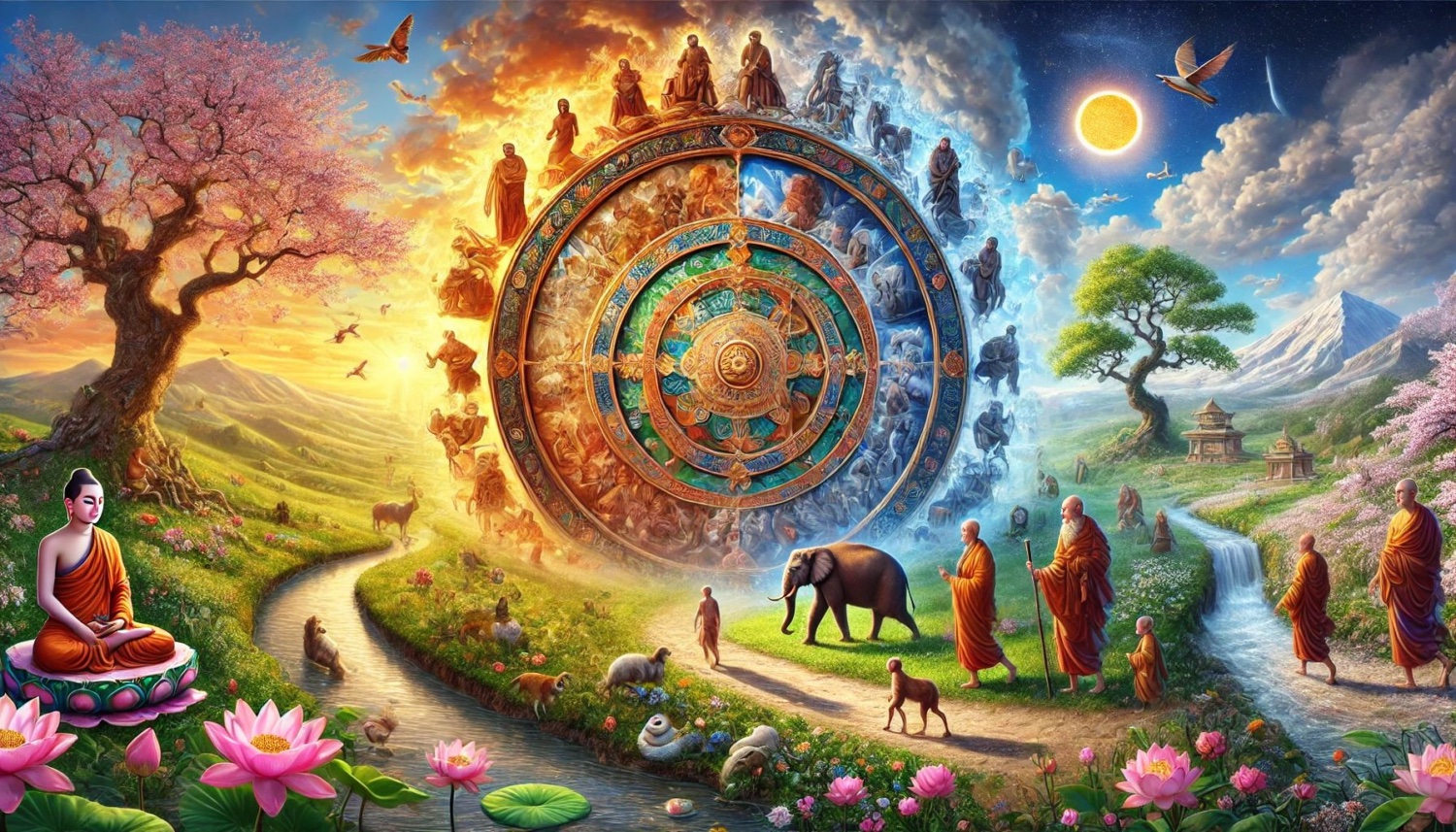
生与死,看似是生命的起点与终点,实则在佛教的视角中,只是同一条长河中的两个波段。众生在其中往复漂流,起伏不息,这条长河,便是生死流转。它并非偶然的循环,而是由业力推动、由心识牵引,在无始以来不断延续的过程。
生死流转的核心,不在于肉体的生灭,而在于心的延续。色身有生有死,心识却依业而行,随因缘迁转。当一段生命结束,并非一切归于虚无,而是过往的行为、习气与执着,化作潜在的力量,推动下一次生命形态的显现。正如种子入土,遇水则发芽,遇火则毁灭,因缘不同,结果亦殊。
驱动生死流转的根本力量,是无明。众生不了解生命的真实本质,误以为“我”是固定不变的实体,于是围绕这个“我”生起贪取与排斥。为了满足欲望,造作种种行为;为了维护自我,生起种种冲突。这些行为在当下看似微不足道,却在心识中层层累积,形成推动生死之轮不断转动的业力。
在流转之中,苦并非偶然,而是必然的伴随者。求不得、爱别离、怨憎会、身心衰败,这些经验反复出现,贯穿于不同生命形态之中。即使短暂获得安乐,也难逃变化与失去。正因为一切无常,执着才成为痛苦的根源;正因为误认无常为常,生死才显得沉重而漫长。
值得深思的是,生死流转并不只发生在来世,也在当下不断重演。一个念头生起、消失,一个情绪形成、瓦解,一个身份建立、崩塌,都是微观层面的生死。若在当下的念念生灭中无法觉察与放下,那么宏观的生死轮回,便难以真正超越。因此,修行并非等待死亡来临时才面对生死,而是在每一个当下学习不被牵引。
佛教并非否定生命,而是指出生命被无明与执着束缚时的困境。真正的问题,不是“是否还会再生”,而是“是否还会继续被迫流转”。当智慧尚未生起,慈悲尚未圆满,心便会不断寻找依托,在生与死之间反复投生,如旅人误入循环的道路,却不知出口何在。
然而,生死流转并非牢不可破。正因为它依因缘而生,也能依因缘而止。当人开始如实观照身心,体认无常、苦与无我,贪与嗔便逐渐松动,无明的遮蔽也随之减弱。此时,业力不再盲目推动,生命的方向开始由觉知而非习气主导。
解脱,并不是逃离生命,而是从被动的流转中醒来。当心不再执着于“必须成为某种样子”,不再恐惧失去与终结,生与死便失去了原有的对立。生只是因缘的聚合,死只是因缘的离散,而觉醒的心,不再被这聚散所迷惑。
因此,理解生死的流转,并非为了增添对未来的焦虑,而是为了在当下活得清醒而自由。当每一个念头都被看见、每一次选择都更趋向善与智慧,生死之流便不再只是轮回的洪水,而成为通向解脱的道路。正是在这样的觉照中,生命的真正尊严与安稳,才得以显现。
Date: 01/11/2025 01/12/2025
Location: Star Lake Meditation Center
Teacher: Shilin Long
Dharma Knowledge
The Cycle of Birth and Death
Birth and death appear to be the beginning and the end of life, yet from the Buddhist perspective, they are merely two phases within the same flowing river. Beings drift endlessly within it, rising and falling without rest. This river is the cycle of birth and death, not a random repetition, but a process driven by karma and guided by consciousness, continuing without a discernible beginning.
The essence of this cycle does not lie in the arising and passing of the physical body, but in the continuity of the mind. The body is born and perishes, while consciousness moves on according to karma, carried by causes and conditions. When one life ends, nothing simply vanishes into nothingness. Instead, past actions, habits, and attachments become latent forces, shaping the emergence of the next form of existence. Like seeds in the soil, conditions determine whether they sprout, wither, or transform.
The fundamental force that sustains the cycle of birth and death is ignorance. Not understanding the true nature of existence, beings mistake the self for something fixed and permanent. From this misconception arise craving and aversion. In pursuit of desire, actions are created; in defense of identity, conflicts arise. Though these actions may seem insignificant in the moment, they accumulate within consciousness, turning the wheel of cyclic existence without pause.
Within this cycle, suffering is not accidental but inherent. The pain of unfulfilled desire, separation from what is loved, encounters with what is disliked, and the inevitable decline of body and mind recur across different lives. Even moments of happiness are fleeting, inevitably subject to change and loss. Because all things are impermanent, attachment becomes the root of suffering; because impermanence is mistaken for permanence, the cycle of birth and death feels heavy and endless.
Importantly, the cycle of birth and death does not exist only in future lives; it unfolds continuously in the present moment. Every thought that arises and fades, every emotion that forms and dissolves, every identity that is constructed and collapses represents a subtle form of birth and death. If one cannot observe and release these momentary cycles, transcending the larger cycle of rebirth becomes impossible. Practice, therefore, is not about confronting death only at the end of life, but about learning not to be carried away in each moment.
Buddhism does not deny life; rather, it reveals the predicament of life when bound by ignorance and attachment. The real question is not whether rebirth will occur again, but whether one will continue to be compelled to wander. As long as wisdom has not arisen and compassion is not fully developed, the mind continues to seek new footholds, moving repeatedly between birth and death like a traveler trapped on a circular path, unaware of the exit.
Yet the cycle of birth and death is not unbreakable. Because it arises from causes and conditions, it can also cease when those causes are transformed. When one begins to observe body and mind as they truly are, realizing impermanence, suffering, and non-self, greed and hatred gradually loosen their grip, and the veil of ignorance thins. At this point, karma no longer drives blindly, and the direction of life becomes guided by awareness rather than habit.
Liberation is not an escape from life, but an awakening from compulsive wandering. When the mind no longer clings to the need to become something, no longer fears loss or extinction, birth and death lose their rigid opposition. Birth is merely the gathering of conditions, death the dispersal of conditions, and the awakened mind is no longer confused by this coming and going.
Thus, understanding the cycle of birth and death is not meant to increase anxiety about the future, but to enable a clear and free way of living in the present. When each thought is seen clearly and each choice leans toward goodness and wisdom, the flow of birth and death is no longer a flood of endless rebirth, but a path leading toward liberation. In such awareness, the true dignity and peace of life are finally revealed.