时间:12/21/2024 12/22/2024
地点:星湖禅修中心
主讲:净真
佛法知识
畜生道的因缘
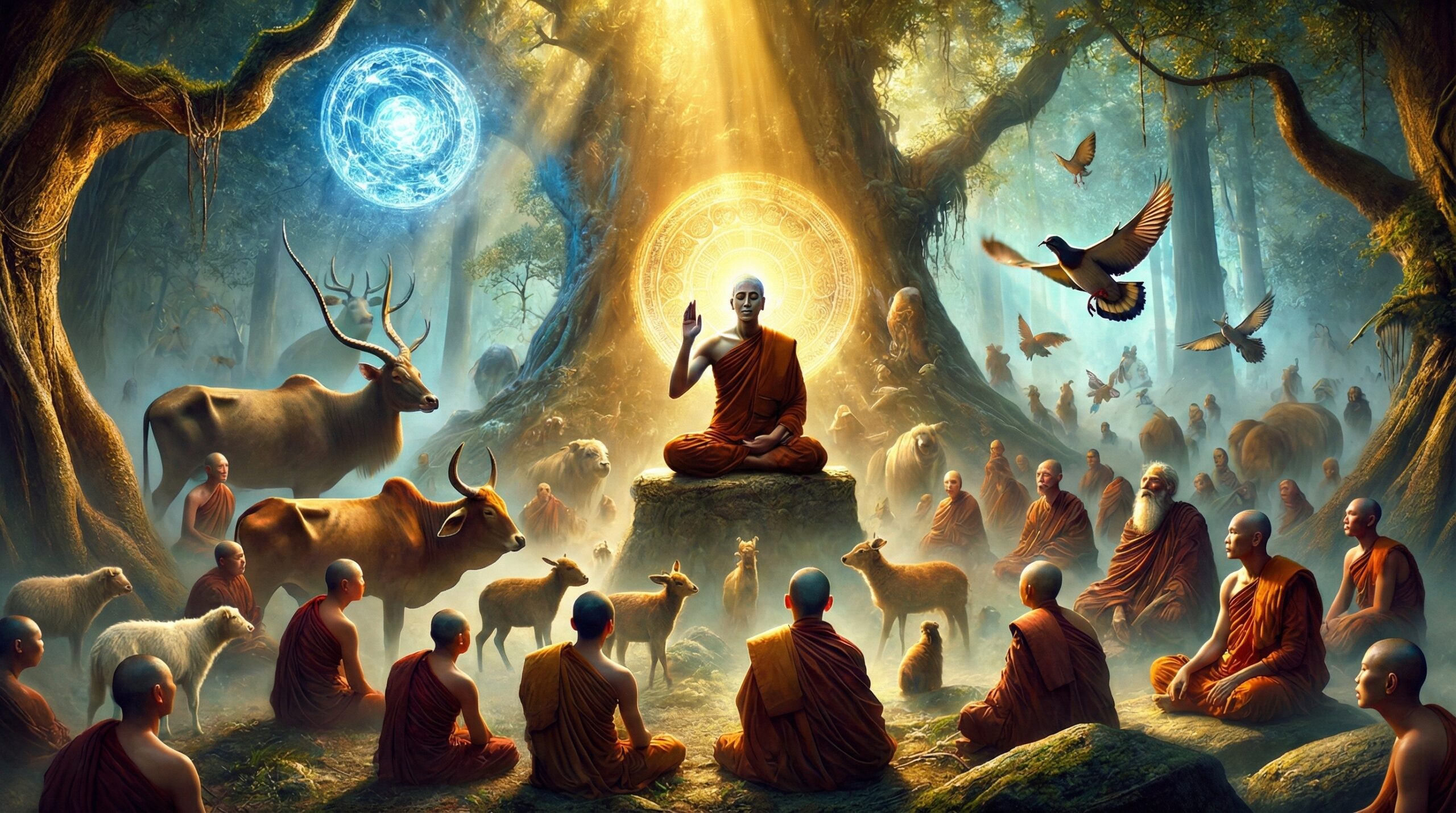
在佛法的轮回体系中,“畜生道”并非神罚的结果,也不是偶然堕落的命运,而是特定因缘条件成熟后的必然果报。理解畜生道,关键不在于恐惧其形态,而在于看清其成因机制。佛法讨论畜生道,并非为了制造道德威慑,而是为了揭示认知与行为如何塑造生命形态。
从根本上说,畜生道的主因是无明的加重与心智功能的退化。这里的无明,并非单纯的不知道,而是持续、顽固地无法分辨因果、善恶与行为后果。当认知能力长期被遮蔽,判断力不断弱化,生命的运行方式便逐渐偏离清醒与自觉,趋向本能化、反射化与被动化。
在具体行为层面,愚痴是导致畜生道的重要直接因。愚痴表现为拒绝理解、不愿反思、逃避因果,对善恶不作区分,对后果缺乏预见。这种状态并不一定表现为智力低下,而是一种主动关闭觉察能力的心态。当这种心态反复被强化,便构成通向畜生道的认知基础。
与愚痴密切相关的,是强烈而未经约束的贪欲。畜生道的生命形态,以被欲望驱动为显著特征。若一个生命在人的形态中,长期完全由食欲、性欲、占有欲推动,对节制、反省与责任毫无兴趣,其行为模式已在向畜生道靠拢。佛法并不否认欲望的存在,而是指出:当欲望完全取代理性,生命便失去向上调整的能力。
此外,残忍与无差别伤害也是重要因缘。长期以他者痛苦为无关甚至为乐,对生命缺乏基本的同理与克制,会显著削弱心的柔软性与辨识力。这种冷漠并非情绪问题,而是认知结构的硬化。心一旦习惯将他者视为工具或威胁,便自然趋向低层次的存在状态。
需要强调的是,佛法所说的畜生道,并不仅仅指死后投生为动物。更重要的是,它描述了一种心智运作模式:被本能牵引、被环境驱使、缺乏自我反省能力。当一个生命在现世中,几乎完全丧失自我调整、自我观察与自我修正的能力,其“道”的性质已经发生变化。
因此,畜生道并非突然降临,而是长期累积的结果。每一次拒绝理解因果、每一次放弃反省、每一次让欲望完全主导行为,都是在强化这一走向。反之,只要觉察能力尚存,只要因果理解仍在运作,这一趋势就并非不可逆。
佛法揭示畜生道的因缘,不是为了定罪,而是为了说明:生命形态并非偶然,心如何运作,生命便如何呈现。轮回不是外在安排,而是认知与行为的连续结果。看清这一点,才可能在因上止恶,于果前转向。
Date: 12/21/2024 12/22/2024
Location: Star Lake Meditation Center
Teacher: Sara
Dharma Knowledge
The Causes and Conditions of Rebirth in the Animal Realm
Within the Buddhist framework of rebirth, the animal realm is not the result of divine punishment nor an accidental fall. It is the natural outcome of specific causes and conditions coming to fruition. To understand the animal realm, one must look beyond fear of its form and examine the mechanisms that lead to it. The Dharma addresses this realm not as moral intimidation, but as an analysis of how cognition and behavior shape modes of existence.
At the most fundamental level, rebirth in the animal realm is rooted in intensified ignorance and the degradation of cognitive function. Ignorance here does not mean mere lack of information, but a persistent inability to discern causality, ethical distinction, and the consequences of action. When discernment is repeatedly weakened, life gradually shifts away from clarity and intentionality toward instinct, reactivity, and passivity.
On the level of conduct, delusion is a primary direct cause. Delusion manifests as refusal to understand, unwillingness to reflect, and avoidance of causal responsibility. It involves indifference to moral distinction and blindness to future consequences. This condition does not necessarily imply low intelligence, but a willful abandonment of awareness. When such a mindset becomes habitual, it forms the cognitive foundation for rebirth in the animal realm.
Closely linked to delusion is unrestrained craving. A defining characteristic of animal existence is domination by desire. When a human life is driven almost entirely by appetite, sexuality, or possessiveness, with no interest in restraint, reflection, or responsibility, its behavioral structure already resembles that of the animal realm. The Dharma does not deny desire, but it makes clear that when desire fully replaces discernment, upward transformation becomes impossible.
Another significant condition is cruelty and indiscriminate harm. Prolonged indifference to the suffering of others, or taking pleasure in it, severely diminishes empathy and perceptual sensitivity. This is not merely an emotional defect, but a hardening of cognitive structure. When the mind habitually treats other beings as objects or threats, it naturally gravitates toward lower modes of existence.
It is crucial to note that in the Dharma, the animal realm does not refer only to post-mortem rebirth. More fundamentally, it describes a mode of mental operation: being driven by instinct, controlled by environment, and lacking self-reflective capacity. When a being in human form loses the ability to observe, regulate, and correct itself, the quality of its “realm” has already shifted.
Rebirth in the animal realm, therefore, is not sudden. It is the result of long-term accumulation. Each refusal to understand causality, each abandonment of reflection, and each surrender to unchecked desire reinforces this trajectory. Conversely, as long as awareness remains and causal understanding is active, this movement is not irreversible.
The Dharma explains the causes of the animal realm not to condemn, but to clarify: modes of existence are not random. How the mind operates determines how life manifests. Rebirth is not externally assigned, but the continuous result of cognition and action. Seeing this clearly allows one to abandon harmful causes before their consequences fully mature.